Table of Contents
- What most homeowners get wrong
- How to choose the best garage floor coating
- What determines the best choice for your garage
- What happens when you get this wrong
- Why how a contractor installs the system matters
- The bottom line
- Frequently asked questions
Direct Answer
For most garages, the best garage floor coating is a flake epoxy system: a 100% solid epoxy base coat, a full refusal color flake broadcast, and a polyaspartic topcoat. The reason is the environment. A garage is indoors and out of direct sun, so what matters most is how well the coating bonds to the slab and how much moisture it can tolerate, and that is exactly what an epoxy base does best. The polyaspartic topcoat then adds the UV stability and scratch resistance on top. There is no single best product, because a real garage floor is a system of layers, and the best one for you depends on your slab, your budget, and how you use the garage. This guide walks through how to make that call.
Key takeaways
- A garage floor coating is a system: a base coat that bonds to the slab and a topcoat that protects it, not a single product.
- For a garage (indoor, no direct sun), an epoxy base plus a polyaspartic topcoat is the strongest combination, usually in a flake system.
- Epoxy gives the best bond and moisture tolerance; polyaspartic gives the best UV and scratch resistance as the topcoat; polyurea is a cold-climate base that matters less in this region.
- The right choice depends on the environment first, then your slab condition, how you use the garage, and your budget.
- Even the right system only lasts if it is prepped and installed correctly, which is where the contractor matters as much as the product.
After years installing these floors across the Charlotte metro area, the question we hear most is simply which coating is best, and the honest answer starts by clearing up what a coating actually is.
What Most Homeowners Get Wrong
The most common mistake is treating “best garage floor coating” as a single product to pick off a shelf, epoxy versus polyaspartic versus a bucket of paint, as if they all do the same job. They do not. A professional epoxy garage floor is a system with a base coat and a topcoat, each doing a different job, and epoxy and polyaspartic are usually layers in that system rather than competitors. The other half of the confusion is comparing a coating to things that are not coatings at all, like interlocking tiles or a can of floor paint. Once you see the floor as a system matched to an environment, the question stops being which product wins and becomes which system fits your garage. For the basics of the material itself, start with what epoxy flooring actually is.
How to Choose the Best Garage Floor Coating
The rule that makes this simple is to lead with the environment, because the environment decides the system. Here is how the pieces fit.
- A coating is a base coat plus a topcoat. The base coat bonds to the concrete and creates the foundation; the topcoat is the protection layer that takes the daily traffic, sun, and wear. Almost every quality garage floor is built this way.
- Epoxy is the base coat for a garage. It has the strongest bond to concrete and the best built-in moisture tolerance of the three materials, which is what an indoor slab needs. It ambers under direct sun over time, but a garage floor does not get daily sun, so that is not a factor here.
- Polyaspartic is the topcoat. It is the most UV stable and most scratch resistant of the three, so it protects the floor and keeps it from yellowing, regardless of what base is underneath. For a deeper look at the two together, see epoxy versus polyaspartic garage floor coatings.
- Polyurea is a specialty base. It stays flexible in cold, freeze-thaw climates, which matters far more in northern winters than in the Charlotte metro area, so it is rarely the right base for a garage here.
- Flake versus metallic is the look, not the performance tier. Most garages get a flake system for its durability and hidden wear; metallic is a more decorative, more delicate finish better suited to a showpiece space than a working garage.
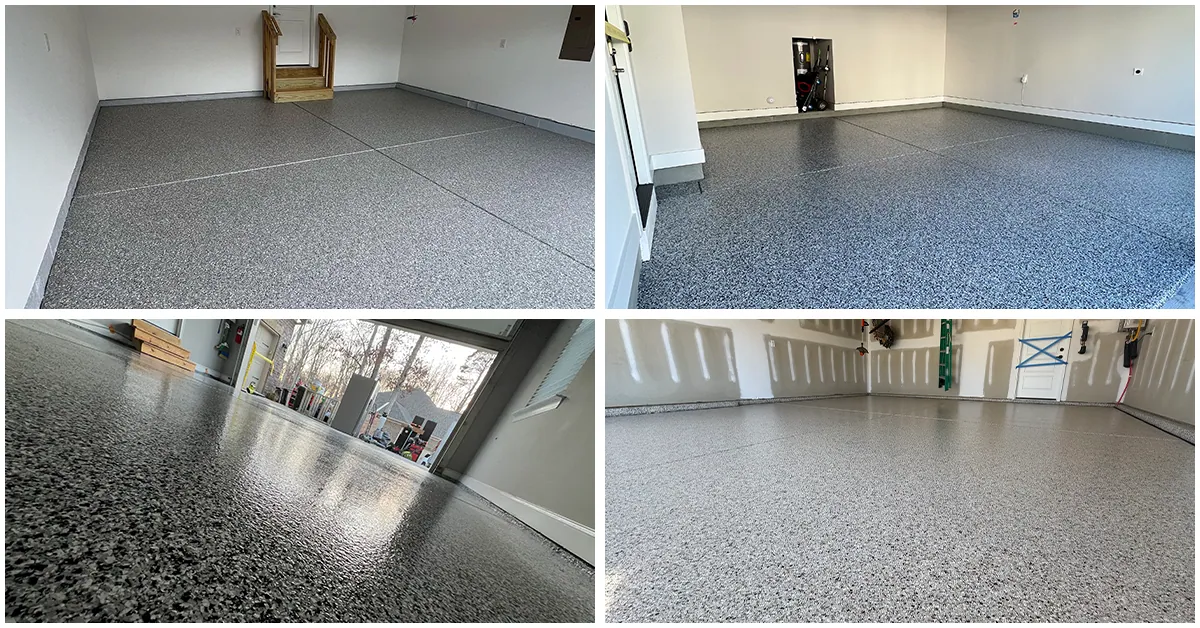
Put together, the best coating for a typical garage is an epoxy base with a polyaspartic topcoat, most often as a flake system. That is the answer this whole guide points to, and the sibling guides go deeper on each piece.
What Determines the Best Choice for Your Garage
The general answer is an epoxy and polyaspartic flake system, but a few things specific to your garage fine-tune the decision.
- How the garage is used. A daily driver garage with tools and traffic needs the full durability of a flake system. A rarely used storage garage has a little more room for a lighter build.
- The condition and moisture of the slab. Cracks, prior coatings, and moisture readings decide how much prep is needed and whether a moisture barrier goes down first, which is why every floor starts with testing rather than a guess.
- How long you plan to own the home. A properly installed system is engineered to last many years, so the longer you will be there, the more a full system pays off. To see what that longevity looks like, read how long an epoxy garage floor lasts.
- Budget and whether it is worth it. A full system costs more than a weekend paint kit, and whether that is worth it depends on how hard the garage is used and how long you will own the home. Weigh the upfront cost against how many years of daily use you expect to get out of the floor.
Weigh the environment first and these factors second, and the best coating for your specific garage becomes clear without guessing off a product label.
What Happens When You Get This Wrong
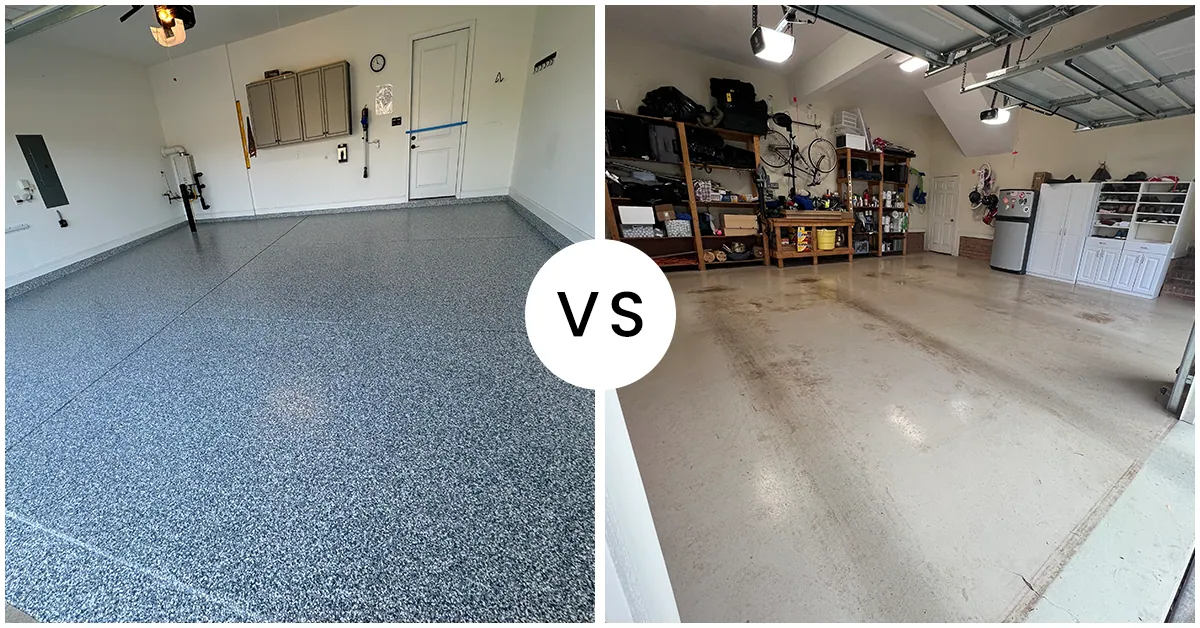
Choosing by price or brand name alone, without matching the system to the slab and the setting, is where garage floors fail. A base coat with too little moisture tolerance can delaminate when vapor moves up through the slab. A floor coated over a slab that was never properly ground never bonds in the first place. And picking a product built for the wrong environment, like a base coat meant for sun exposure on an indoor slab, wastes its strengths. When a coating fails, the old material has to be ground off and the floor redone from scratch, so the wrong first choice almost always costs more than the right one would have.
Why How a Contractor Installs the System Matters
Even the correct system is only as good as the installation, and this is the part homeowners rarely hear about. The single most important step is surface prep. We diamond grind every slab to open the concrete profile so the base coat can bond into it, rather than acid etching, which is the shortcut that leaves residue and is a common reason coatings peel later. Before that, we run a moisture test and a concrete hardness test so the right base and the right prep are chosen for the actual slab, not assumed. And because every coating has a working window once it is mixed, an experienced crew that moves efficiently is what keeps the base coat, the flake, and the topcoat going down cleanly with no seams or roller marks. That full installed build is what we deliver as our epoxy garage floor coating system. The product matters, but the prep and the crew are what make the best coating actually last. For how to vet that in any contractor, see how to choose an epoxy flooring contractor.
The Bottom Line
The best coating for a garage is not a single product, it is a system: an epoxy base for bond and moisture tolerance, a polyaspartic topcoat for UV and scratch resistance, usually built as a flake floor. Start with the environment, match the system to your slab and how you use the garage, and make sure whoever installs it preps the slab properly. If you want a system recommended for your specific garage rather than a one size quote, request a free in-person estimate and we will walk the floor with you.
Frequently Asked Questions
What is the best garage floor coating for a garage? For most garages it is a flake epoxy system: an epoxy base coat for bond and moisture tolerance, with a polyaspartic topcoat for UV and scratch resistance. The epoxy handles what an indoor slab needs while the polyaspartic protects the surface.
Should I choose epoxy or polyaspartic for my garage? The question assumes they compete, but in the best garage systems they do not. Epoxy is the base coat for its bond and moisture tolerance and polyaspartic is the topcoat for its UV and scratch resistance, so a good system uses both rather than picking one.
Is a coating better than garage floor tiles or paint? For a garage that sees daily use, yes. A bonded coating system becomes part of the slab, while tiles rest on top with seams and paint is a thin surface layer that wears through quickly. Tiles and paint can suit light use or a rental, but they are not built like a professional coating system.
Does the best garage floor coating depend on where I live? To a degree, yes. The environment drives the base coat choice, so a cold, freeze-thaw climate can call for a flexible polyurea base, while an indoor garage in a warmer region is best served by an epoxy base and polyaspartic topcoat.
How much does a good garage floor coating cost? Cost depends on the system, the size of the garage, and the slab condition, since prep like crack repair changes the scope. Every estimate is built around your specific floor rather than a flat per-square-foot number.
How long does the best garage floor coating last? A properly installed flake epoxy floor with a polyaspartic topcoat is engineered to last 15 to 20 years or more under normal residential use, with lifespan tied almost entirely to the quality of the surface prep and installation.