Table of Contents
- What most homeowners get wrong
- How epoxy and garage floor tiles compare
- Which one holds up better for your garage
- What happens when you get this wrong
- Why how we prep and bond the floor matters
- The bottom line
- Frequently asked questions
Direct Answer
A properly installed flake epoxy floor holds up better than garage floor tiles for a garage that sees real daily use. Epoxy bonds directly into a diamond ground slab, so the coating and the concrete become one continuous surface with no seams for grit, oil, or water to work into. Garage floor tiles interlock and sit on top of the slab instead of bonding to it, which means the seams between tiles are a permanent weak point under heavy vehicle weight and repeated rolling loads. Tiles have real advantages, they install fast and can be lifted and replaced individually, and that makes them a reasonable choice for a lightly used garage or a renter who cannot make a permanent change. For a garage with daily vehicle traffic, tools, and long term ownership, a bonded epoxy system is the more durable choice.
Key takeaways
- Epoxy bonds directly to the concrete slab; tiles interlock and sit on top of it without bonding.
- Tile seams are a weak point under heavy vehicle weight and can trap grit and moisture over time.
- Tiles install faster and can be lifted and replaced individually, which suits light use or rental situations.
- A daily use garage with vehicle traffic favors a bonded epoxy system for long term durability.
- Neither option is universally right; the choice depends on how permanent and how heavily used the garage is.
We get asked about tiles often enough across the Charlotte metro area that it is worth laying out exactly where each option holds up and where it does not.
What Most Homeowners Get Wrong
The assumption is that because tiles and epoxy can both look like a finished garage floor in photos, they perform similarly. They do not. A tile floor is a modular surface resting on the slab, while an epoxy floor becomes part of the slab once it is bonded and cured. That structural difference, not the finish, is what determines how each one holds up over years of vehicle traffic. For the basics of what an epoxy system actually is, see what epoxy flooring actually is.
How Epoxy and Garage Floor Tiles Compare
Here is how the two options actually differ.
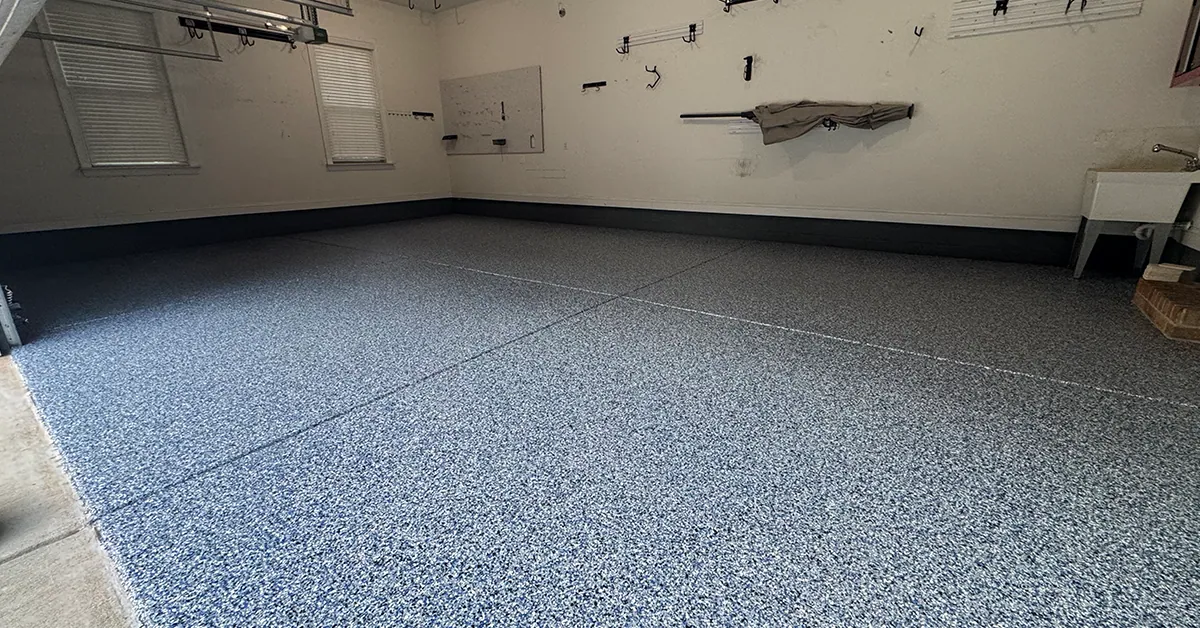
- Bond to the slab. Epoxy is applied wet and cures into the diamond ground concrete, forming one continuous surface. Tiles interlock edge to edge and float on top of the slab with no adhesive bond in most residential systems.
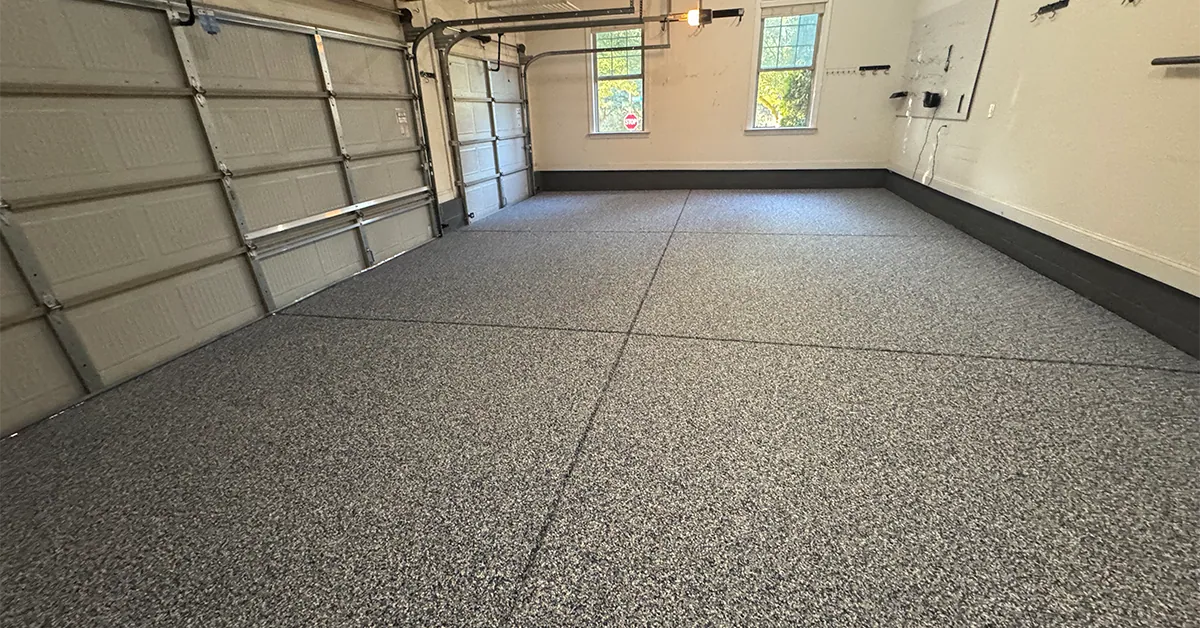
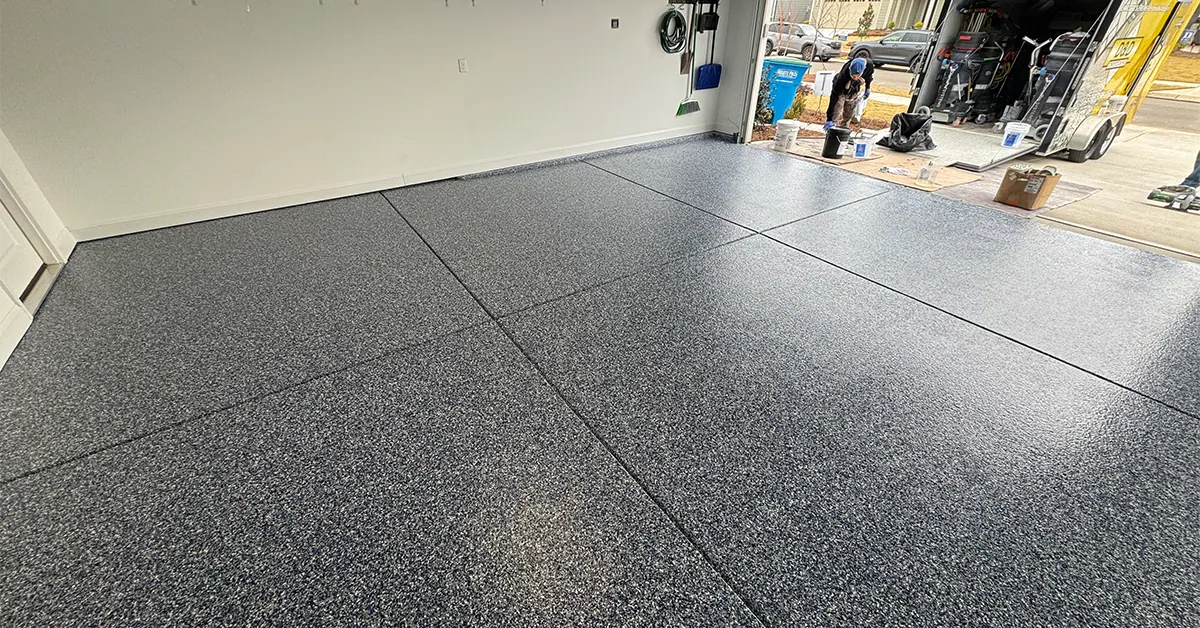
- Seams. A properly installed epoxy floor has no seams across the whole garage. Every tile has a seam, and those seams are where grit, oil, and moisture eventually work their way underneath.
- Weight and traffic. Vehicle tires roll directly across a bonded epoxy surface with no give. Repeated rolling loads at tile seams can eventually cause shifting or lifting, especially near heavier vehicles like trucks.
- Installation and removal. Tiles snap into place in a day and can be removed or replaced individually, which is genuinely useful for a rental or a garage that might be reconfigured. Epoxy is a permanent, bonded system that is not designed to be removed.
- Maintenance. A bonded epoxy floor wipes clean with no seams to catch debris. Tile floors need occasional attention at the seams where dirt and moisture can collect.
Put simply, tiles trade permanence for flexibility, and epoxy trades flexibility for a stronger, seamless bond. For how epoxy stacks up against every garage floor option, not just tiles, see our guide on the best garage floor coating.
Which One Holds Up Better for Your Garage
For a garage used daily, with vehicles parked and moved regularly, tools in use, and years of ownership ahead, a bonded flake epoxy system holds up better because there is no seam for the daily wear to concentrate on. For a garage used lightly, a rental property, or a situation where the floor might need to come up later, tiles are a reasonable and faster option. The honest comparison is not which product is universally superior, it is which one matches how long you plan to own the home and how hard the garage actually gets used. If cost is the deciding factor between the two, what an epoxy garage floor actually costs breaks down where that number comes from, and how long an epoxy garage floor lasts covers exactly what that durability looks like over time.
What Happens When You Get This Wrong
Installing tiles in a heavy use garage without accounting for vehicle weight can lead to shifting or cracking tiles at the seams within a few years, and grit that works underneath a tile can be hard to clean out without lifting it. Installing epoxy without proper diamond ground prep has the opposite failure mode, a coating that never bonds and delaminates. Either way, the fix means starting over, which is why matching the system to the slab and the actual use case matters before anything goes down.
Why How We Prep and Bond the Floor Matters
The reason a bonded epoxy floor outperforms tiles in a heavy use garage comes down to preparation. We diamond grind every slab to open the concrete profile before the base coat goes down, which is what lets the epoxy bond into the slab rather than sit on top of it the way a tile does. That bond is the entire reason a professionally installed epoxy garage floor does not develop the seam related weak points a tile floor is built with from day one.
The Bottom Line
Epoxy holds up better than garage floor tiles for a daily use garage because it bonds directly to the slab instead of resting on top of it in seamed sections. Tiles still make sense for lighter use or situations where a removable floor matters more than long term durability. If you want a floor assessed for how your garage actually gets used, request a free in-person estimate and we will walk the floor with you.
Frequently Asked Questions
Do garage floor tiles hold up as well as epoxy?
Can garage floor tiles crack under a car?
Individual tiles can crack or shift at the seams under concentrated weight from tires, especially heavier vehicles, since they are not bonded to the slab the way an epoxy coating is. Once a tile cracks or shifts, moisture and grit can work into that gap and the damage tends to spread to the tiles around it.
Are garage floor tiles cheaper than epoxy?
Tiles can be less expensive up front, but the comparison depends on the specific products and the size of the garage. A bonded epoxy system costs more because it is a permanent, prepped installation rather than a modular product laid on top of the slab.
Can I install garage floor tiles myself?
Yes, that is one of their advantages, most interlocking tile systems are designed for a DIY installation over a weekend, unlike a bonded epoxy system, which needs diamond grinding equipment and requires a chemical working window pros are trained on. That difference in equipment and timing is exactly why one is a weekend project and the other is not.
Do tiles trap moisture under a garage floor?
Moisture and grit can work into the seams between tiles over time. A bonded epoxy floor has no seams for moisture to collect under, which is part of why it holds up better long term.
How long does an epoxy floor last compared to garage floor tiles?
A properly installed flake epoxy floor is engineered to last 15 to 20 years or more under normal residential use. Garage floor tiles do not carry a comparable engineered lifespan, since they are not bonded to the slab the same way.