Table of Contents
- What most homeowners get wrong
- What a workshop floor needs that a parking bay does not
- What determines the right specification for your shop
- What happens when you get this wrong
- Why the specification changes and the process does not
- The bottom line
- Frequently asked questions
Direct Answer
Yes, and a working garage is where a coated floor earns the most, because it is the floor doing the most work. What changes for a workshop is the specification rather than the system: the same mechanically ground slab, base coat, flake until the surface will not take another chip and polyaspartic topcoat, with more attention to slip resistance where fluids get handled, jack and equipment loading, and chemical exposure. What does not change is the tools an epoxy garage floor requires, or the preparation or the grade of what goes down, because a shop floor sees the abuse that finds both a weak bond and a thin retail product fastest. Industrial-grade material over a properly ground slab is the baseline, not the upgrade.
Key Takeaways
- A working garage returns more from a coated floor than a parking bay does.
- The system is the same. The specification decisions change.
- Concentrated weight from jacks, stands and equipment feet needs pads, not a different coating.
- A grip additive worked into the topcoat where fluids get handled and the floor gets wet.
- Chemical resistance is a property of the cured topcoat, not an add-on.
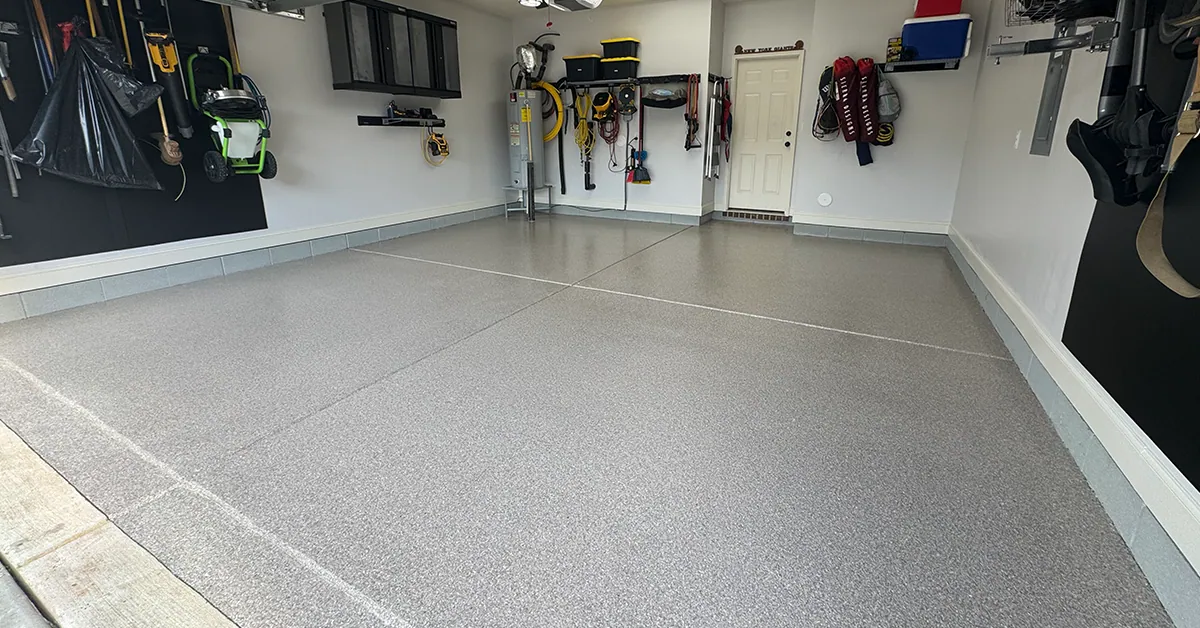
The garages we coat that get used hardest are also the ones whose owners notice the difference first.
We coat working garages and shops across the Charlotte metro, and the spec changes when the floor takes tools and chemicals rather than just cars.
What Most Homeowners Get Wrong
There are two opposite mistakes here and both are common.
The first is assuming a coating is decorative and therefore too delicate for real work. A cured polyaspartic topcoat is harder than the concrete underneath it and resists the oil, brake fluid, antifreeze and cleaners a shop generates, none of which bare concrete resists at all.
The second is assuming a workshop needs a fundamentally different product. It does not. It needs the same system with a few decisions made differently, and it needs the preparation done properly, because a shop floor will find a weak bond within a year where a parking bay might take three.
What a Workshop Floor Needs That a Parking Bay Does Not
Chemical resistance that gets used. Oil, gasoline, brake fluid, antifreeze and the solvents used to clean them up. On bare concrete every one of those soaks in permanently. On a sealed polyaspartic surface they sit on top and wipe off.
Slip resistance where fluids get handled. A parking bay sees tracked-in rain. A shop sees spills. This is where a grip additive in the topcoat move from optional to worth specifying.
Tolerance for concentrated weight. A jack, a jack stand or an engine hoist concentrates a lot of weight into a very small contact area. That is a pads conversation rather than a coating conversation, and it is worth having before the floor goes down rather than after.
Impact tolerance. Dropped tools on a diamond-hard surface usually leave nothing. A dropped sledge landing on an edge can chip, and that is true of any hard floor.
Cleanability under actual mess. The single largest practical difference. A shop floor that wipes clean is a shop that gets used.
Light. Shops are usually the worst-lit rooms in a house, and a gloss floor returns a meaningful amount of what light there is.
What Determines the Right Specification for Your Shop
What actually happens in the room. Vehicle maintenance, woodworking, a gym, or a mix. Each generates a different mess and a different traffic pattern.
Whether fluids get handled. If yes, beads in the topcoat.
Whether a lift or a jack is used. Concentrated weight, and where in the bay it sits.
Whether the space is heated. Resinous systems do not install below 30 degrees, and an unheated shop in December means either waiting or switching the base coat to polyurea.
Slab condition. Shop slabs are often older and have seen more, which usually means more crack repair and sometimes prior coating removal, and a professional epoxy garage floor is the first question.
Whether equipment stays put. Anything sitting on the floor permanently traps grit and moisture underneath.
What Happens When You Get This Wrong
The most common shop-specific failure is a smooth finish. A solid colors or metallic floor in a room where fluids get spilled is slicker than it needs to be, and there is no adding texture after the topcoat cures.
The second is unpadded equipment. Steel feet under load on any hard floor leave marks, and a shop is full of steel feet. This is entirely preventable and entirely a planning question.
The third, and the expensive one, is under-prepped concrete in a room that gets used hard. A shop floor cycles temperature, sees more solvent, and takes more concentrated weight than a parking bay, so a marginal bond that might have survived three years in a garage that stores boxes releases in one here.
Why the Specification Changes and the Process Does Not
Everything above is a decision made at the estimate, and none of it changes the sequence.
The slab is still tested for hardness, still ground until the concrete is white, open and porous, still hand-ground at the perimeter and the apron, still measured for moisture before the base coat is chosen. Every crack the grinding reveals is still cleaned out, filled with a two-part polyurea crack mender and ground flush. Flake still goes on to full coverage, the floor is still scraped and vacuumed after it sets, and the clear topcoat still goes on about three sheets of paper thick.
A shop floor and a parking bay get the same sequence on our workshop floor coatings. What changes is whether a grip additive goes into the topcoat, which base coat the conditions call for, and what gets discussed about pads and equipment placement. Tell David at the estimate what actually happens in the room and those three decisions get made properly.
Where a coating is the wrong choice for a shop. If the floor sees dropped steel regularly, welding sparks, or equipment that gets dragged rather than lifted, a coating will show it. Some working shops are better served by a sealed slab that is expected to look used, and there is no shame in that being the answer.
The Bottom Line
A working garage is the best case for a coated floor, not the risky one, because the whole benefit is cleanability and durability and a shop is where those get used. Tell whoever quotes it what actually happens in the room, because the specification decisions that matter, beads and base coat, get made from that. And plan for pads under anything steel before the floor goes in rather than after.