Table of Contents
- What most homeowners get wrong
- Whether Epoxy Floors Scratch Under Normal Use
- What determines how well yours holds up
- What happens when you get this wrong
- Why hot-tire pickup is a chemistry question, not a hardness one
- The bottom line
- Frequently asked questions
Direct Answer
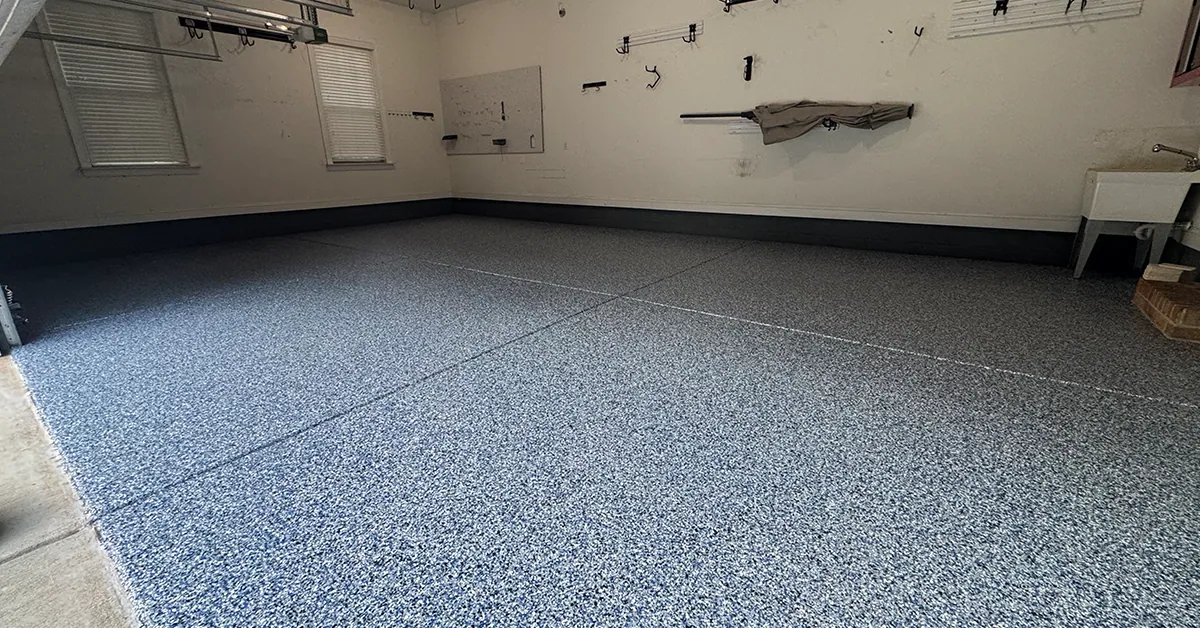
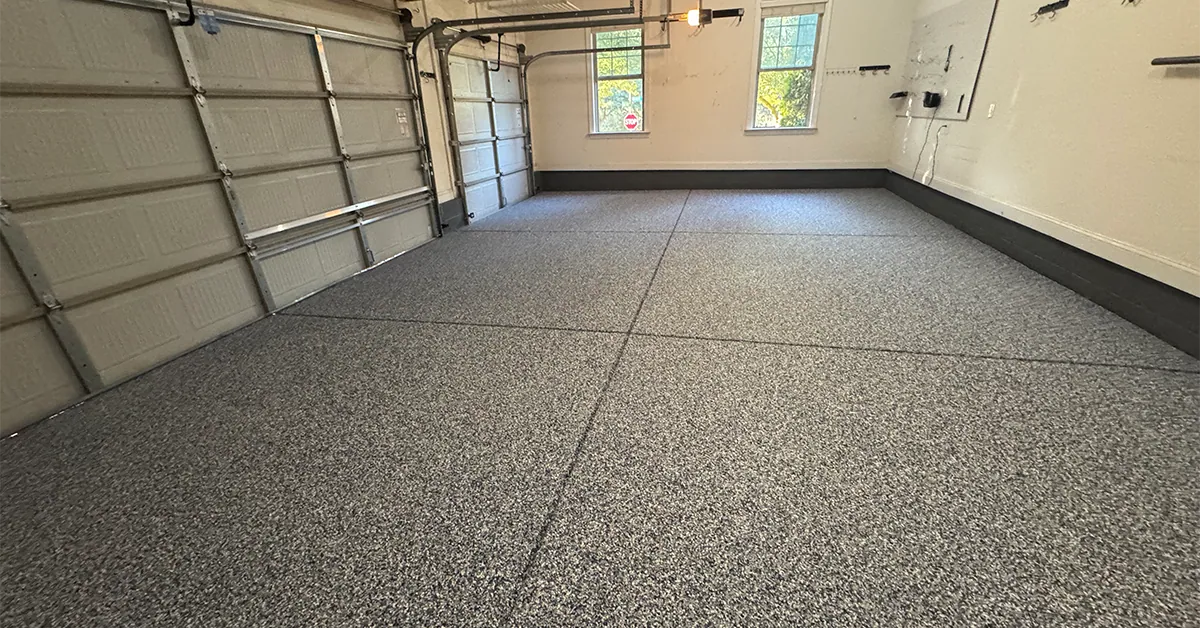
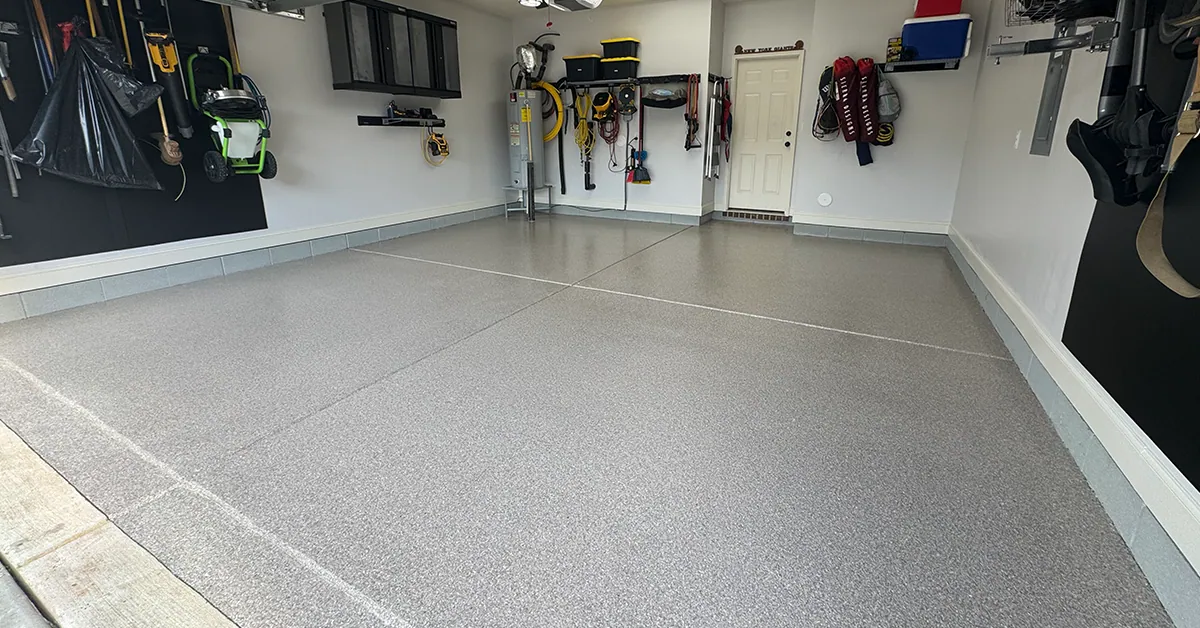
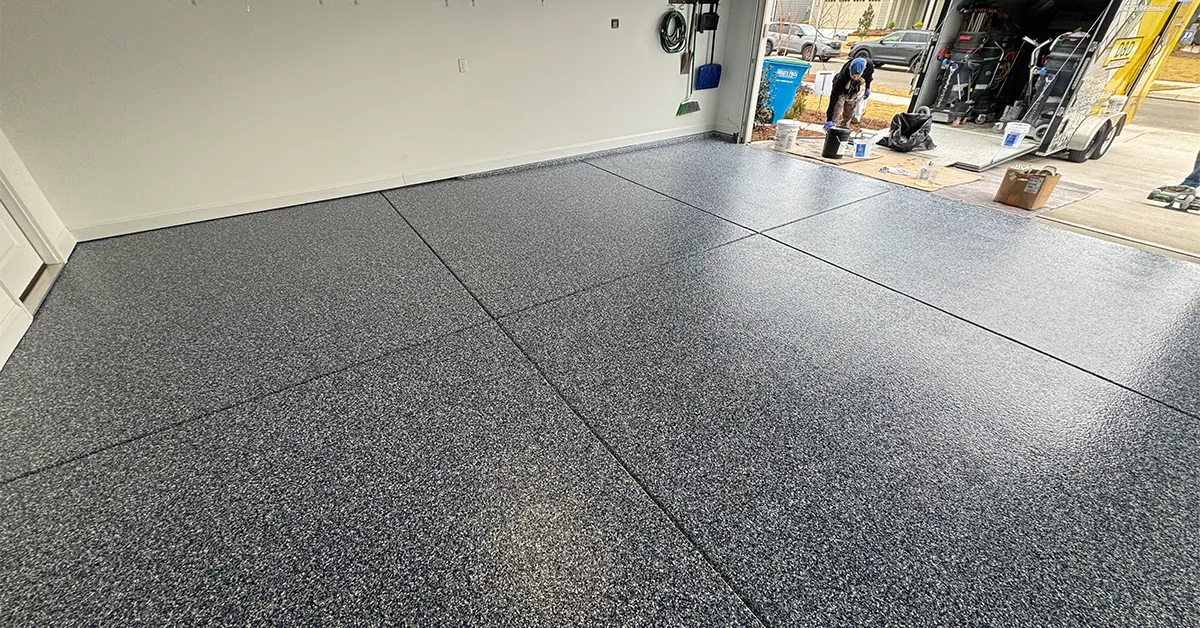
A properly installed flake floor with a genuine polyaspartic topcoat is cured to diamond hardness and does not scratch under normal residential garage use. The word doing the work is genuine: a hardware-store clear coat and a commercial-grade polyaspartic are different materials, only one cures to that hardness, and it has to go over a slab that was mechanically ground open with industrial equipment. It is not scratch proof, and no floor is. Dragging steel-legged shelving or a jack across it will mark it, and grit ground under a tire will dull the tire paths over years. Hot-tire pickup, where the coating lifts with a warm tire, is a separate problem entirely and it is not about hardness: it is about whether the topcoat is polyaspartic and whether the bond underneath was properly established.
Key Takeaways
- A polyaspartic topcoat cures to diamond hardness and resists normal garage use.
- Nothing is scratch proof. Dragged steel legs and jacks leave marks.
- Grit under a tire is the real abrasion, which is why sweeping is the whole maintenance routine.
- The flake texture hides light scuffing that a smooth floor would show.
- Hot-tire pickup is a chemistry and bond problem, not a hardness problem.
When we are called out to look at a floor showing early wear, it is almost always worn in one place first, and where it is worn tells us what happened before we ask a single question.
We have seen hot tires lift plenty of coatings around Charlotte, and every one of them was missing a real polyaspartic topcoat.
What Most Homeowners Get Wrong
The usual assumption is that a garage floor coating either survives everything or scratches like paint, and that hardness is the whole answer.
Hardness handles impact and abrasion. It does nothing about hot-tire pickup, which is a bond and chemistry failure rather than a surface one, and people conflate the two constantly because both look like the floor coming away. A diamond-hard topcoat over a poor bond will still lift with a warm tire, and understanding that distinction is what tells you whether a floor was installed correctly.
Whether Epoxy Floors Scratch Under Normal Use
Vehicle traffic: no. Tires rolling on a cured polyaspartic topcoat do not scratch it. The tire paths eventually lose a little gloss, and that is grit rather than the tire.
Dropped tools: rarely. A dropped wrench or socket on a diamond-hard surface usually leaves nothing. A dropped sledge or a chisel landing on its edge can chip, and that is a point-load event rather than a scratch.
Dragged furniture and shelving: yes. Steel legs and unpadded feet mark almost any hard floor. Felt pads cost nothing and prevent it entirely.
Floor jacks and stands: yes, if unpadded. A jack under load concentrates weight into a very small area. Jack pads solve it.
Grit: this is the real one. Sand and concrete dust ground under a tire is an abrasive action, and it is what actually dulls a tire path over years. Sweeping weekly is not housekeeping advice, it is wear prevention.
And the flake helps. A textured multi-chip surface breaks up light scuffing so the eye does not catch it, so a flake floor looks better than a smooth one at the same age with the same use.
What Determines How Well Yours Holds Up
Whether the topcoat is a genuine commercial-grade polyaspartic. UV-stable, hard, and specifically resistant to hot-tire pickup. A retail clear coat sold under the same word does not cure to the same hardness, which is the single most common reason a floor marks when the owner was told it would not.
Whether the topcoat was applied at specification. About three sheets of paper thick, 13 mils. Thinner and the flake is not fully sealed in, which leaves chip edges exposed to wear at exactly the points that see the most traffic.
Whether the flake went to full coverage. Full coverage wears evenly. Partial coverage has thin areas that wear first.
Whether the slab was properly prepared. A floor lifting with a warm tire is a bond problem, and no topcoat hardness compensates for a slab that was acid washed rather than mechanically ground open.
How the garage is used. A workshop with a jack and equipment asks more of a floor than a parking bay. That is a specification conversation at the estimate, not a limitation, and a workshop floor takes different punishment.
Whether it gets swept. Genuinely the largest thing a homeowner controls.
What Happens When You Get This Wrong
The tire paths tell the story. Two parallel dull strips and nothing elsewhere means grit abrasion, which means it was not swept and it is cosmetic.
A floor where the coating has lifted in patches shaped like a tire contact patch is hot-tire pickup, and that is a different diagnosis: the topcoat was not polyaspartic, or the bond underneath was never properly established. It does not improve and it is not a maintenance issue.
Chip edges wearing at the traffic areas, with the rest of the floor fine, means the topcoat was applied too thin to fully seal in the flake. Also not repairable in place.
And a floor with gouges under where shelving used to be is nobody’s install problem. Pads.
Why Hot-Tire Pickup Is a Chemistry Question, Not a Hardness One
A warm tire parked on a coating does two things: it softens a susceptible coating slightly, and the tire’s own compounds interact with it. When the tire cools and grips, it can take the coating with it. Cheaper coatings and single-layer paints are vulnerable to this, which is why hot-tire marks are one of the most common complaints about garage floor paint.
A polyaspartic topcoat is specifically resistant to it. That resistance is a property of the material rather than of the thickness, which is why the answer to hot-tire pickup is which topcoat, not how much.
The bond is what the whole floor rests on, which is why our residential coatings start at the slab. And underneath all of it sits the bond. A hot-tire mark on a well-bonded floor is a cleaning job. The same mark on a poorly bonded one is the first sign of what is coming.
What will mark it no matter who installs it. Dragged steel, an unpadded jack, a dropped chisel on its edge, and years of grit under a tire. None of that is an install failure and none of it is preventable by a better coating. Any contractor promising a floor that never marks is describing a floor that does not exist.
The Bottom Line
Under normal use a properly installed flake floor does not scratch, and it is not scratch proof, so use pads under anything steel and sweep the grit off. If your concern is specifically hot-tire marks, the question to ask a contractor is which topcoat they use, because that is a material property rather than a matter of how thick they put it on. The estimate is where the specification for your use case gets set.