Table of Contents
- What most homeowners get wrong
- Whether a coated floor is slippery when it is wet
- What determines how much traction your floor has
- What happens when you get this wrong
- Why the topcoat thickness decides it
- The bottom line
- Frequently asked questions
Direct Answer
A flake epoxy garage floor is not slippery when dry and it is comparable to bare concrete when wet, because the flake broadcast, which happens into a wet base coat builds texture into the surface rather than leaving it smooth. The floor that gets slippery is a smooth one: solid color with no chip, metallic, or a flake floor whose topcoat was applied too thick and buried the texture. Where more traction is wanted, a grip additive can be worked into the topcoat before it goes on. No coating is non-slip in an absolute sense, and any contractor claiming that is overstating it.
Key Takeaways
- Flake builds texture into the surface, and that texture is the slip resistance.
- Topcoat thickness decides it: too thick buries the flake and the floor gets slick.
- A grip additive can be worked into the topcoat where more traction is wanted, and it has to be specified before the topcoat goes on.
- A smooth finish, solid color or metallic, is genuinely slicker than flake when wet.
- No coating is non-slip absolutely. Wet is wet, on any hard floor.
A floor gets scraped before the topcoat goes on, and one reason is this question: a floor flaked to full coverage has texture, and the scrape is how our crew confirms it is genuinely there.
We broadcast flake to full refusal on every floor, and that texture is the reason the slip question rarely comes back after the install.
What Most Homeowners Get Wrong
Most people picture a gloss floor and assume gloss means slick, the way a polished tile does.
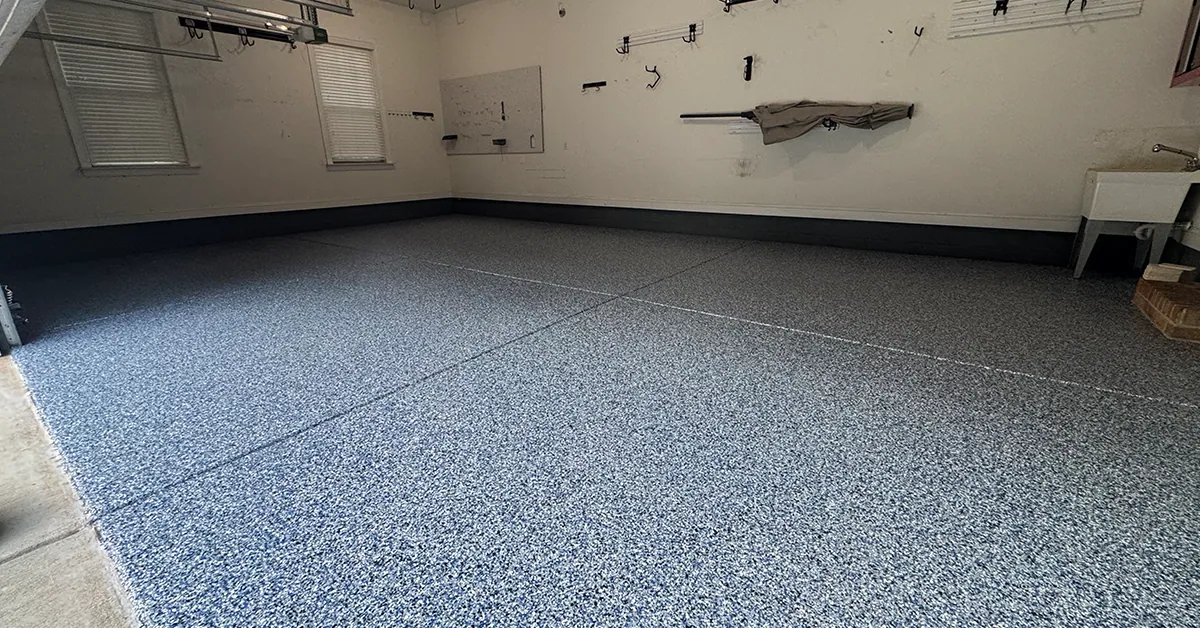
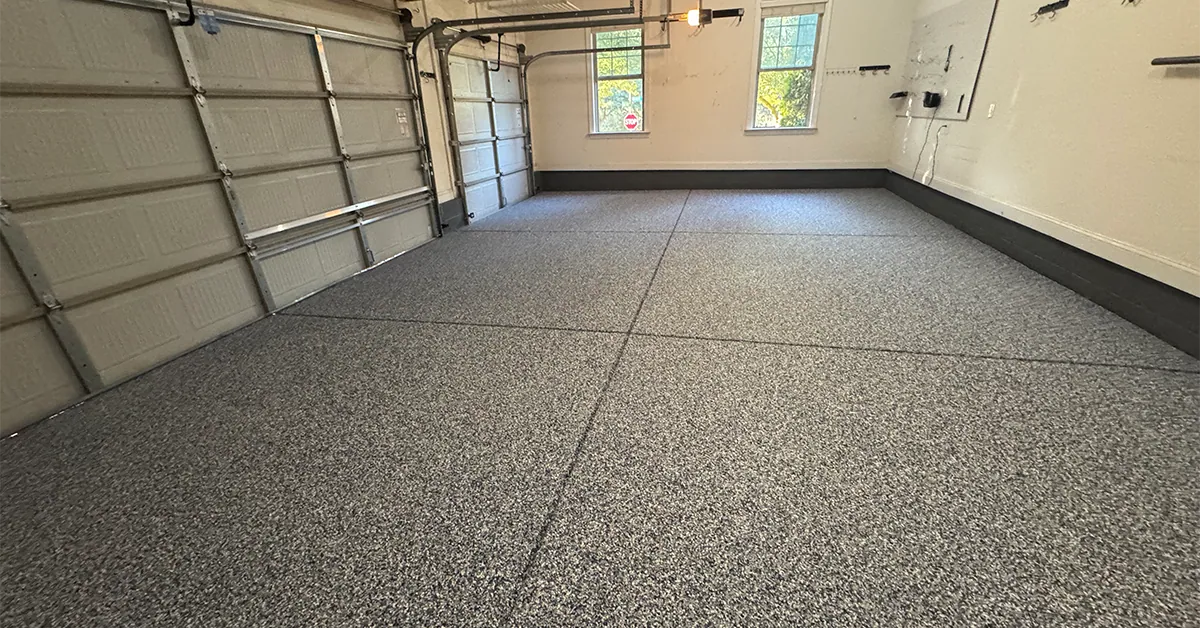
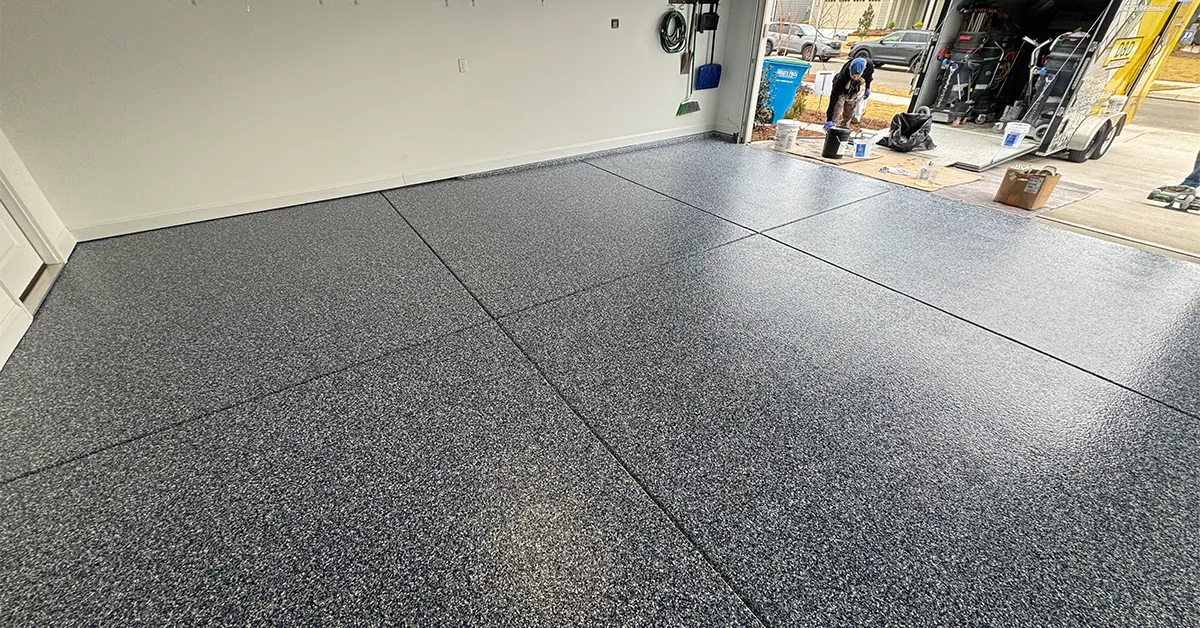
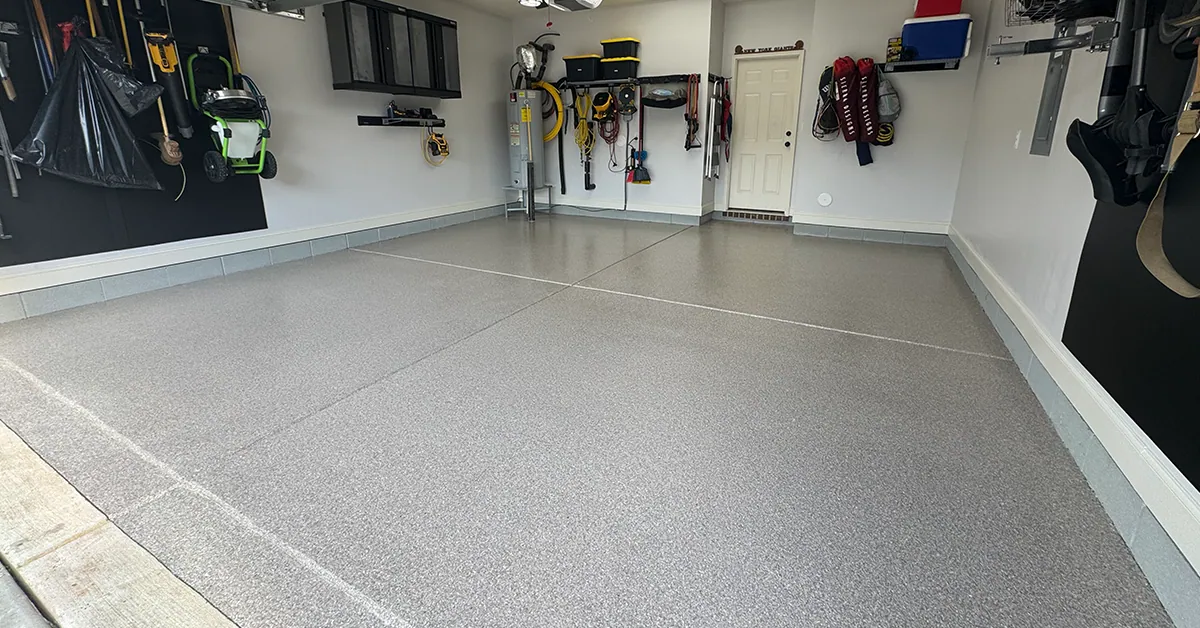
Gloss and texture are separate properties. A flake floor is glossy and textured at the same time, because thousands of vinyl chips packed edge to edge create a surface profile under the clear topcoat. Run your hand across a finished flake floor and you can feel it. What people are actually picturing when they imagine a slippery epoxy floor is a smooth-finish system, which is a different build.
Whether a Coated Floor Is Slippery When It Is Wet
Dry: no. The flake texture gives a flake floor more grip than a smooth sealed slab, and comparable grip to bare broom-finished concrete.
Wet: comparable to bare concrete, not worse. Water on any hard surface reduces traction. A flake floor holds up because the chip profile gives water somewhere to go and gives a shoe or a tire something to bite. The honest answer is that a wet flake floor requires the same care a wet driveway does.
Where the risk genuinely is: a smooth finish. A solid color system or a metallic has no chip and therefore no built-in profile, so when it is wet it behaves like any smooth sealed surface. That is one of the reasons flake suits a garage better than a display space.
And where it is a workmanship problem: a flake floor with too much topcoat. At about three sheets of paper thick, 13 mils, the polyaspartic seals in the chip while leaving the profile proud. Applied substantially thicker, it levels over the texture and the floor becomes exactly what the homeowner was worried about.
A grip additive. Where extra traction is wanted, a grip additive is worked into the topcoat. They increase the surface profile without changing color, and they are a specification decided at the estimate.
What Determines How Much Traction Your Floor Has
Whether the finish is flake or smooth. The single largest factor.
Topcoat thickness. About three sheets of paper thick, 13 mils. Thicker levels the texture, thinner leaves flake edges exposed to wear.
Whether flake went to full coverage. Partial coverage means partial texture, and thin areas are smoother than the rest of the floor.
Whether beads were added. An option, not a default.
What the garage is used for. A floor that gets hosed down, or a garage that is the main entrance in wet weather, is a stronger case for beads.
Footwear and tires. Not something a coating controls, and worth saying plainly: any hard floor is slicker in smooth-soled shoes.
What Happens When You Get This Wrong
The most common outcome is a smooth floor in a working garage. It looks superb and it is slick when wet, and there is no way to add texture after the topcoat cures. Fixing it means recoating.
The second is a flake floor with too much topcoat, which produces the same result on a floor that was supposed to have texture. Also not fixable in place.
The third is over-promising. A contractor who describes a coating as non-slip has made a safety claim about a floor that will still be wet sometimes, and that claim is not defensible. Slip-resistant with texture built in is accurate. Non-slip is not.
Why the Topcoat Thickness Decides It
This is the clearest example in the trade of a specification with a reason behind it.
About three sheets of paper thick, 13 mils, of polyaspartic seals in the flake fully while leaving the chip profile standing proud of the surface. Go thicker and the coating self-levels across the texture, the floor gets its gloss and loses its grip. Go thinner and the flake is not fully sealed, which leaves chip edges exposed to wear and creates a different problem.
That is also why the floor is scraped after the flake sets and before the topcoat goes on. Chips that land standing vertically become sharp once the polyaspartic cures the surface to diamond hardness, and scraping is simultaneously how the crew confirms the coverage and the texture are genuinely there.
A grip additive goes into our slip-resistant garage floors before the topcoat or not at all. If traction is the thing you are worried about, say so at the estimate rather than after, because beads go into the topcoat and the topcoat is the last thing that happens.
Where bare concrete is still better. A broom-finished exterior slab has more texture than almost any coated floor, and on a driveway or a ramp that stays wet, that texture matters more than anything a coating offers. Coatings belong on floors under cover. Outside, the honest comparison is closer than a coating contractor selling the job will usually admit.
The Bottom Line
If the floor is flake and the topcoat was applied at specification, it is not slippery dry and it behaves like bare concrete wet. If you want more than that, ask for a grip additive in the topcoat and decide it at the estimate rather than after. And be sceptical of anyone selling a non-slip garage floor, because the honest version of that promise is slip-resistant, and the difference matters.