Table of Contents
- What most homeowners get wrong
- Where the color actually comes from
- Garage floor epoxy ideas that actually work in a garage
- What happens when you get this wrong
- Why how much flake goes down matters
- The bottom line
- Frequently asked questions
Direct Answer
Garage floor epoxy color does not come from tinting the epoxy. It comes from vinyl flake broadcast into the wet base coat, and the blend is chosen from a chip chart rather than mixed. Blends range from neutral grays and tans through to darker charcoals and multi-color combinations, and within flake the color choice is cosmetic: it does not change how the floor performs. Metallic is not a flake color at all but a different build entirely, and it runs three to five days rather than one.
Key Takeaways
- Color comes from vinyl flake rather than tinted epoxy, and the base coat under it shifts the tone.
- Within flake systems, color is cosmetic and does not affect performance or lifespan.
- Flake is broadcast until the surface will not take another chip, which is what produces even color with no thin patches.
- Mid-tone and multi-color blends hide dust and tire marks better than solid dark or solid light.
- Metallic is a separate system, not a flake option, and takes three to five days.
Flake goes down until the surface will not take another chip on every residential floor, which means the blend you pick is the color the whole floor is, with the base coat underneath shifting how warm or cool it looks.
After hundreds of flake floors around Charlotte, the color choice homeowners regret is almost always the one picked from a screen rather than a physical sample.
What Most Homeowners Get Wrong
Most homeowners assume the color is mixed into the epoxy, the way paint color is in the can. They ask what colors the epoxy comes in.
What you see on a finished floor is thousands of vinyl chips packed edge to edge, sealed in under a clear topcoat, so a chip chart rather than a paint fan is the right way to choose. The base coat still matters, though, and this is the part that gets missed in the other direction: base coats come in gray, tan and black, and the one underneath shifts the overall tone even though the chips carry the color. The usual pairing follows the blend: a tan blend over a tan base, a gray blend over gray, a dark blend over black. David recommends the pairing once you have picked your blend, and any base can be used with any blend if you want the contrast instead.
Where the Color Actually Comes From
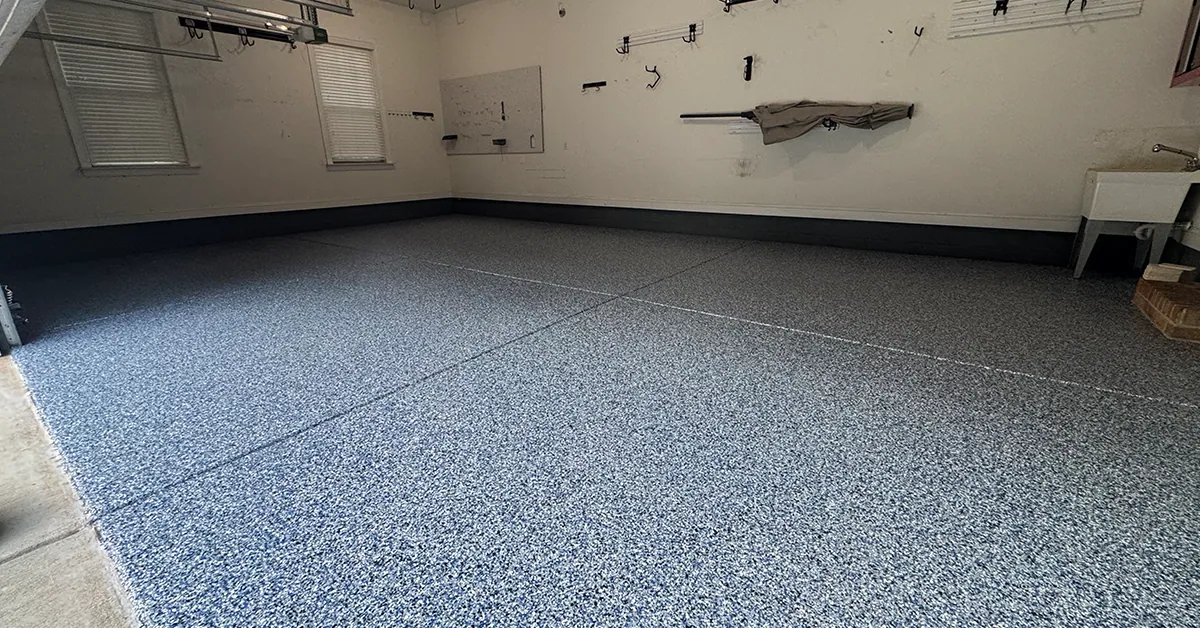
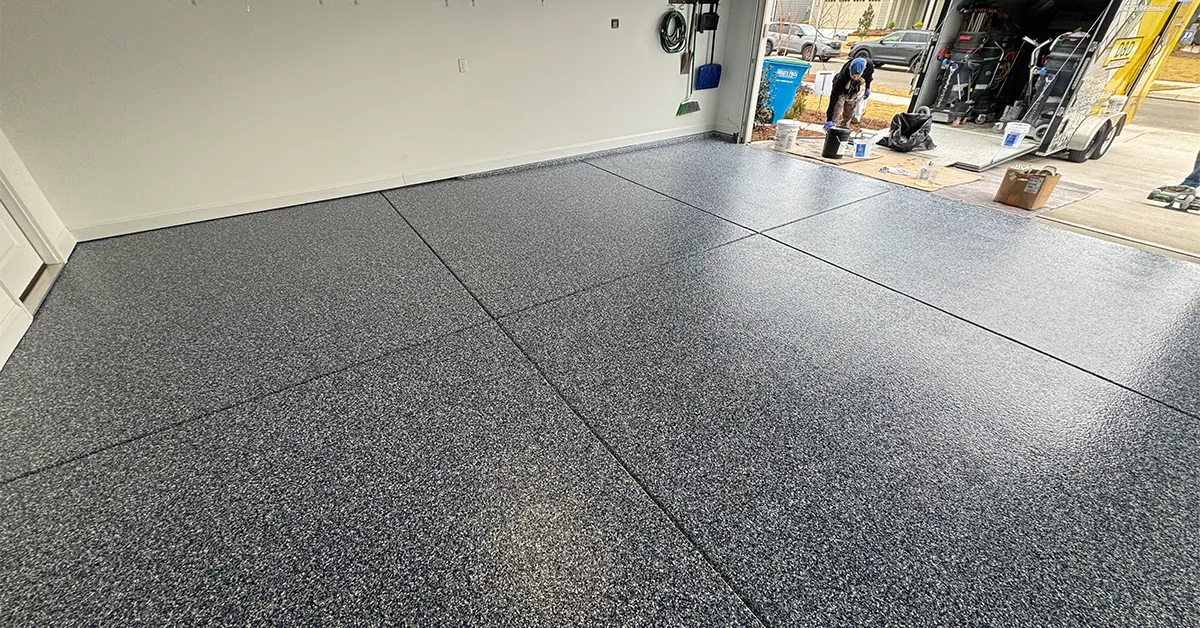
The flake. Vinyl chips broadcast into the wet base coat until the surface will not accept any more. Blends are pre-mixed combinations of chip colors and sizes, and you select the blend, not individual colors.
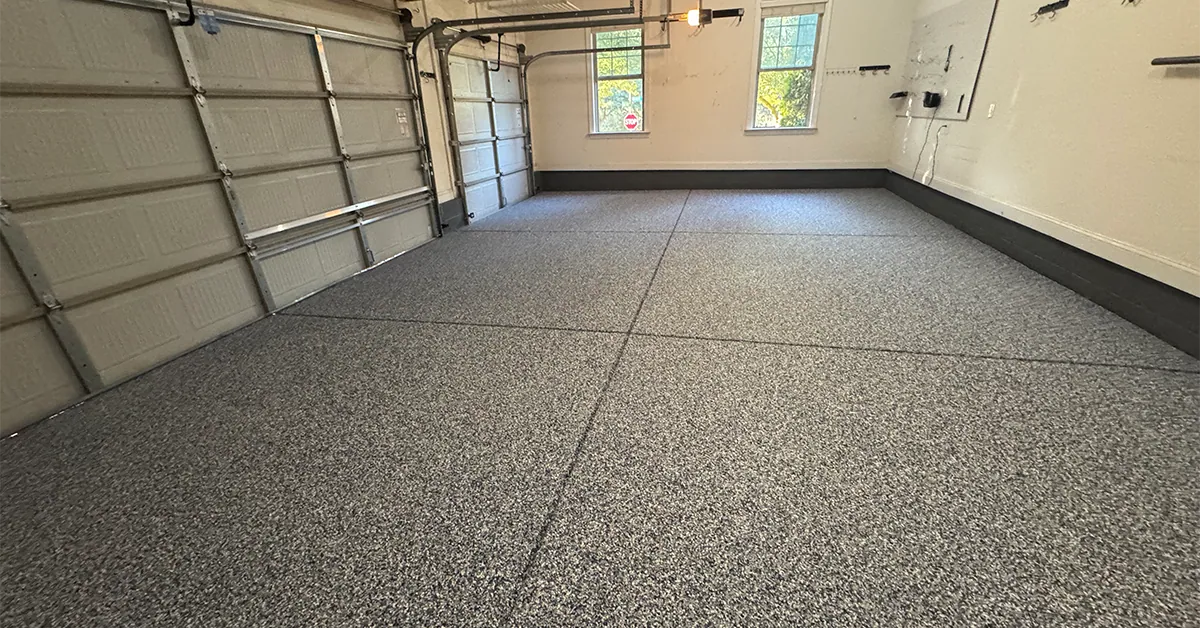
Neutral blends. Grays, tans and beige combinations. The most common choice for a residential garage because they look finished without drawing attention and they hide the dust a garage generates.
Darker blends. Charcoals and browns. Strong contrast with a lighter wall, and they hide oil marks well, though they show dry dust more than a mid-tone does.
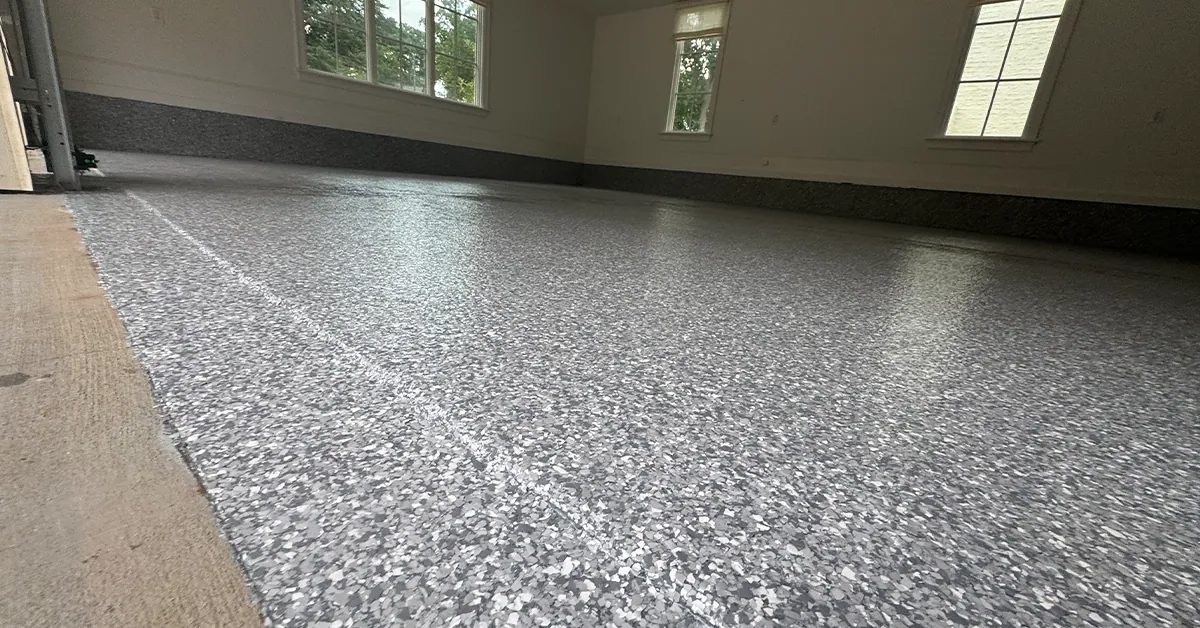
Multi-color blends. Combinations with a visible accent chip. These do the most to disguise everyday marks because the eye reads a pattern rather than a surface.
The clear topcoat. About three sheets of paper thick, 13 mils, of polyaspartic, and why that topcoat rather than another over the flake. It is what gives the floor its depth and gloss, and it holds color under UV rather than ambering the way an unprotected coating does.
Metallic is not a flake color. It is a separate system: base coat, cure, sand, pigment layer, cure again, then topcoat. Three to five days rather than one. Striking in a finished basement or a display space, and time-consuming for a working garage, which is why flake is the standard choice for a garage.
Garage Floor Epoxy Ideas That Actually Work in a Garage
What the garage is used for. A floor that sees vehicle traffic and tools shows more than one that parks two clean cars. Multi-color and mid-tone blends forgive more.
How much light the space gets. A garage with one small window looks much darker than the chip chart suggests. Lighter blends open the space; darker blends can make a dim garage feel smaller.
What the walls and trim are. The floor is the largest surface in the room and it will either match the house or fight it.
Dust color. Concrete dust is pale. A very dark floor shows it constantly. A very light floor shows tire marks and oil. Mid-tone blends sit between those two problems, which is why they are the most common residential choice.
Whether extra grip is wanted. A grip additive can be worked into the topcoat where a floor needs more traction, and that does not change the color.
Seeing physical samples in the actual garage light matters more than any of this, which is why samples come to the estimate.
What Happens When You Get This Wrong
The most common regret is not the color, it is the coverage. Flake broadcast partially rather than to full coverage leaves thin areas where the base coat shows through, and those patches appear as shadows within the first year as the topcoat wears. There is no fix after the topcoat cures. Adding flake means recoating the floor.
The second is choosing from a screen rather than a physical chip. Flake blends photograph differently than they look underfoot, and a blend that looked warm on a website can turn gray in a north-facing garage.
The third is choosing metallic for a working garage. It is a beautiful finish and it is a decorative one: it shows scratches and traffic differently than flake, and it is a longer, more delicate install.
Why How Much Flake Goes Down Matters
The common shortcut here is partial coverage. Flake is a material cost, and broadcasting to full coverage uses substantially more of it than broadcasting to visual coverage. On the day the difference is invisible under a fresh topcoat.
A contractor doing this properly broadcasts until the wet base will not accept another chip, then lets the floor set for a couple of hours, then scrapes the entire floor before vacuuming. That scrape step exists because chips that land standing vertically become sharp once the polyaspartic cures the surface to diamond hardness, and scraping is also the check that the coverage really was complete.
Flake goes down to full coverage on every one of the flake floors we install, which is why the sample you hold is the color you get across the whole slab. We broadcast to full coverage on every residential floor and scrape every one of them, which is why the sample you hold at the estimate is the color you get across the whole slab rather than in the middle of it.
Where a plain finish is the better call. If the garage is a workshop where you want to see what you dropped, a lighter solid or a low-contrast blend is more practical than a busy multi-color, even though the busy blend hides marks better. And if you are selling within a year, a neutral is the safer choice than the one you actually like.
The Bottom Line
Pick the blend from physical samples in your own garage light, and pick a mid-tone or multi-color if the floor will actually be used. Within flake, color is a preference and coverage is a specification, so the question worth asking a contractor is not which colors they offer but whether they broadcast to full coverage. Samples come to the estimate and you can hold them against your walls before deciding.