Table of Contents
- What most homeowners get wrong
- What an epoxy garage floor costs per square foot
- What moves your quote up or down
- What happens when you get this wrong
- Why how a contractor quotes matters
- The bottom line
- Frequently asked questions
Direct Answer
Most professionally installed epoxy garage floors fall between about $5.50 and $9.00 per square foot for a standard flake system, and roughly $10 to $13 or more per square foot for a metallic finish. For a typical two-car garage that usually lands somewhere in the low to mid thousands, depending on the size of the slab, its condition, and the system you choose. The gap between two quotes on the same garage is almost always explained by what is included: how the concrete is prepared, the grade of the coating, and whether there is a real topcoat sealing the floor. A number far below that range is not a better deal, it is usually a sign that a step or a material was cut, and that floor often costs more in the end because it has to be redone.
Key Takeaways
- Flake systems typically fall between about $5.50 and $9.00 per square foot; metallic runs roughly $10 to $13 or more.
- One-car garages usually carry a minimum, because mobilisation and setup are fixed costs.
- Typical sizes: one-car about 200 square feet, two-car 400 to 500, three-car 600 to 800.
- Prep is the variable, not the coating. Crack repair and prior coating removal move the number most.
- Payment terms vary widely in this trade. Ask what a contractor accepts and whether financing exists before you plan the job.
We have quoted enough Charlotte-area garages to know the number moves on what the grinder finds, not on what the tape measure says.
After years quoting these floors across the Charlotte metro, the quotes that come in far below the others explain themselves once the floor is down.
What Most Homeowners Get Wrong
Most homeowners expect a per-square-foot number over the phone, and most assume a larger garage costs proportionally more.
Neither holds. Two garages of identical footage can differ by a third because one slab is sound and the other has forty years of cracking, a prior coating removal, and moisture that changes which base coat is appropriate. And the per-foot rate falls as the garage gets larger, because mobilisation, setup, grinder transport and crew time do not scale with area.
What an Epoxy Garage Floor Costs Per Square Foot
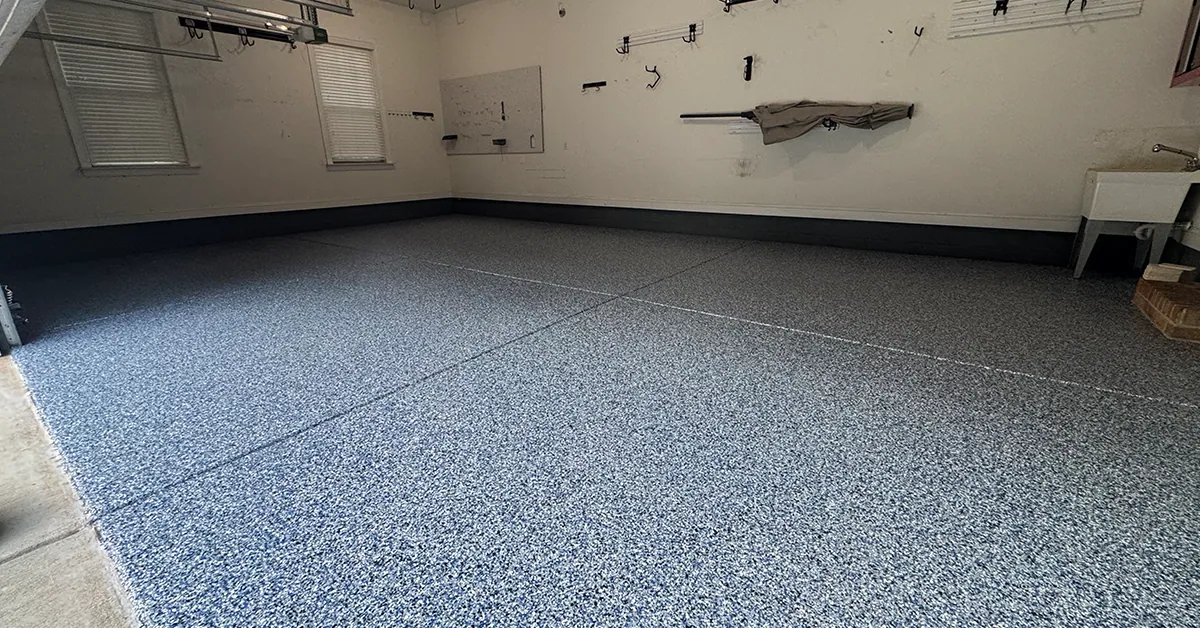
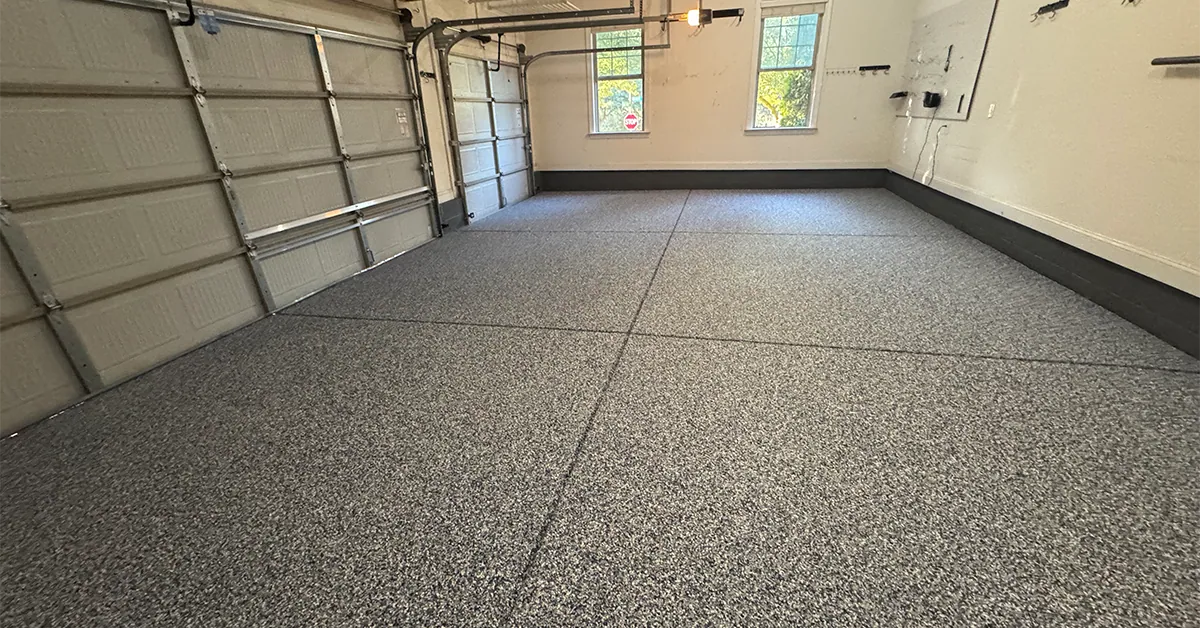
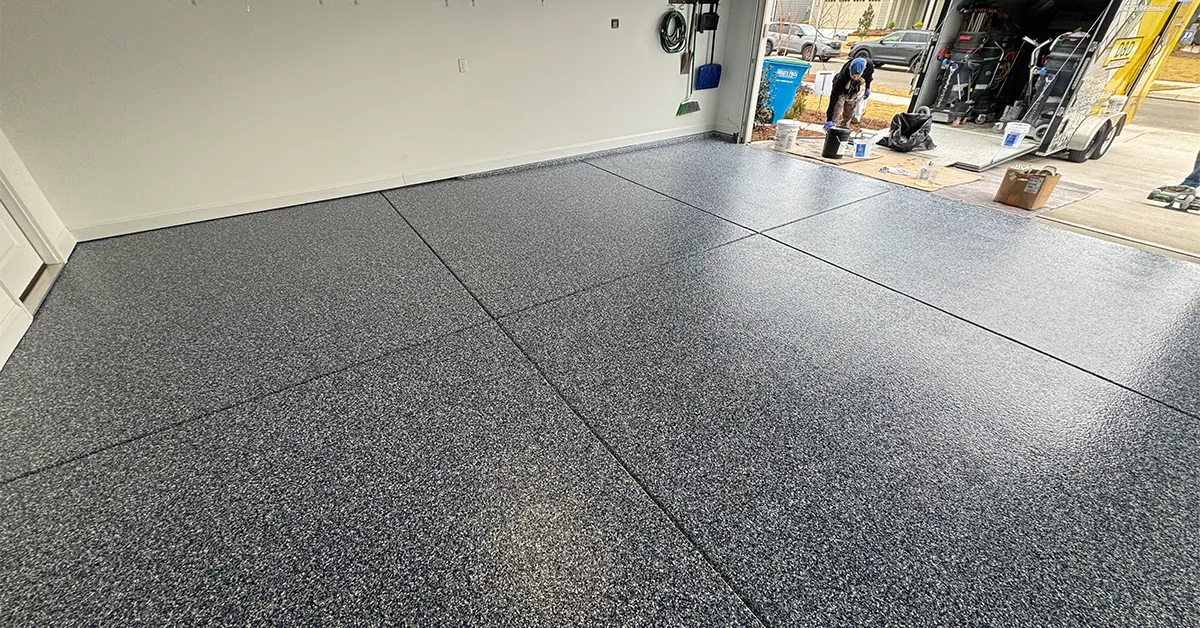
Flake systems: about $5.50 to $9.00 per square foot installed. This is the residential standard for a garage that gets used. Three cars and under is usually a one-day install.
Solid epoxy. A three-coat system, primer, base and topcoat, over two to three days. It sits between flake and metallic on cost.
Metallic systems: roughly $10 to $13 or more per square foot. Three to five days, because the base has to cure and be sanded before pigment goes on, then cure again before the topcoat. Metallics are striking and time-consuming, which is why flake is the recommendation for a working garage.
Minimums. We carry a minimum on a one-car garage, and most established installers do, because the fixed costs of getting a crew and industrial grinders to your property do not shrink with the room. Ask what it is up front, because a per-square-foot figure will not describe a small garage accurately.
By garage size. A one-car garage is roughly 200 square feet, a two-car 400 to 500, and a three-car 600 to 800. Run those against the per-foot range and you have the ballpark; the estimate confirms which end.
What Moves Your Quote Up or Down
Where a floor falls in any range is decided by the slab rather than the square footage. The slab decides most of it: the prep hours it demands, the crack repair it needs and any prior coating that has to come off are the variables. The coating itself is close to fixed, which is why a real quote is built after seeing the floor rather than over the phone. We carry a minimum on a one-car garage, as most established installers do, and it is worth asking what it is early.
Slab condition. This is the largest single variable. A sound, bare slab needs grinding and nothing more. A slab with decades of cracking needs mechanical cleanout and polyurea crack mender on every crack, ground flush, before any coating, and whether a slab is a candidate at all is a separate question.
Product grade. The second largest driver after slab condition, and the one that explains most of the gap between two quotes on the same garage. An industrial-grade, 100 percent solid base coat costs a multiple of a water-thinned retail product, and what to ask a contractor about grade is covered separately, and the grades on the market are covered separately.
Prior coatings. An existing coating, sealer or paint has to be ground off. That is grinder time and consumables, and it is the most common reason two quotes on the same garage differ.
Moisture. A high moisture reading changes which base coat is appropriate and can require a moisture barrier, which changes the material cost.
Access and obstacles. Water heaters, shelving and anything that cannot be moved add masking and hand-grinding time.
Vertical surfaces and the apron. Coating the garage apron or vertical concrete is additional area and additional hand work.
Tile. A tiled floor can be removed and the slab prepared, or coated over. Which one suits depends on the tile and the slab underneath, and removal adds meaningfully to the job.
Topcoat. An additional topcoat is available where the use case calls for it, and it adds to the total.
What Happens When You Get This Wrong
The cheapest quote on a garage floor is almost always the quote with the least prep in it, and the saving is real on the day and gone within a year.
A coating over an unprepared slab releases rather than wears, and removing a failed coating costs more than the original install because the failed material has to be ground off before the slab can be prepared properly. A homeowner who saved a few hundred on prep pays for a full removal plus a full install.
The other failure is a quote given over the phone. A phone number is a guess at the slab, and when the grinder reveals the cracks nobody looked at, the number changes mid-job. That is not a price increase, it is a quote that was never real.
Why How a Contractor Quotes Matters
Some outfits quote a rate over the phone and adjust later. It wins the call and it moves the conflict to the day the work starts.
A contractor pricing garage floor coating systems properly walks the slab first: measures the actual footage, looks for prior coatings, checks moisture, and prices the prep your floor needs rather than the prep an average floor needs.
What you get back is one price for the finished floor, with the scope described: the system, the prep, the crack repair, the flake coverage and the topcoat. The price is one number. The scope is what you compare. And that number should not move once work starts, because everything that could move it was looked at before it was quoted.
When the cheaper quote is the right one. On a newer slab that is bare, sound and never sealed, there is genuinely less work to do, and a lower quote on that floor may simply reflect a simpler job. The quotes worth questioning are the low ones on old slabs, previously coated ones, or slabs passing moisture, because that is where the saving comes out of the prep.
The Bottom Line
Use about $5.50 to $9.00 per square foot to estimate a ballpark for a flake garage floor, expecting the low end on a sound slab and the high end on an old one. Understand that what you will actually be quoted is one price for the finished floor, not a rate. The number that matters is not a per-foot rate, it is what the price includes. Two contractors can quote the same total and be selling different floors, so compare the scope: what garage floor prep is in it before the epoxy goes down, what happens to the cracks, and what grade of material is going down. If you want a real number on your floor, the on-site estimate takes about half an hour.