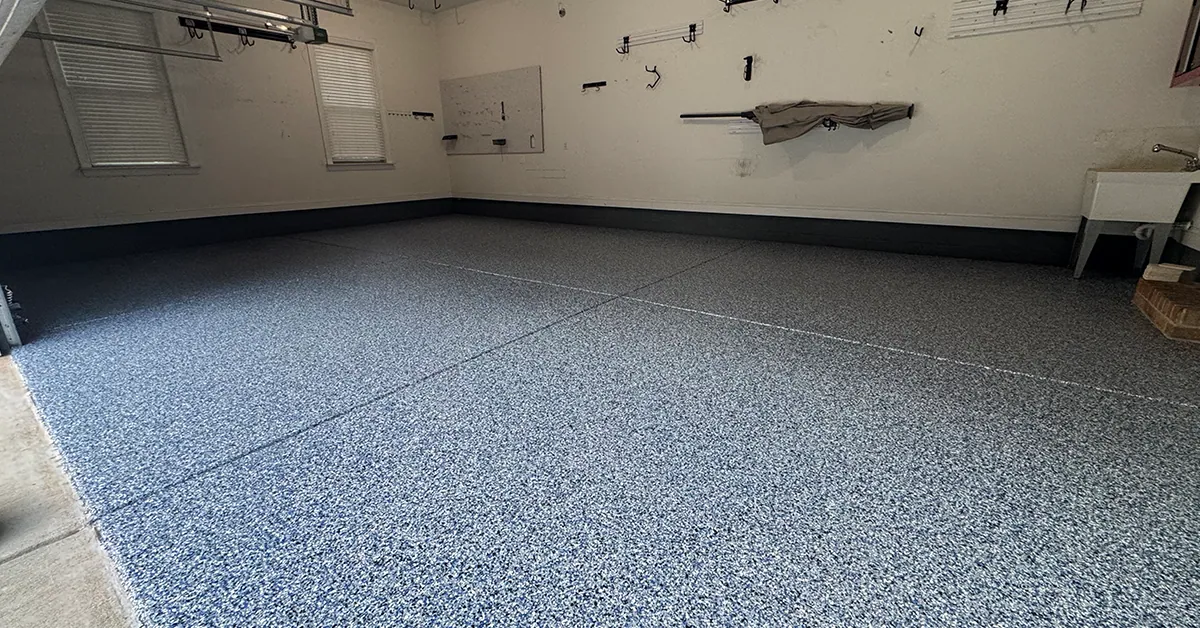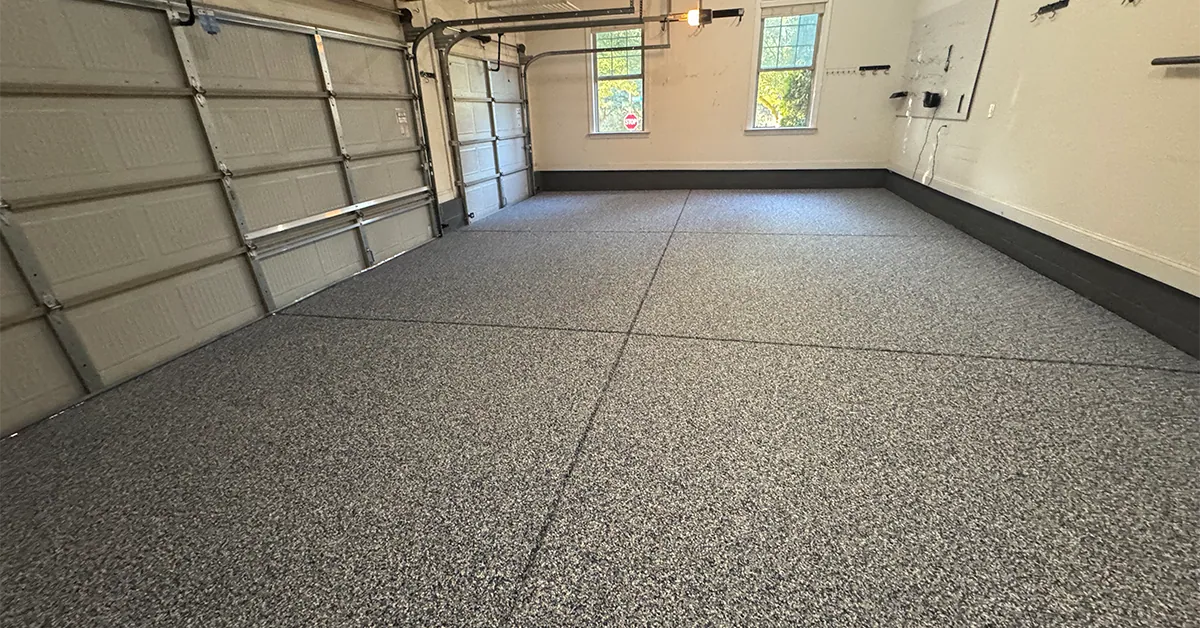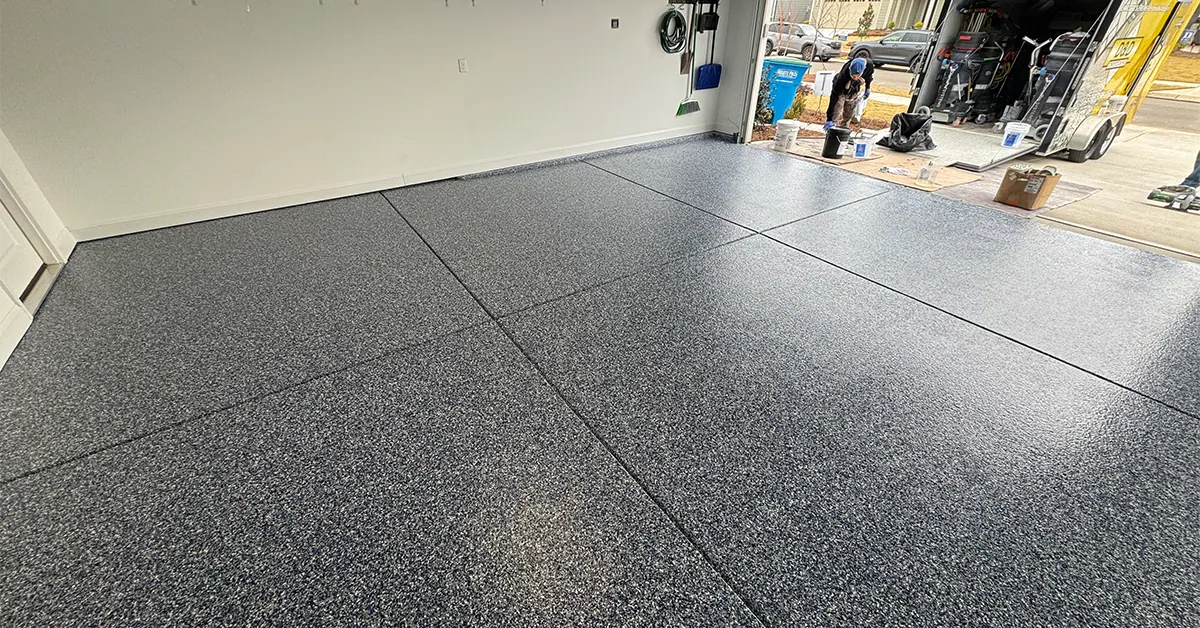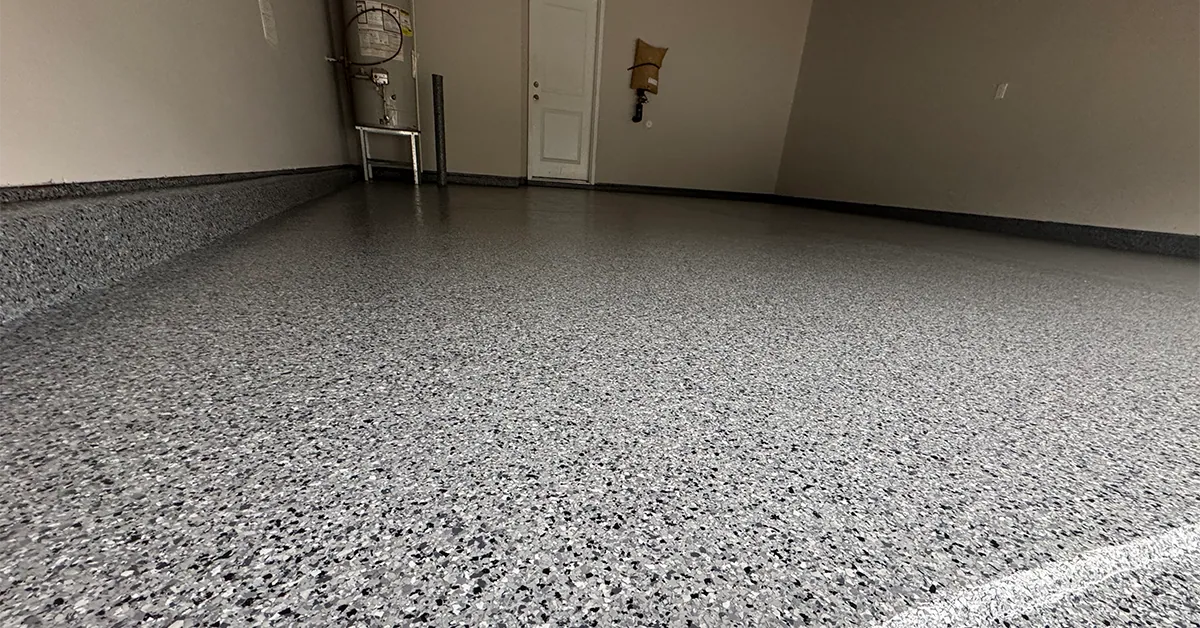
An epoxy garage floor is one of the lowest-maintenance surfaces you can put in a garage. Day to day, all it needs is a dust mop or a broom to keep grit off it, an occasional damp clean with a mild cleaner, and a quick wipe of spills before they sit. A properly built floor does not need waxing or resealing, because the polyaspartic top coat is the wear surface and the protection in one. The main things to avoid are abrasive pads and harsh chemicals, and dragging heavy or sharp objects across it. That is the whole routine. The reason it is this simple is the top coat, which is why a floor without a real one is harder to keep looking good.
Key takeaways
- Routine care is a dust mop or broom, an occasional damp clean, and prompt spill cleanup.
- A quality floor needs no waxing and no resealing; the polyaspartic top coat is the protection.
- Grit is the real enemy, because it grinds underfoot and under tires, so keeping it swept matters most.
- Avoid abrasive pads, harsh chemicals, and dragging heavy or sharp objects.
- Easy maintenance is a property of the top coat, so a floor without a real one is harder to keep clean.
After years installing these floors across the Charlotte metro area, the most common reaction we hear once a floor is in is surprise at how little it asks for. The hard work was in our install. Keeping it looking new is genuinely simple.
What Most Homeowners Get Wrong
The misconception runs in two directions. Some homeowners assume an epoxy floor needs special products, regular waxing, or periodic resealing to stay nice. Others assume that because it is tough, it needs nothing at all and can take any abuse.
Neither is right. A properly built floor does not need waxing or resealing, so the special-product routine is wasted effort. But it is not indestructible: grit left on the surface, harsh chemicals, and dragged equipment will still wear or mark it over time. The sweet spot is simple, consistent care, which is easy precisely because of how the floor is built. If you want the underlying reason the top coat does this work, see what epoxy flooring actually is.
How to Clean and Maintain an Epoxy Garage Floor
Here is the full routine, start to finish.
Keep grit off it. The single most useful habit is regular dust mopping or sweeping. Sand and grit are what actually wear a floor, because they grind against the surface underfoot and under tires. A quick pass with a dust mop or soft broom removes the thing most likely to dull the finish.
Damp clean as needed. When the floor needs more than dust removal, clean it with a mild cleaner and water and a soft mop, then rinse. A flake floor’s texture hides ordinary dirt well, so most floors only need this occasionally rather than on a schedule.
Wipe spills promptly. Wipe up oil, chemicals, and other spills before they sit. The top coat is resistant, but prompt cleanup keeps the surface easy and avoids any chance of staining or etching from aggressive substances.
Skip the wax and sealer. A properly built floor does not need a wax coat or a reseal, because the polyaspartic top coat is already the protective wear layer. Adding products on top is unnecessary and can leave a film.
Avoid the few things that mark it. Stay away from abrasive scrubbing pads, harsh or acidic cleaners, and dragging heavy or sharp objects across the floor. Use mats or pads under anything that would otherwise scrape it.
That is the entire maintenance program. How long that easy upkeep pays off ties directly to how long the floor lasts, since consistent care extends the life of a good floor.
What Affects How Easy It Is to Maintain
Not every coated floor is equally easy to care for, and the difference is built in.
The top coat. A real polyaspartic top coat is what makes the surface dense, scratch resistant, and easy to wipe. A floor with no top coat, or a thin one, stains and scratches more easily and is simply harder to keep looking good no matter how diligent you are.
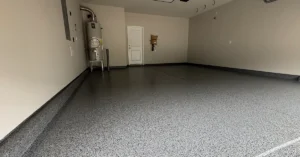
The finish. A flake finish has texture that hides dust and minor debris between cleanings and adds traction. Some floors also have slip resistance built into the top coat with fine glass beads, which is useful in a garage that sees water or oil.
The quality of the install. A floor with a clean, uniform finish and no thin spots cleans evenly. A patchy or poorly sealed floor has weak points that dirty and wear faster. In other words, easy maintenance starts at the install, not the cleaning closet.
What Happens When You Get This Wrong
Two things go wrong, and they pull in opposite directions. Over-maintaining a good floor, waxing it, sealing it, or scrubbing it with abrasive pads and harsh chemicals, can dull the finish or leave a film the floor never needed. Under-maintaining it, letting grit build up and spills sit, slowly grinds and stains the surface that simple care would have protected.
Neither ruins a well-built floor quickly, but both shorten how long it looks new, and abrasive or acidic cleaners can damage a top coat that would otherwise have lasted for years. The bigger point is that maintenance can only protect what the install delivered; it cannot rescue a floor that was built without a real top coat, which is part of why the build quality determines whether the floor was worth it.
Why How a Contractor Builds for Easy Maintenance Matters
The low-maintenance reputation of epoxy floors is earned at the install, not at the cleaning stage. A floor is only easy to keep clean if it was built with the layer that makes it that way.
A contractor who builds for easy maintenance seals the system with a genuine polyaspartic top coat for a dense, scratch-resistant, wipeable surface, broadcasts flake to full and even coverage so there are no weak or rough spots that trap dirt, and can add slip resistance into the top coat where a garage needs it. That is what a professionally installed epoxy floor coating gives you: a floor whose upkeep is a dust mop and an occasional rinse. We build it that way because the easiest floor to live with is the one finished correctly, and no cleaning routine can add a top coat that was never there.
The Bottom Line
Maintaining an epoxy garage floor is about as simple as flooring gets: keep the grit swept off, damp clean occasionally with a mild cleaner, wipe spills promptly, and skip the wax and harsh chemicals. The reason it is this easy is the polyaspartic top coat, which means the easy upkeep was decided when the floor was built. If you want a floor that is this simple to live with, request a free in-person estimate and we will build it with the top coat that makes it that way.