Table of Contents
- What most homeowners get wrong
- What the alternatives to an epoxy garage floor actually are
- Matching the option to how you use the room
- What happens when you get this wrong
- Why how each option bonds decides the outcome
- The bottom line
- Frequently asked questions
Direct Answer
The real alternatives to a flake epoxy garage floor are interlocking tiles, garage floor paint, rubber or vinyl rolls, polished concrete and a plain sealer. They separate on one thing: whether they bond into the slab or sit on top of it. The difference is how each one attaches: a flake system is a bonded multi-layer build and bonds; tiles, rolls and mats float; paint adheres to the surface without penetrating. Each of the floating options is genuinely better than a coating in one specific case, which is when you need the floor to come back up.
Key Takeaways
- The dividing line is bonding versus floating, not price.
- Tiles and rolls are the right answer for a rental or a floor that has to come up again.
- Paint sits on the surface with no wear layer and is the shortest-lived option.
- Polished concrete is a separate service with a different result, not a cheaper coating.
- Every seam and every edge is a place moisture and grit get underneath.
A contractor who installs more than one of the options below has no single answer to defend on a comparison like this one.
We have replaced tile, paint and roll-on kits across the Charlotte metro, and each one fails in a way you can predict from how it was applied.
What Most Homeowners Get Wrong
Most homeowners line these options up by price and assume they are buying the same outcome at different quality levels.
They are not. A bonded coating becomes part of the slab and cannot be removed without grinding. A tile floor sits loose and lifts out in an afternoon. Those are different products solving different problems, and the cheaper one is sometimes correct. What goes wrong is choosing a floating product because it was cheaper and then wanting it to behave like a bonded one.
And within the coating option there is a second comparison the price list hides. Coatings come in grades, and the grade decides how much material is left on the slab once it cures. A top-grade product leaves nearly all of it; a thinned retail one leaves a film. Both say the same word on the tin, which is why the difference between a real system and a kit is a material question before it is a price question. Without a grade named, two quotes are not measuring the same thing, whatever the numbers at the bottom say, and the equipment matters the same way: an industrial grinder opens the slab so the coating can key into it, where a rented buffer only polishes what is already there.
What the Alternatives to an Epoxy Garage Floor Actually Are
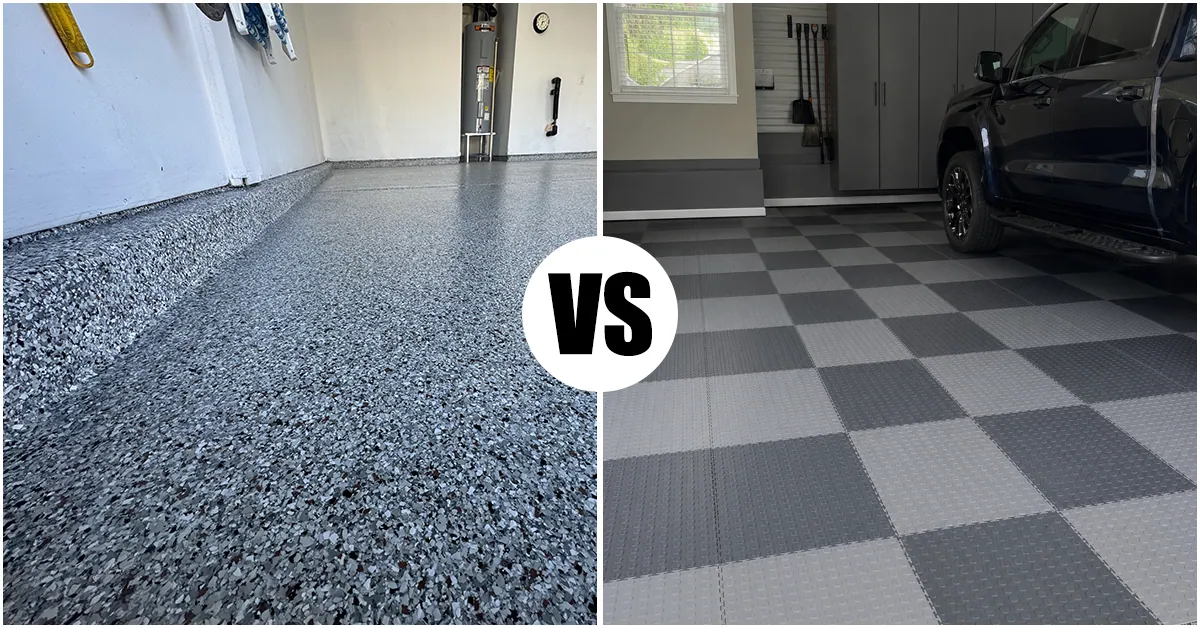
Interlocking tiles. PVC or polypropylene squares that snap together over the existing slab. Fast, no cure time, no prep beyond sweeping, and completely reversible. Every tile has a seam, and seams are where grit, water and oil work underneath. Under a parked vehicle the load concentrates on the tile edges.
Garage floor paint. A single coat that adheres to the concrete surface without penetrating it. No dedicated wear layer, which means the color layer is also the surface taking the tires. It is the least expensive option and the shortest-lived.
Rubber and vinyl rolls or mats. Rolled sheet over the slab. Comfortable underfoot, quiet, and useful in a gym-use garage. Traps moisture against the concrete underneath, and rolls curl at the edges over time.
Polished concrete. Mechanically grinding and honing the existing slab until the concrete itself shines, with no coating at all. Almost no upkeep and no coating to fail, and it depends entirely on the quality of the slab you already have. A pitted or patched garage slab does not polish well.
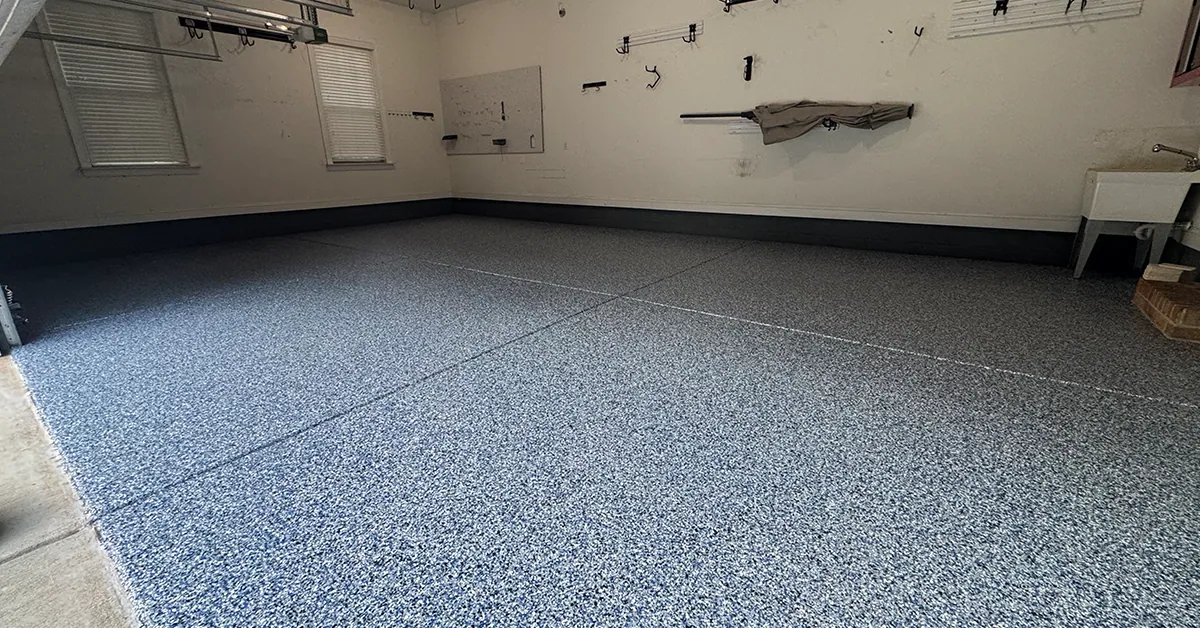
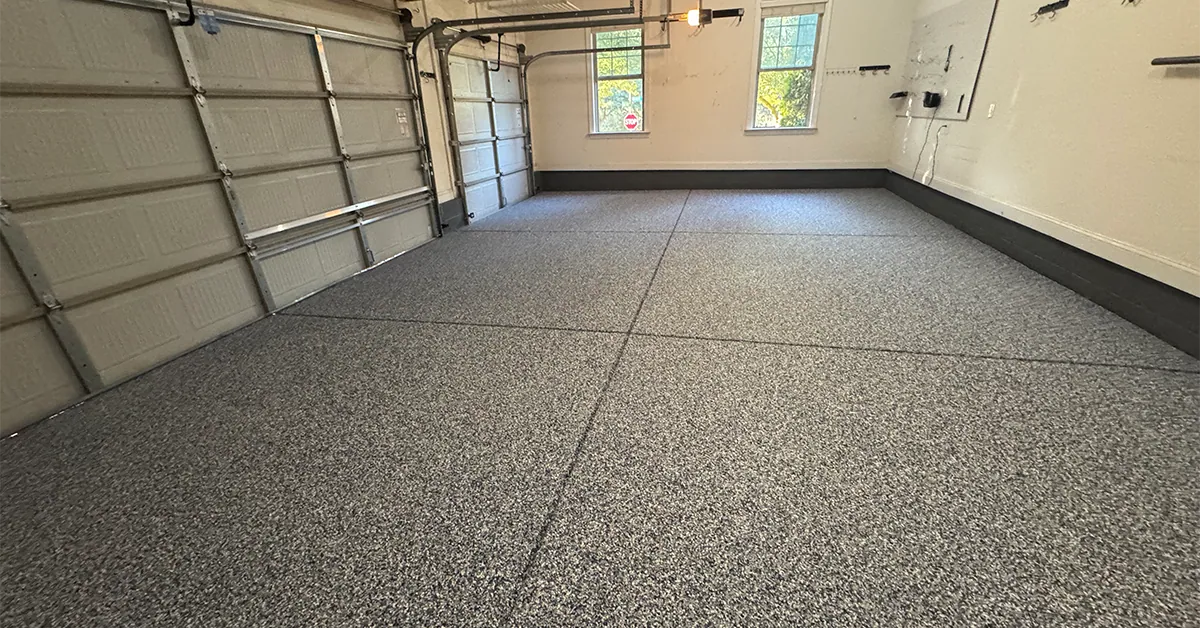
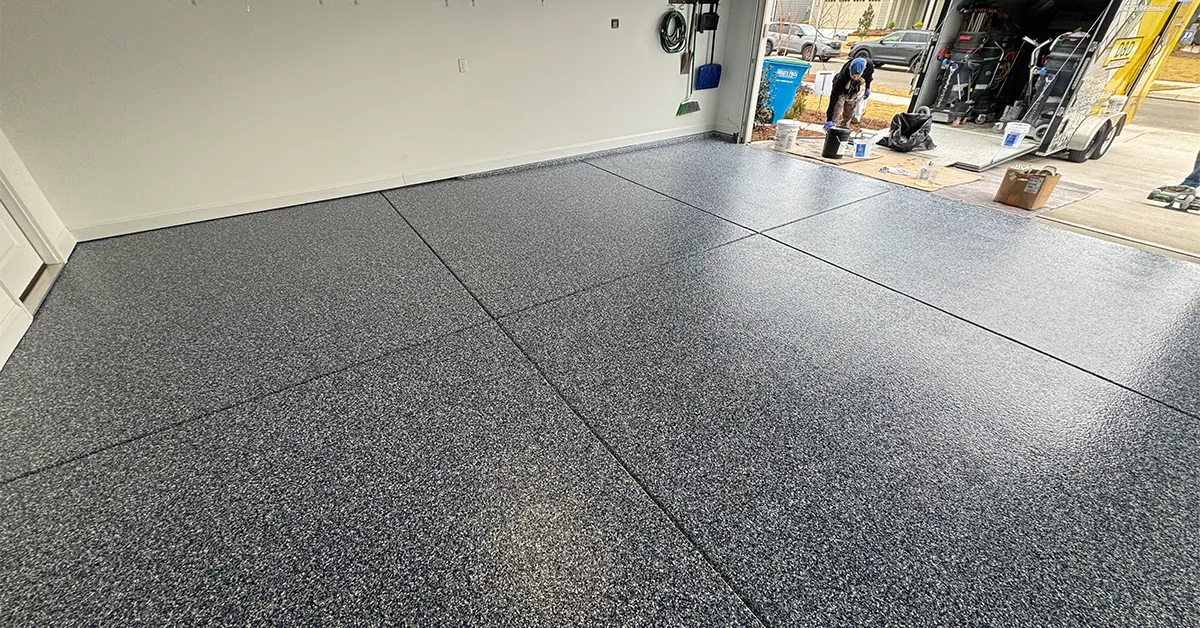
A flake epoxy system. Ground slab, an epoxy, polyurea or polyaspartic base coat, flake until the surface will not take another chip, polyaspartic topcoat. Bonded, seamless, with a dedicated wear layer.
Matching the Option to How You Use the Room
Where a competing option genuinely wins. In a rental, a reversible floor is the correct answer and a bonded coating is not. That is the honest limit on everything below: if the floor has to come up again, tiles win and no argument about seams changes that.
Whether you own the property. A bonded coating is a long-term commitment to a slab, so it only makes sense on a slab you expect to keep.
Whether the slab has to breathe or stay accessible. Anything sealed over a slab with a moisture problem traps that moisture. A slab passing vapor up from the ground looks no different from one that is not, which is why a moisture test at the estimate answers this rather than a look at the floor.
What the garage is used for. A gym-use garage benefits from the cushion of a rubber roll. A garage with vehicles and tools benefits from a bonded surface with no seams.
Slab condition. Polished concrete requires a good slab. A coating can bridge a poor one after repair. Tiles hide a poor one entirely without fixing it, and whether the slab is a candidate decides before any option does.
How long you want it to last. Paint measures in seasons, tiles in years if not driven on hard, and a properly installed flake system in the range where a warranty makes sense.
Whether seams matter. A garage that gets washed down or sees standing water is a bad case for any seamed or floating product.
What Happens When You Get This Wrong
Paint on a working garage floor is the most common regret. It peels at the tire paths first because there is no wear layer, and removing failed paint requires the same grinding a coating would have needed in the first place.
Tiles under a vehicle in a hot garage is the second. Concentrated weight at the seams plus heat produces flex and separation, and grit gets under the tiles where it grinds against the concrete.
Rubber rolls over a slab with a moisture issue traps the moisture and produces exactly the problem the homeowner was trying to cover.
Polished concrete on a poor slab is a fourth: polishing reveals everything in the concrete rather than hiding it, and there is no going back once it is honed.
Why How Each Option Bonds Decides the Outcome
Every failure above traces to the same variable: whether the floor is part of the slab or on top of it.
A bonded coating requires the slab to be mechanically ground to white open porous concrete, tested for moisture, and repaired before anything is applied. That is why it needs a professional and why it lasts. A floating product needs none of that, which is precisely why it is fast, reversible and vulnerable at every seam.
That is also why the honest recommendation changes with the situation rather than with the product. More than one of these is something we install as part of our garage floor coating options, which is why we have no single answer to defend. Which option we recommend comes from the slab and the use, decided at the estimate rather than from what is in the van.
The Bottom Line
If the floor needs to come up again, buy tiles and do not let anyone talk you into a coating. If it does not, the seams and the missing wear layer are what you are paying for with every floating option. For a garage that gets used and stays yours, a bonded flake system with a dedicated topcoat is the answer, and the estimate is where the slab tells us whether it can take one.