Table of Contents
- What most homeowners get wrong
- How epoxy and garage floor paint compare
- Which one actually lasts
- What happens when you get this wrong
- Why how we build the system matters
- The bottom line
- Frequently asked questions
Direct Answer
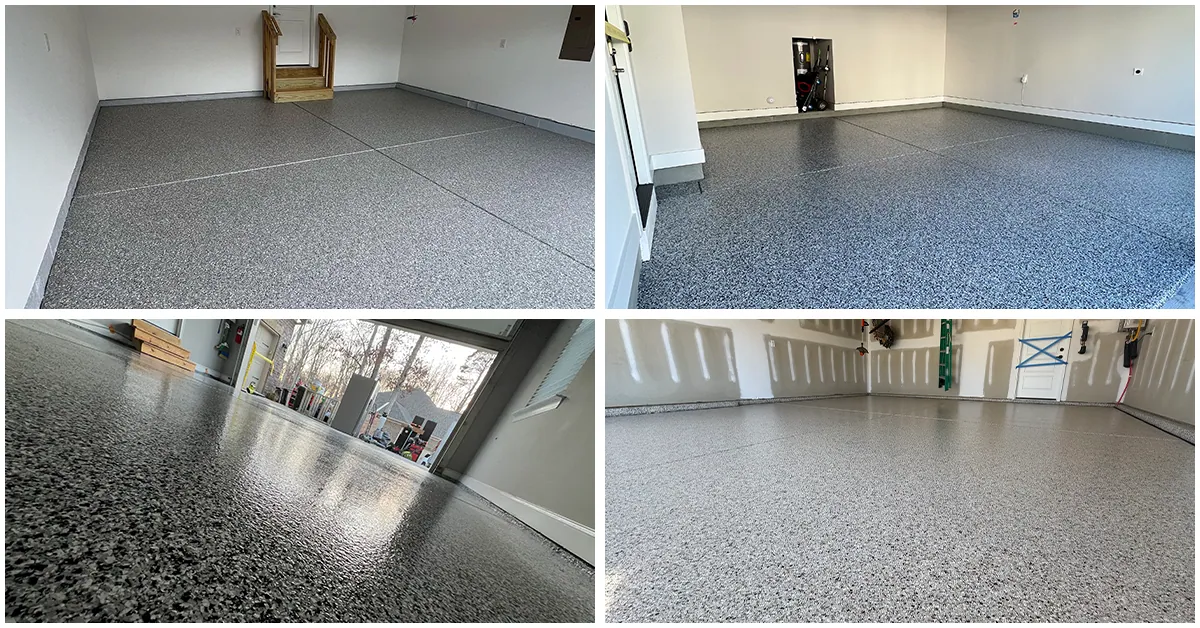
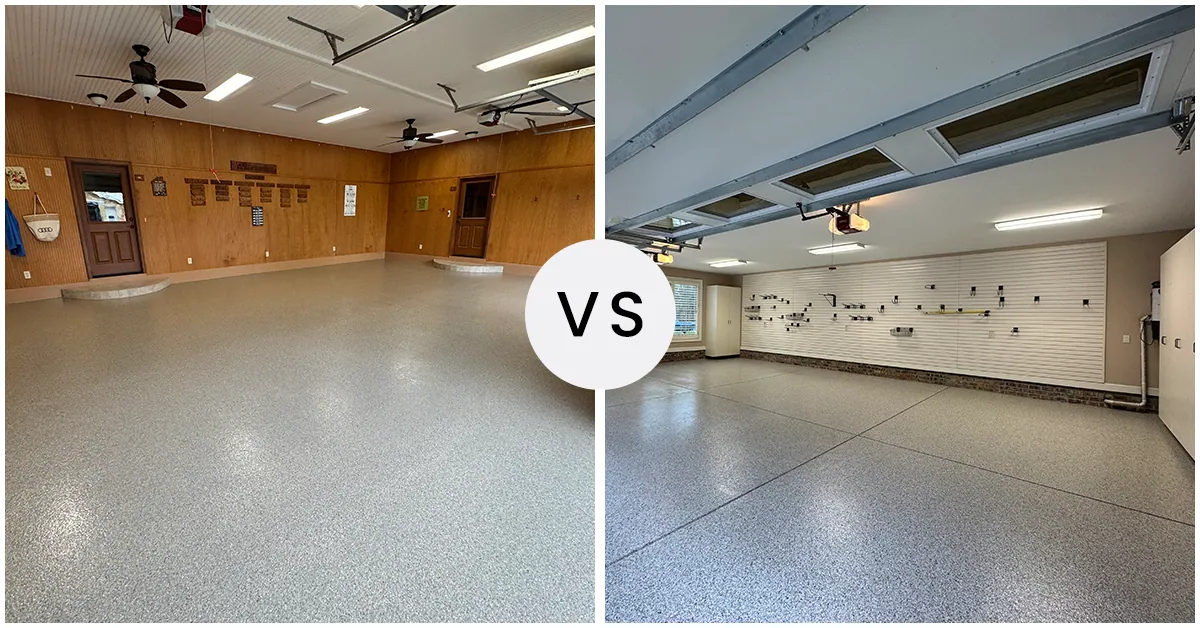
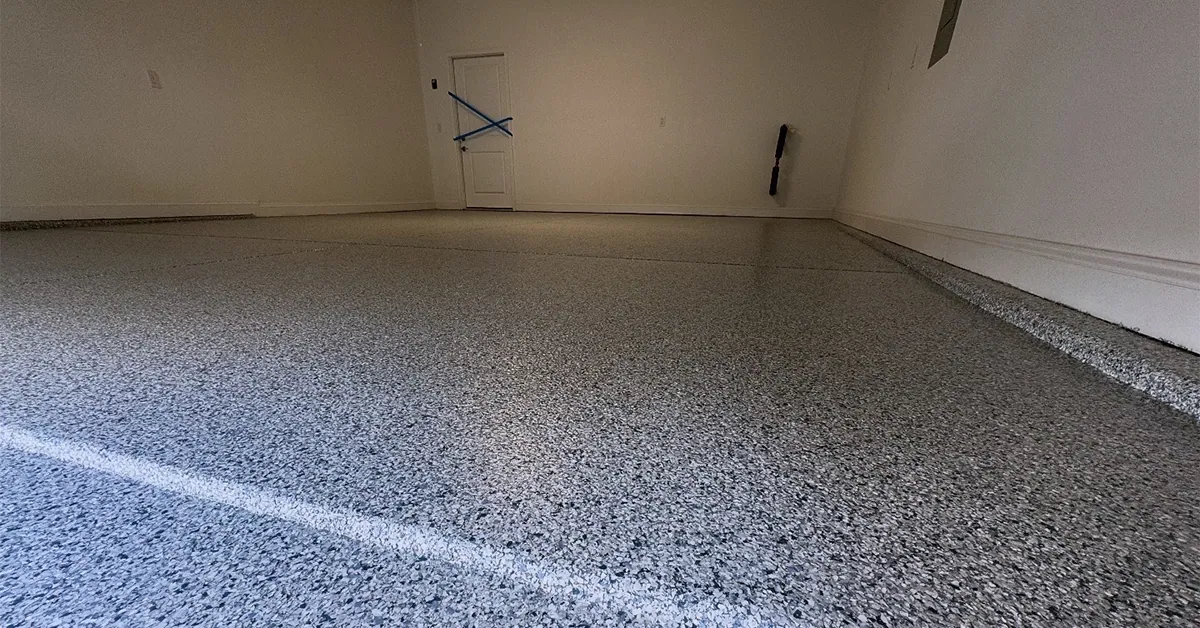
A professionally installed epoxy system lasts dramatically longer than garage floor paint. Garage floor paint, whether it is a basic acrylic or a thin retail epoxy kit, is a surface coating applied directly over the concrete with little to no mechanical prep, and it wears through under hot tires and daily traffic within a season or two. A true flake epoxy system starts with diamond ground surface prep so the base coat bonds into the concrete rather than sitting on it, then adds a polyaspartic topcoat engineered for UV and abrasion resistance. Paint is a paint job. Epoxy, done right, is a bonded system, and that difference in how each one is built is exactly why one lasts for years and the other does not.
Key takeaways
- Garage floor paint is a thin surface coating with minimal prep behind it; a true epoxy system bonds into a diamond ground slab.
- Paint typically wears through, peels, or lifts under hot tires within a season or two of daily use.
- A flake epoxy system with a polyaspartic topcoat is engineered to hold up to years of vehicle traffic and chemical exposure.
- Retail “epoxy” paint kits are a different, much thinner product category than a professionally installed epoxy system.
- The gap in cost between paint and epoxy reflects the gap in how long each one actually lasts.
We get called in to redo peeling garage floor paint often enough across the Charlotte metro area to know exactly why it fails, and it almost never comes down to which brand of paint was used.
What Most Homeowners Get Wrong
The word “epoxy” appears on plenty of retail paint cans, which leads homeowners to assume a can from the hardware store and a professionally installed epoxy floor are the same category of product. They are not. A retail kit is a thin, low solids coating rolled directly over bare or lightly cleaned concrete with no real surface preparation. A professional system starts with diamond grinding the slab and uses a high solids base coat that leaves a far thicker, fully bonded film once cured. For the fundamentals, see what epoxy flooring actually is.
How Epoxy and Garage Floor Paint Compare
Here is where the two products actually diverge.
- Surface prep. A true epoxy system starts with diamond grinding to open the concrete profile so the coating bonds into the slab. Paint is typically rolled over a cleaned but unprepared floor, so it has nothing to grip onto beyond the surface.
- Material thickness and grade. A professional epoxy base coat is applied at a real film thickness with a genuine polyaspartic topcoat over it. Retail paint kits are thin, single coat products with no comparable topcoat.
- Bond strength. Because it bonds into a ground slab, a professional epoxy floor resists peeling from hot tire pickup. Paint sits on the surface and lifts easily once heat and tire pressure work at the bond line.
- Chemical and abrasion resistance. A polyaspartic topcoat resists oil, gas, and cleaning chemicals along with daily abrasion. Paint offers minimal resistance and stains or wears through in high traffic areas quickly.
- Lifespan. A properly installed epoxy system is engineered to last for years under normal use. Garage floor paint commonly needs touch ups or a full redo within a season or two.
None of that is a knock on paint as a product category, it simply is not built or applied the same way a professional coating system is. For how paint stacks up against every other garage floor option, see our guide on the best garage floor coating.
Which One Actually Lasts
For a garage that sees regular vehicle traffic, a properly installed flake epoxy system lasts because it is bonded into the concrete and sealed with a topcoat engineered for the abuse a garage floor takes. Garage floor paint can be a reasonable short term or budget option for a garage with light use, but it is not built to survive daily hot tire pickup and chemical exposure the way a bonded system is. If budget is the main driver in the decision, what an epoxy garage floor actually costs breaks down where that investment goes, and how long an epoxy garage floor lasts covers exactly what that investment buys over time.
What Happens When You Get This Wrong
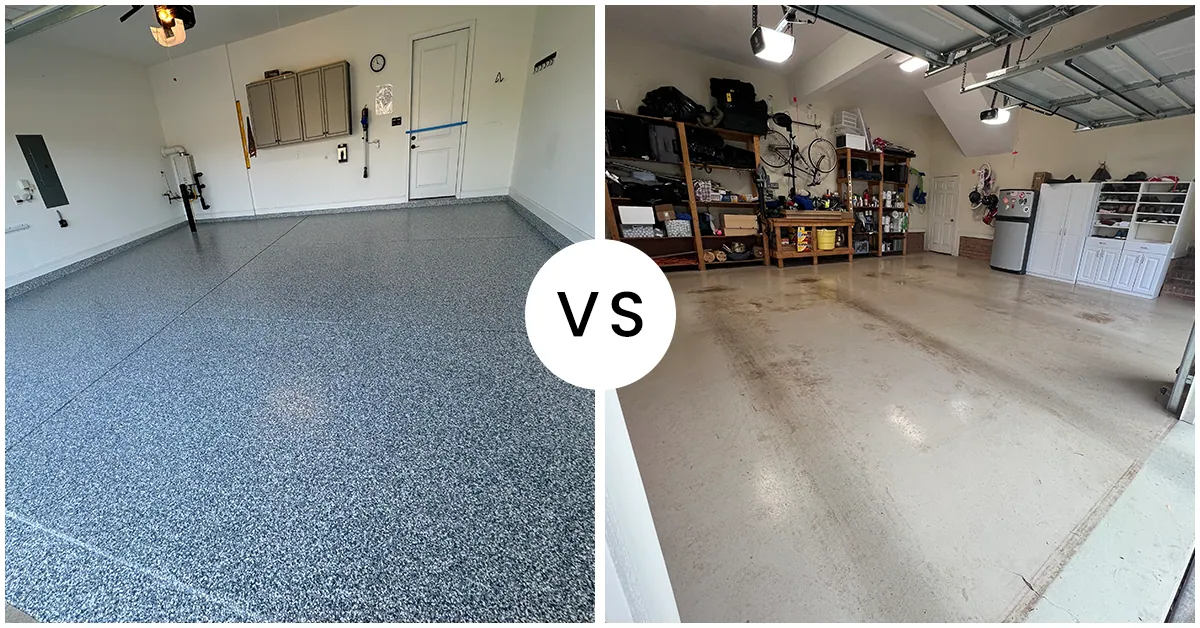
Garage floor paint applied without proper prep, or expected to perform like a full coating system, typically starts peeling, bubbling, or lifting at the tires within months to a couple of years. Once that happens, the peeling paint has to be fully removed and the slab prepped properly before a real system can go down, so a floor that was meant to save money often ends up costing more once it is redone the right way.
Why How We Build the System Matters
The reason our floors outlast garage floor paint is not a secret ingredient, it is the process. We diamond grind every slab before anything is applied, select a base coat matched to the moisture and temperature conditions on site, and seal the system with a polyaspartic topcoat rather than leaving a single thin coat exposed. That sequence, done in the right order every time, is what separates a professional epoxy garage floor coating that lasts from a paint job that does not.
The Bottom Line
Garage floor paint and a professionally installed epoxy system are not really the same category of product, and that is why one lasts and the other does not. Paint sits on the surface with minimal prep behind it, while a true epoxy system bonds into a diamond ground slab and is sealed with a polyaspartic topcoat built for daily wear. If you want a floor built to last rather than repainted every season, request a free in-person estimate and we will walk the floor with you.
Frequently Asked Questions
Is garage floor paint just a cheaper version of a real epoxy coating?
Not in practice. Retail paint kits are thin, low solids coatings applied over minimal prep, while a professional epoxy system uses diamond ground prep and a full layered build with a polyaspartic topcoat.
Why does garage floor paint peel so fast?
Paint is applied directly over concrete with little or no mechanical surface prep, so it has nothing to bond into. Hot tires and daily traffic work at that weak bond until the coating lifts or peels.
Is epoxy garage floor paint worth it compared to a professional install?
For most garages, no. Retail kits are a lower cost, shorter term option, but they will not hold up to daily vehicle use the way a properly installed system does.
How long does garage floor paint typically last?
It varies with product and use, but paint commonly shows wear, peeling, or lifting within a season or two of regular vehicle traffic, well short of what a bonded epoxy system delivers. Once it starts lifting at the tires, the whole surface usually needs to be stripped before anything new can go down.
Can you put epoxy over old garage floor paint?
In most cases the old paint has to be ground off first so the new system can bond directly to the concrete, which is part of the surface prep on any repaint or recoat project. Coating directly over old paint without grinding just traps the same weak bond under the new layer.
How long does a professional epoxy floor last compared to paint?
A properly installed flake epoxy floor with a polyaspartic topcoat is engineered to last 15 to 20 years or more under normal residential use. Garage floor paint does not carry anything close to that kind of engineered lifespan.