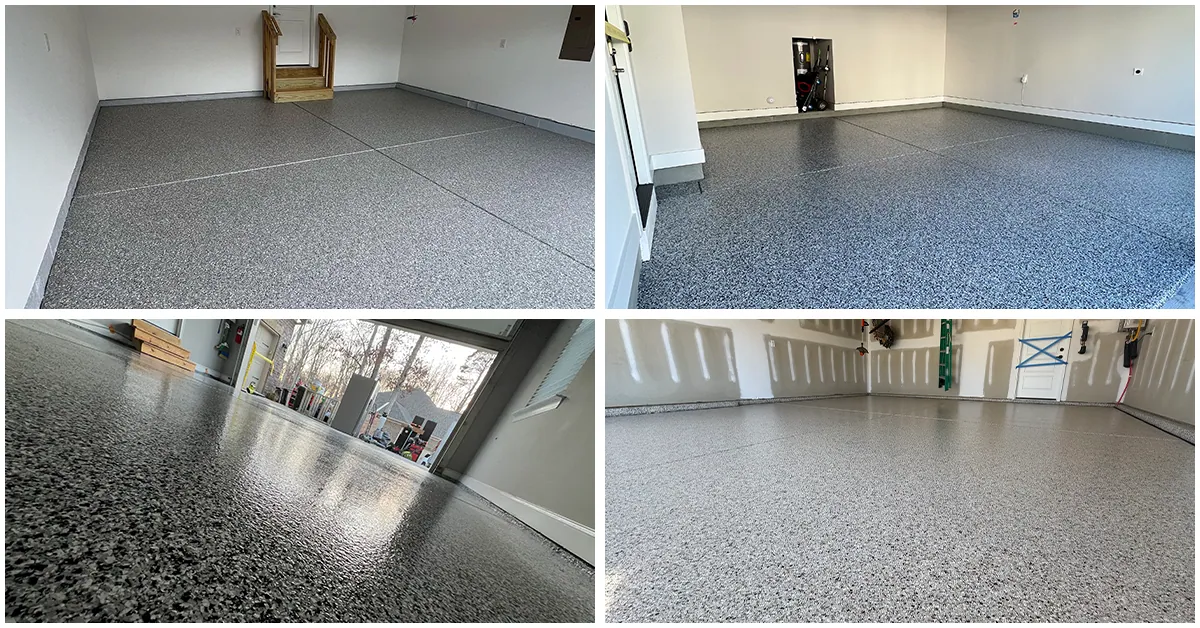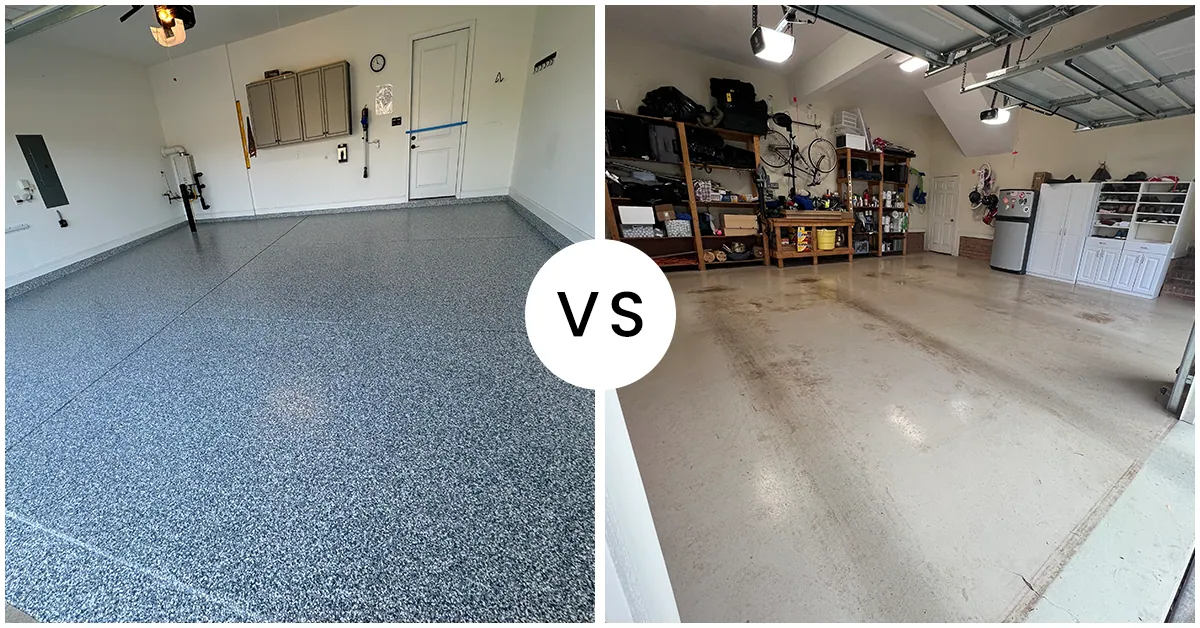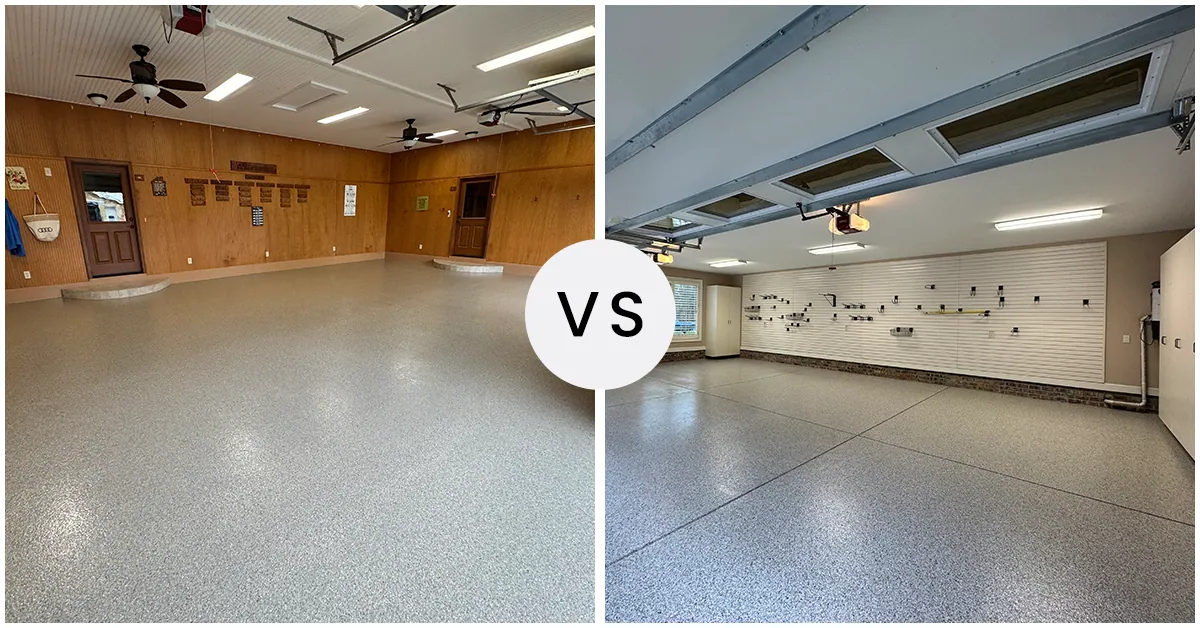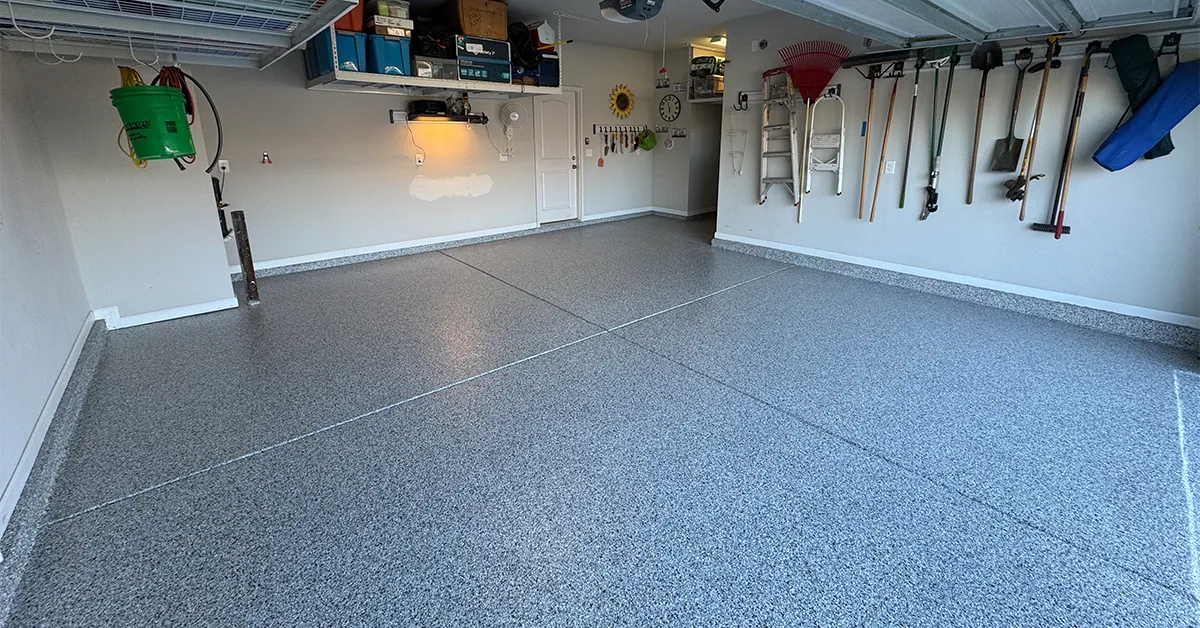
Most professionally installed epoxy garage floors fall between about $5.50 and $9.00 per square foot for a standard flake system, and roughly $10 to $13 or more per square foot for a metallic finish. For a typical two-car garage that usually lands somewhere in the low to mid thousands, depending on the size of the slab, its condition, and the system you choose. The price gap between quotes is almost always explained by what is included: how the concrete is prepared, the grade of the coating, and whether there is a real top coat sealing the floor. A number far below that range is not a better deal, it is usually a sign that a step or a material was cut, and that floor often costs more in the end because it has to be redone.
Key takeaways
- A standard flake system runs roughly $5.50 to $9.00 per square foot installed; metallic finishes run about $10 to $13 or more.
- Slab size and condition are the biggest cost variables, followed by the coating system you choose.
- The cheapest quote usually wins by leaving something out: grinding, a high solids base, or the top coat.
- A failed cheap floor has to be ground off and redone, so it becomes the most expensive route to the floor you wanted.
- A written, all-inclusive quote is the only way to compare two contractors honestly.
After years coating garage floors across the Charlotte metro area, the question we hear first is almost always about price, and the honest answer is that the number on a quote means very little on its own. Two floors at the same price per square foot can be built to completely different standards, so the real question is not just what it costs but what you are getting for it.
What Most Homeowners Get Wrong
The most common mistake is treating epoxy flooring as a single priced product, like carpet by the yard, when it is a layered system whose cost is mostly hidden. Homeowners compare the bottom-line numbers on two quotes and assume the lower one is the same floor for less money.
It rarely is. The price is driven by things you cannot see in the finished floor: whether the slab was diamond ground, whether the base coat is a high solids product or a thinned down one, and whether there is a true top coat over the flake. A floor that skips those costs less to install and looks the same on day one, which is exactly why the cheap quote is tempting and exactly why it fails. Understanding what epoxy flooring actually is as a system rather than a product is what lets you read a price correctly.
What an Epoxy Garage Floor Actually Costs
Here are the ranges we see for professionally installed floors, materials and labor included.
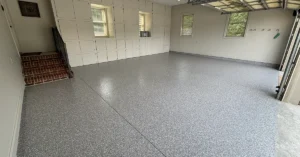
A standard flake system, which is the most popular choice for a garage, runs roughly $5.50 to $9.00 per square foot. That covers diamond grinding, a high solids base coat, flake broadcast to full coverage, and a polyaspartic top coat. For a two-car garage of around 400 to 500 square feet, that puts most floors in the low to mid thousands.
A metallic finish, which creates a marbled, reflective look, runs about $10 to $13 or more per square foot because it uses more expensive materials and takes more skill and time to install. Metallic is usually chosen for living spaces, showrooms, and garages where the floor is meant to be a feature rather than just a durable surface.
Where you land inside those ranges depends mostly on the size and condition of your slab, covered next. If you are deciding between systems, the differences in look, durability, and price are laid out in how the coating systems compare.
What Drives the Price
Square footage is the obvious one, but the variables that move a quote up or down are these.
Slab condition. A clean, sound slab grinds and coats quickly. A floor with cracks, pitting, oil staining, or old failing coating needs repair and extra prep first, and that labor adds to the price. Cracks and control joints are cleaned and filled before coating, which protects the finished floor but adds time.
The coating system. A standard flake floor sits at the lower end of the range. A metallic finish sits well above it. The base coat also matters, since a high solids product costs more than a thin one and is part of why a real quote is higher than a bargain one. How the slab is turned into a finished floor is covered step by step in how an epoxy garage floor is installed.
Prep requirements. Diamond grinding is standard and non-negotiable for a floor that lasts. If a slab tests high for moisture, it needs a vapor barrier before coating, which adds cost but prevents the floor from peeling later. Skipping these is how a cheap quote gets cheap.
Who does the work. An in-house crew installing a full system to manufacturer specification costs more than a crew cutting corners, and it is the difference between a floor that lasts and one that does not. The lower number on a subcontracted, single-coat job is not the same product.
What Happens When You Get This Wrong
Choosing the lowest quote is where the real cost hides. When a coating fails, and a cut-corner floor often does within a year or two, it cannot simply be recoated. The failed coating has to be ground off the slab before a new system can go down, which means you pay for removal on top of paying for the floor a second time. The cheapest quote becomes the most expensive route to the floor you actually wanted.
A thin or improperly cured floor peels at the tires, bubbles where moisture was never tested for, and wears through where there was no real top coat. None of that shows up in the price you were quoted, only in the bill that comes later. A floor built correctly the first time, and the kind of service life you should expect from one, is covered in how long an epoxy garage floor lasts.
Why How a Contractor Quotes Matters
Most quotes give you a single number and leave out what produces it. The ones worth trusting show their work: the prep method, the base and top coat products, the moisture and crack handling, and what the warranty covers. The difference between two prices is almost never the same floor at two margins, it is two different floors.
A contractor who quotes the right way walks the slab in person, measures it, checks its condition, and prices the actual system the floor needs rather than a per square foot guess over the phone. The quote names the products and the prep, so you can see exactly what you are paying for. That is what a properly scoped professional epoxy garage floor coating quote looks like, and it is the only kind you can compare honestly against another. We quote that way on purpose, with the owner walking every estimate, because a price you cannot read is not a price you can trust.
The Bottom Line
Epoxy garage floor pricing is less about finding the lowest number and more about reading what the number includes. A flake system in the range of $5.50 to $9.00 per square foot, or a metallic above that, buys a floor built to last when the prep, materials, and top coat are all there. A quote far below that is not a deal, it is a floor missing something you will pay for later. If you want a real number for your garage rather than a guess, request a free in-person estimate and we will measure the slab and price the system it actually needs.
Frequently Asked Questions
How much does it cost to epoxy a two-car garage?
Most two-car garages run somewhere in the low to mid thousands for a standard flake system, based on a rate of roughly $5.50 to $9.00 per square foot and a typical size of 400 to 500 square feet. The exact number depends on the slab’s condition and the system you choose, which is why an in-person measurement beats a phone estimate.
Why are some epoxy quotes so much cheaper?
A lower quote almost always leaves something out: diamond grinding, a high solids base coat, the top coat, or moisture testing. The floor looks the same on day one and fails sooner, so the savings up front usually turn into a full redo later.
Is a metallic epoxy floor worth the extra cost?
Metallic costs more because the materials are pricier and the install takes more skill, so it is worth it when the look matters to you, such as a showroom-style garage or a finished living space. For a working garage where durability is the goal, a flake system delivers the same protection for less.
Does the condition of my concrete change the price?
Yes. A clean, sound slab is quick to prep, while cracks, pitting, oil staining, or an old failing coating need repair and extra grinding first. The worse the starting condition, the more prep labor the quote includes.
Can I just get a price over the phone?
You can get a rough range, but not an accurate quote. The real number depends on the slab’s size, condition, and moisture, which a contractor confirms by measuring and inspecting it in person. A firm phone price usually means assumptions that change once the crew arrives.