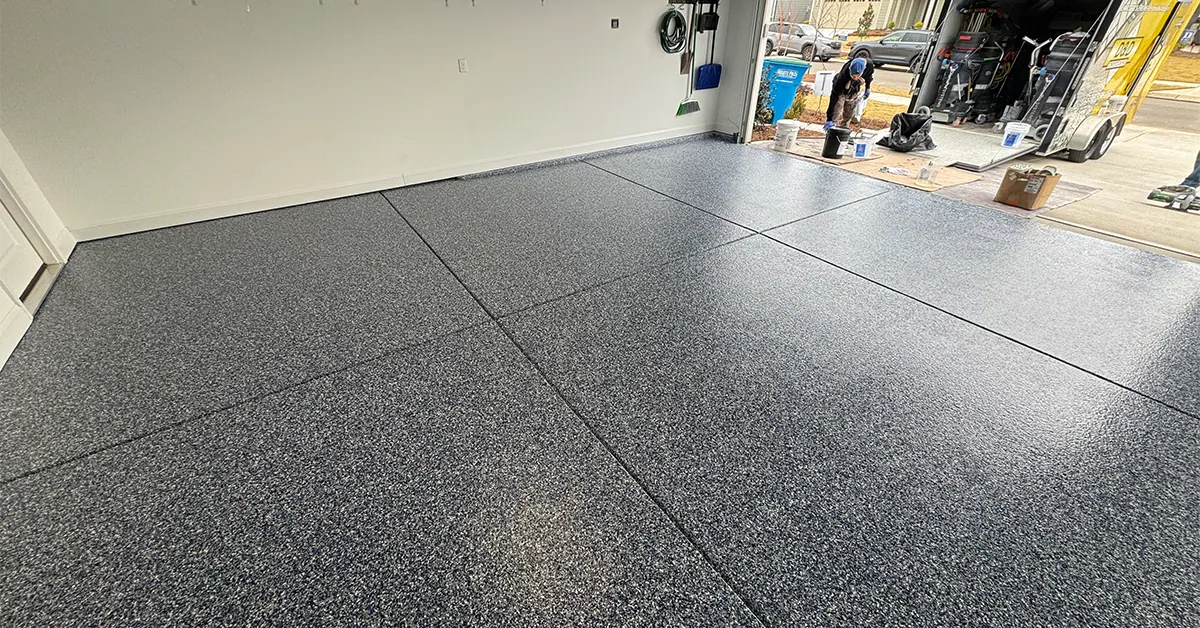
Choosing an epoxy flooring contractor comes down to six things: how they prepare the slab, whether they match the coating system to your conditions, the grade of materials they use, who actually shows up to do the work, what their warranty really covers, and what their track record and finished work show. The cheapest per square foot quote is rarely the comparison that matters, because two floors at the same price can be built to completely different standards. A contractor who diamond grinds the concrete, tests it for moisture and hardness before coating, and installs to manufacturer specification gives you a floor that lasts. One who skips those steps does not, no matter how clean the quote looks. The right questions sort the two apart fast, and this guide walks through exactly what to ask and the warning signs that a price is too good to be true.Surface prep is the step that decides whether a floor lasts, and it is the first thing to ask any contractor about.Key takeaways
Surface prep is the single biggest predictor of whether a floor lasts. Diamond grinding beats acid etching or pressure washing every time.
A real contractor matches the system to your slab’s moisture, sunlight, and temperature, not to a price target.
Material grade matters. A high solids base coat and a true polyaspartic top coat outlast thin big box products.
In house crews and a single accountable owner beat rotating subcontractors.
A delamination warranty is only as strong as the company standing behind it.
Vet the company itself: time in business, Google reviews, online presence, and photos of real finished work that looks crisp and uniform.
We have been called in to redo enough failed coatings across the Charlotte metro area to know that almost every one traces back to the same short list of shortcuts, and the good news is that every one of them is something you can screen for before you sign anything. Choosing well is less about finding the lowest number and more about knowing which questions expose how a floor will actually be built.
What Most Homeowners Get Wrong
The most common mistake is comparing contractors on price per square foot as if every quote describes the same floor. It does not. The number on the page says nothing about whether the slab will be ground or just rinsed, whether the base coat is a high solids product or a thinned down one, or whether there is a real top coat sealing the system at all.This happens because the finished floors look similar in a photo. A professionally installed flake system and a weekend coating can both look glossy and colorful on day one, so the easiest thing to compare becomes the price. The difference shows up a year or two later, when one floor still looks new and the other is peeling at the tires. Understanding what epoxy flooring actually is as a layered system rather than a single product is the first step to reading a quote correctly.
What to Look For in an Epoxy Flooring Contractor
In our experience, a good contractor is not hard to identify once you know what to look at. Six things matter more than anything else, the first five about the floor itself and the last about the company behind it.
How they prep the slab
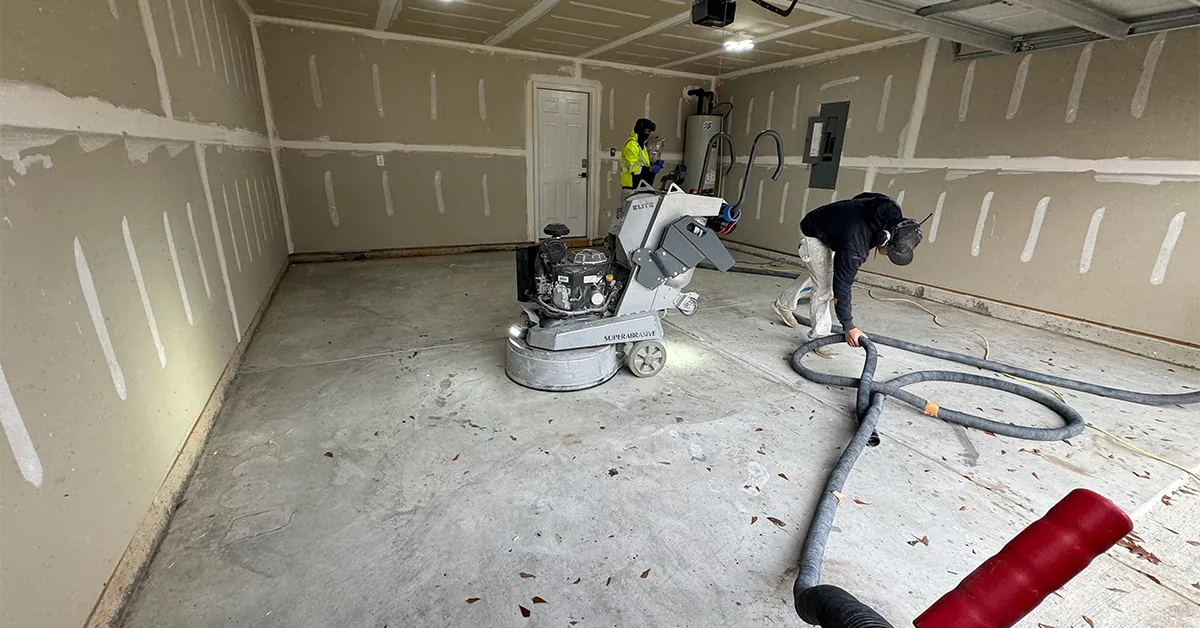
Ask how they prepare the concrete before any coating goes down. The right answer is diamond grinding, which uses diamond tooling to open the pores of the concrete and create the surface profile a coating needs to bond. Acid etching and pressure washing do not produce that profile, and a coating laid over an unprepared slab is the leading cause of failure in this industry. The way the floor is actually installed starts with prep, and a contractor who treats it as optional is telling you how the rest of the job will go.
Whether they match the system to your conditions
There is no single coating that is right for every floor. Epoxy has the strongest bond and the best built in moisture tolerance, which makes it the standard base coat for an indoor garage. Polyurea is more flexible and cures in cold temperatures where epoxy will not set. Polyaspartic is the most UV stable and scratch resistant, which is why it is used as the top coat on nearly every system. A contractor who asks about moisture, sunlight, and how you use the space is matching the system to the slab. One who quotes the same product for every job is not.
The grade of materials
Material grade is where cheap quotes quietly cut corners. A professional system uses a high solids base coat, often a 100 percent solids epoxy, that leaves a full thickness layer once cured, plus a genuine polyaspartic top coat. Thin, water based, or big box products leave a fraction of that film and skip the top coat entirely. If you are weighing this against a store kit, the gap is the same one covered in what is better than epoxy for a garage floor: the material class, not the label, is what determines how it holds up.
Who does the work
Ask whether the crew is in house or subcontracted. A company that sends its own trained crew controls the standard on every job. A company that rotates subcontractors does not, and the person who sold you the floor may never be on site. Owner accountability matters here, because the person who stands behind the warranty should be the same person who oversaw the install.
What the warranty covers
Most warranties in this industry are written against delamination, the coating peeling or separating from the concrete. A long warranty period only means something if the company is established enough to honor it and the warranty actually names what it covers. Ask what voids it, how long the company has been operating, and whether the warranty is in writing.
Their track record and finished work
The first five points are about how the floor is built. The last is about whether you can trust the company to build it that way, and it is easy to check before you ever call.
Check how long they have been in business. An established local contractor is far more likely to still be around when a warranty matters years down the line.
Check their Google reviews. Read for patterns rather than the star rating alone, and pay attention to how they handled the jobs that did not go perfectly.
Check their online presence. A real, active local business with a consistent presence is a safer bet than a name with no footprint.
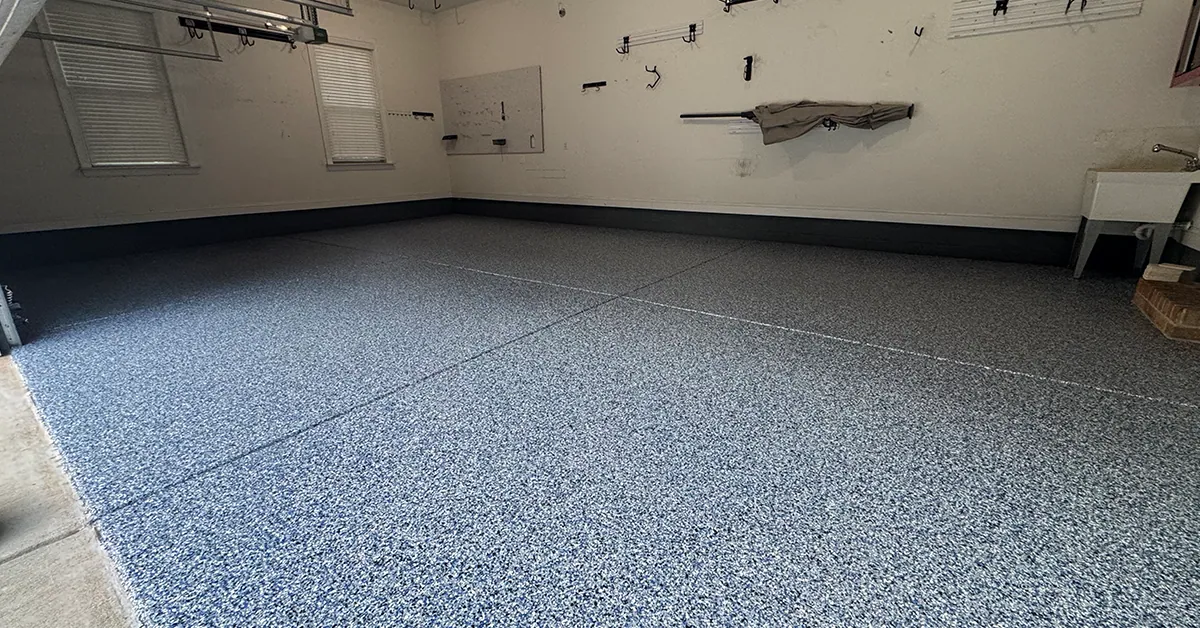
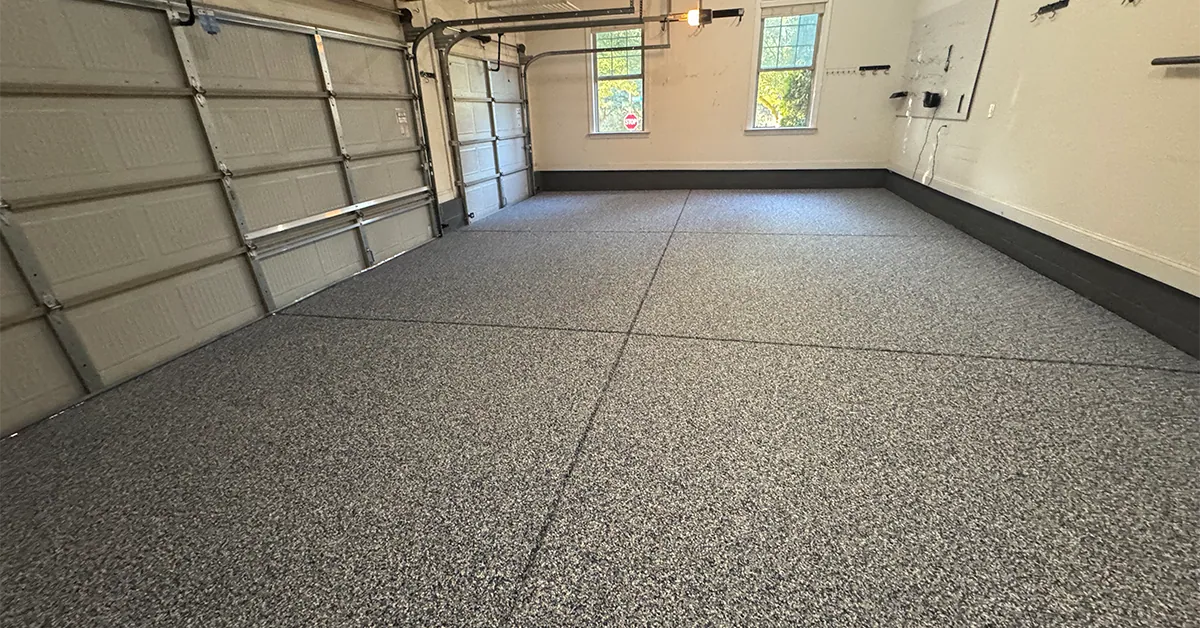
Look at photos of their actual finished work, not stock images. A quality floor looks crisp and uniform from edge to edge. If the floors in their own photos look patchy or uneven, the work on yours probably will too.
The Questions That Separate a Real Installer From a Cheap Quote
Once prep, system, materials, crew, and warranty are on the table, a few direct questions expose the rest. Ask how they handle cracks and control joints, because a real installer mechanically cleans and fills them with a polyurea crack mender before coating rather than coating straight over them. Ask whether they moisture test the slab, since a base coat applied over a slab with high moisture can peel later, and the test is what tells the crew whether a vapor barrier is needed first. Ask what a finished floor should look like up close, because the honest answer is that there should be no visible seams, roller marks, thin spots, or uneven flake anywhere on it.The warning signs of a bad epoxy floor job are consistent. Roller marks in the top coat, patchy or thin flake coverage, coating on the walls and baseboards, and visible lines where one section meets another all point to a crew that rushed the chemical window or did not have the experience to work within it. A quote that comes in far below the others usually explains itself in one of these ways once the floor is down. If you want to see how those shortcuts play out in dollars, what an epoxy garage floor actually costs breaks down where the price really goes.
What Happens When You Get This Wrong
The cost of choosing wrong is not just a floor you do not like. When a coating fails, it has to be ground off before a new one can go down, so the cheapest job often becomes the most expensive route to the floor you wanted in the first place. A coating laid over an unprepared or untested slab can peel, bubble, or delaminate within a year, and hot tires will lift a thin or improperly cured top coat right off the surface.A warranty does not save you here if the company that wrote it is gone or refuses to honor it. That is why how the floor is built matters as much as how long it is promised to last. A properly installed system is engineered for years of service, and how long it lasts comes down almost entirely to the prep, the materials, and the install quality you screened for up front.
Why How a Contractor Approaches the Work Matters
Most coating quotes describe a result. The ones worth trusting describe a process. The difference between a floor that lasts and one that fails is rarely the color or even the price. It is whether the crew prepped the slab correctly, matched the system to the conditions, and worked within the chemical window the products require.A contractor who does this right grinds every slab with diamond tooling rather than etching it, tests the concrete for moisture and hardness before choosing a base coat, repairs cracks and joints before coating, and broadcasts flake to full coverage while the base is still wet so the finish is even from one end to the other. The top coat goes on with no roller marks, the edges stay crisp, and nothing lands on the walls. That is what a professional epoxy garage floor coating looks like when it is built to standard rather than to a price.It also matters who is accountable for that standard. When the same person walks the estimate, oversees the crew, and stands behind the warranty, there is no gap for the quality to slip through. We run it that way on purpose, with in house crews and the owner on every job, because the floor is only as good as the process behind it and someone has to own that process from the first measurement to the final walk through.
The Bottom Line
Choosing an epoxy flooring contractor is really about reading past the price to the process underneath it. Ask how they prep, how they match the system, what materials they use, who does the work, and what the warranty covers, and the right contractor becomes obvious quickly. The lowest quote is only a deal if the floor lasts, and a floor only lasts if it was built correctly the first time. If you want a floor quoted around your actual slab and conditions rather than a per square foot guess, get a free in-person estimate and we will walk the floor with you.
Frequently Asked Questions
What questions should I ask an epoxy flooring contractor before hiring?
Ask how they prepare the slab, whether they diamond grind or just etch, what base and top coat products they use, whether they moisture test the concrete, who does the install, and what the warranty covers. The answers to those questions tell you more about the finished floor than the price does.
Why is one epoxy quote so much cheaper than another?
A lower quote usually means a step or a material was cut. Common culprits are skipping diamond grinding, using a thin or water based coating instead of a high solids system, leaving off a real top coat, or subcontracting the crew. The savings up front often turn into a redo later.
What does a bad epoxy floor job look like?
The signs are visual and consistent: a finish that looks uneven instead of uniform, flake that is patchy or thin in spots, visible edges or seams where the crew stopped and started, coating that crept onto the walls or baseboards, and lifting or peeling near the tires. A floor built correctly reads as one continuous surface with none of that.
Is a 10 year epoxy floor warranty actually worth anything?
It is worth as much as the company behind it. A delamination warranty only helps if the business is established enough to honor it and the terms are in writing. Ask how long the company has operated and what voids the coverage.
Does it matter whether the crew is in house or subcontracted?
Yes. An in house crew is trained to one standard and accountable to the company on every job. Rotating subcontractors make quality harder to control, and the person who sold you the floor may never be on site to oversee it.
How can I tell if a contractor prepped the concrete correctly?
Proper prep means the slab was diamond ground to open the surface profile, with cracks and joints cleaned and filled before coating. If a contractor plans to acid etch or pressure wash instead of grind, the coating has a much higher chance of peeling later.
David is the owner of D&D Concrete Coatings, which he founded in 2020 after years working in the concrete coatings trade. Born and raised in North Carolina and based in the Charlotte area, he personally leads every project from the first estimate through the final topcoat, with in-house crews rather than subcontractors. Every floor he installs is backed by a 10-year warranty.