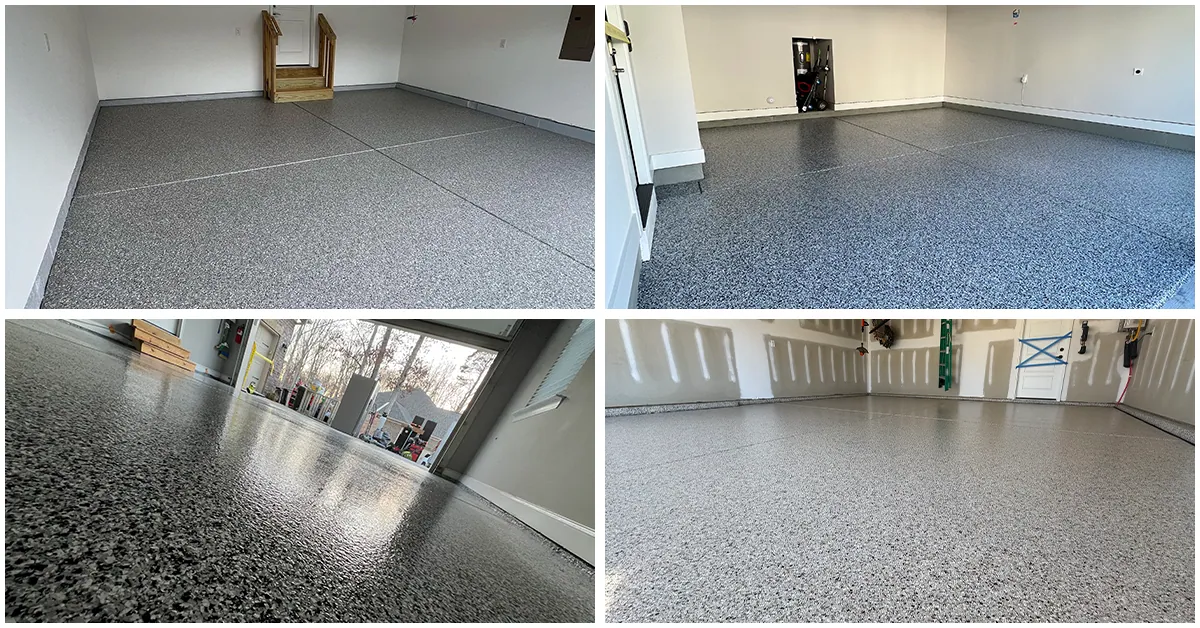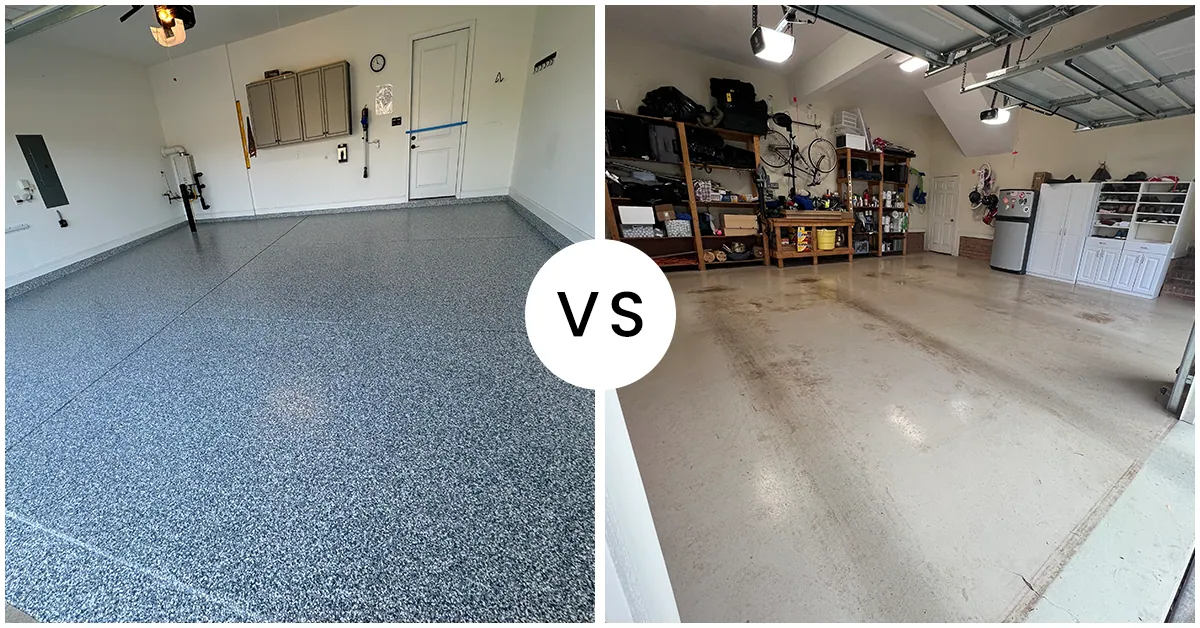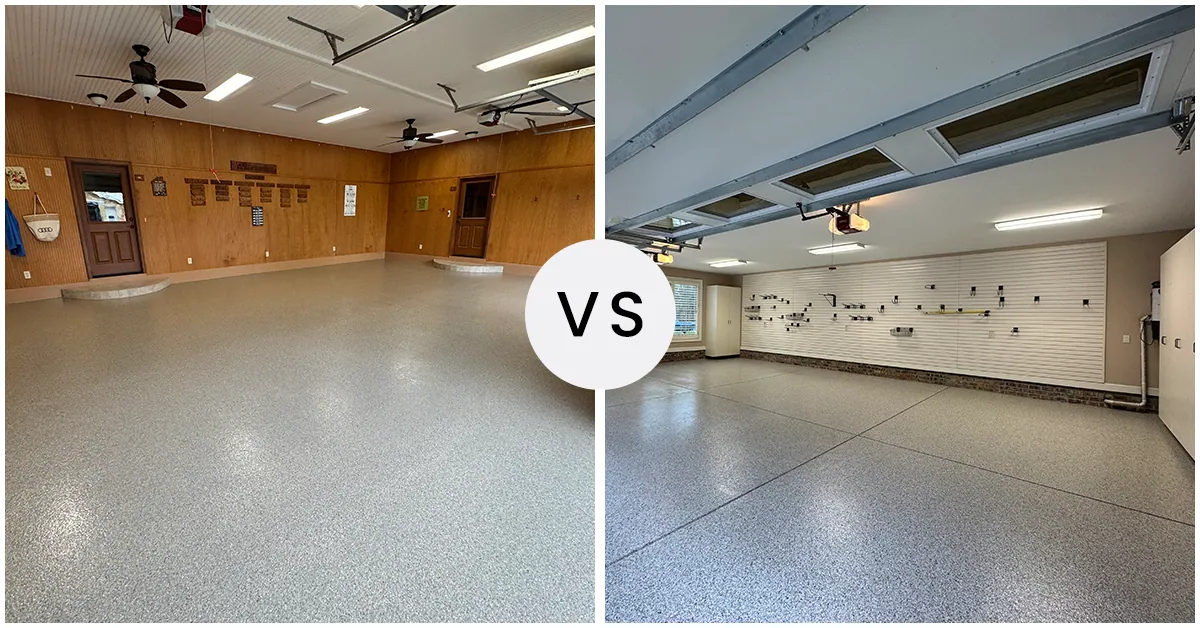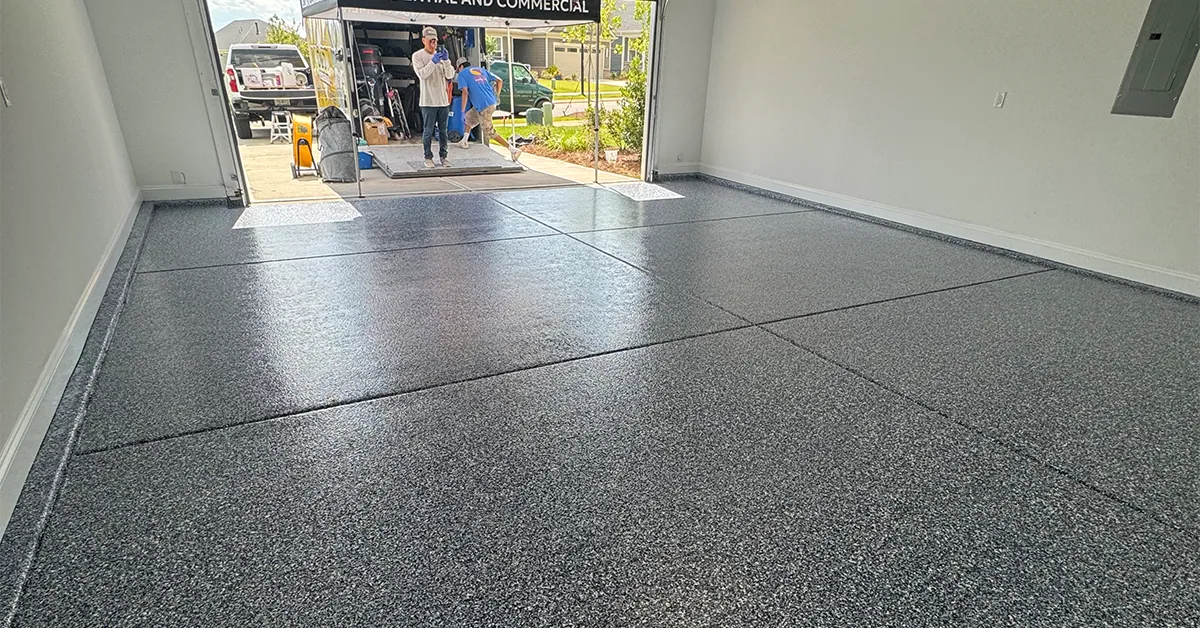
A professionally installed epoxy garage floor is built to last for many years, and a properly built system is durable enough that we back ours with a 10-year warranty against delamination. How long any given floor actually lasts depends far less on the brand of coating and far more on three things: how the slab was prepared, the grade of materials used, and how well the system was installed. A floor that was diamond ground, moisture tested, and sealed with a scratch-resistant, UV-stable polyaspartic top coat holds up for the long run. A thin, single-coat floor over an unprepared slab can start failing within a year. The coating you can see is the same color either way; the durability is built into the layers underneath it.
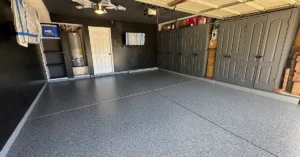
Key takeaways
- A properly installed system is built to last for years and is backed by a 10-year delamination warranty.
- Prep, material grade, and install quality matter far more to lifespan than the coating brand.
- A polyaspartic top coat resists scratching and UV yellowing, which is what keeps a floor looking new.
- Hot tires, harsh chemicals, and heavy abuse shorten the life of any floor, especially a thin one.
- Simple routine care extends the life of a good floor significantly.
After years installing these floors across the Charlotte metro area, the floors we see fail early almost never failed because of the coating itself. They failed because of what happened, or did not happen, to the concrete before the coating went down.
What Most Homeowners Get Wrong
The common assumption is that durability comes from the product: pick a tougher coating and you get a longer-lasting floor. So homeowners compare brands and warranties as if the bucket determines the lifespan.
The coating matters, but it is not the main variable. A premium product over an unprepared slab still peels, because the failure point is the bond to the concrete, not the toughness of the film on top. The floors that last are the ones where the slab was ground to the right profile, tested for moisture, and sealed with a top coat built to resist wear. Understanding what epoxy flooring actually is as a bonded system rather than a paint explains why prep, not brand, sets the lifespan.
How Long an Epoxy Garage Floor Actually Lasts
A floor built correctly is a long-term surface. The system is engineered to stay bonded and intact for many years of normal garage use, which is why a quality installer can stand behind it with a 10-year warranty against delamination. In practice, a well-built floor with routine care keeps performing well past that warranty window.
What you will notice over time is mostly about appearance rather than failure. A polyaspartic top coat is the most UV stable of the coatings, so it resists the yellowing that exposed epoxy would show, and it is the most scratch resistant, so it keeps its finish under traffic and tools. That combination is why the top coat is the layer doing the long-term work, and why a floor without a real one looks tired much sooner. The system that delivers this is the same one covered in how epoxy and polyaspartic compare.
What Determines How Long It Lasts
Lifespan comes down to a handful of factors, most of them decided before and during the install.
Surface preparation. This is the big one. A diamond-ground slab gives the coating a real profile to bond to, and that bond is what keeps the floor down for years. A slab that was only etched or pressure washed gives a weaker grip, and that is where early failure starts. How that prep is done is covered in how an epoxy garage floor is installed.
Material grade and the top coat. A high solids base and a genuine polyaspartic top coat carry the wear and the UV exposure. A thin or top-coat-free floor wears through and yellows far sooner.
Moisture handling. A slab that was moisture tested and given a vapor barrier where needed will not be pushed apart from below. A slab that was not can bubble and delaminate regardless of the coating quality.
How the floor is used and cared for. Hot tires, dragged equipment, and harsh chemicals are hard on any floor, and hardest on a thin one. Routine care, on the other hand, extends the life of a good floor noticeably, which is covered in how to clean and maintain an epoxy garage floor.
What Happens When You Get This Wrong
When prep or materials are cut, the clock on the floor starts early. A coating over an unground slab peels at the edges and the tires. A floor with no real top coat scratches, dulls, and yellows in a sunlit garage. A slab that was never moisture tested can bubble as vapor rises through it. None of this is a slow, graceful wear; it is early failure.
And early failure is expensive, because a failed floor cannot just be recoated. It has to be ground off and rebuilt, so the short-lived cheap floor becomes the most expensive way to end up with the floor you wanted. That is why the durability conversation is really a build-quality conversation, the same one that decides whether the floor was worth it in the first place.
Why How a Contractor Builds for Longevity Matters
Most coating pitches point at a warranty number as proof of durability. The contractors worth trusting build for longevity in the steps the warranty depends on, because a warranty is only as good as the floor underneath it and the company behind it.
A contractor who builds for the long run grinds the slab to the right profile, tests it for moisture and addresses it before coating, uses a high solids base matched to the conditions, and seals the system with a polyaspartic top coat for UV and scratch resistance. Those choices are what make a floor that is still performing a decade in, not the wording of the warranty. That is what a professional epoxy floor coating is built from. We build to that standard and back it with a 10-year warranty because the longevity is engineered into the floor, not promised on paper.
The Bottom Line
An epoxy garage floor lasts a long time when it is built right, and not very long when it is not, and the difference is almost entirely in the prep, the materials, and the install rather than the coating brand. A diamond-ground slab, a real top coat, proper moisture handling, and simple care add up to a floor that performs for many years, which is why a quality system can carry a 10-year warranty. If you want a floor built to last on your slab, request a free in-person estimate and we will build it to that standard.
Frequently Asked Questions
How many years does an epoxy garage floor last?
A professionally installed system is built to last for many years, and a quality floor is backed by a 10-year warranty against delamination, with well-built floors commonly performing past that. The actual lifespan depends mostly on the prep, the materials, and how the floor is used and maintained rather than on the coating brand.
Do epoxy floors scratch easily?
A floor sealed with a polyaspartic top coat is highly scratch resistant, because polyaspartic is the most scratch-resistant of the common coatings. A floor without a real top coat scratches and dulls much faster. Dragging heavy or sharp objects can still mark any floor, so the top coat is what gives you the resistance.
What makes an epoxy floor fail early?
Early failure almost always traces to prep or materials: a slab that was not diamond ground, never moisture tested, or coated with a thin product and no real top coat. The coating then peels, bubbles, or wears through. A floor built on proper prep with a full system rarely fails early.
Does a garage floor coating turn yellow over time?
Exposed epoxy can amber, or yellow, under UV light, which is why it is used as the base coat and not the top layer. A polyaspartic top coat is UV stable and prevents that yellowing, so a properly built system keeps its color in a sunlit garage.
Can I make my epoxy floor last longer?
Yes. Routine care, prompt cleanup of spills, and avoiding dragging heavy equipment all extend the life of a good floor. The biggest factor is still the original build, but sensible maintenance keeps a quality floor performing at its best for longer.