Table of Contents
- What most homeowners get wrong
- What separates a professional coating system from a retail kit
- What Determines the Best Garage Floor Coating for Your Garage
- What happens when you get this wrong
- Why how a contractor installs the system matters
- The bottom line
- Frequently asked questions
Direct Answer
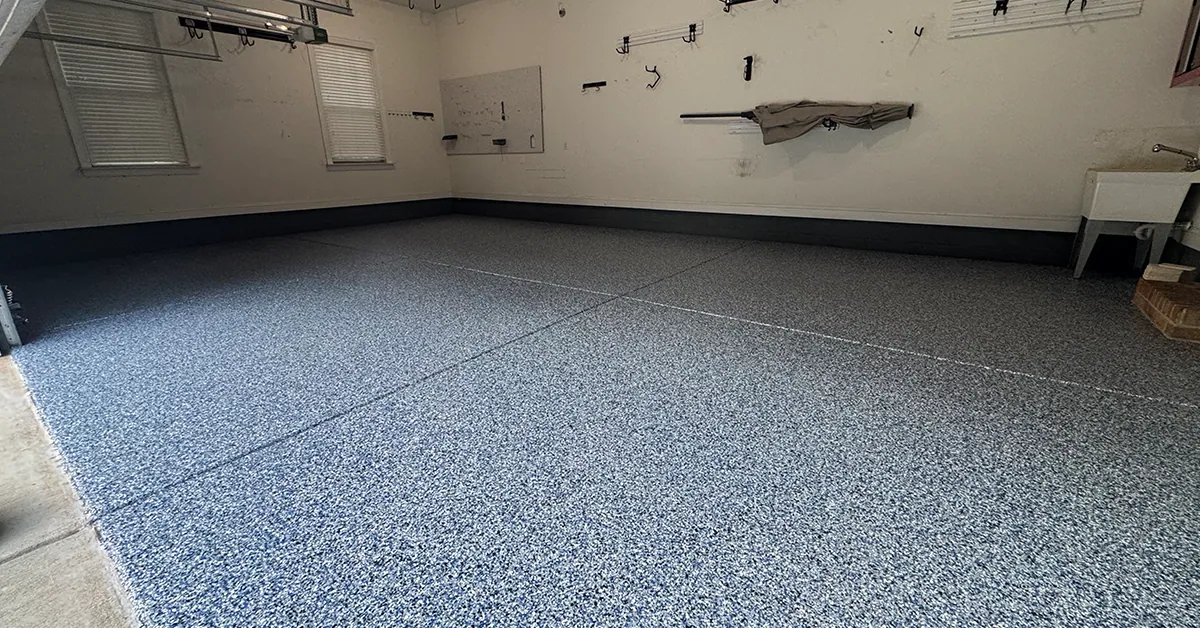
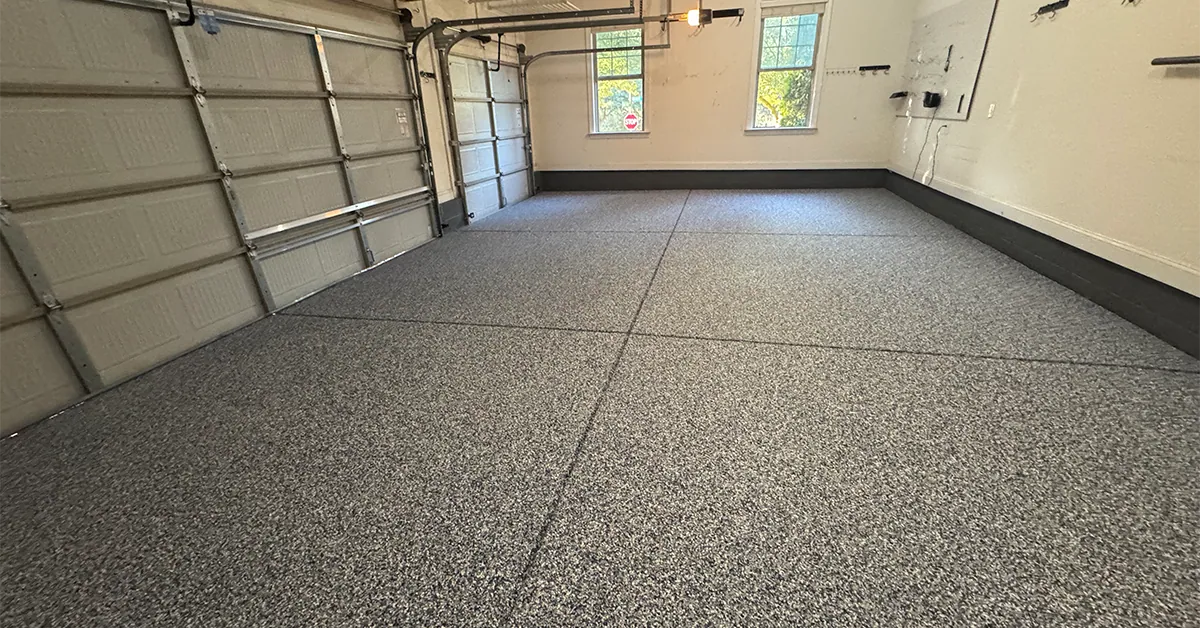
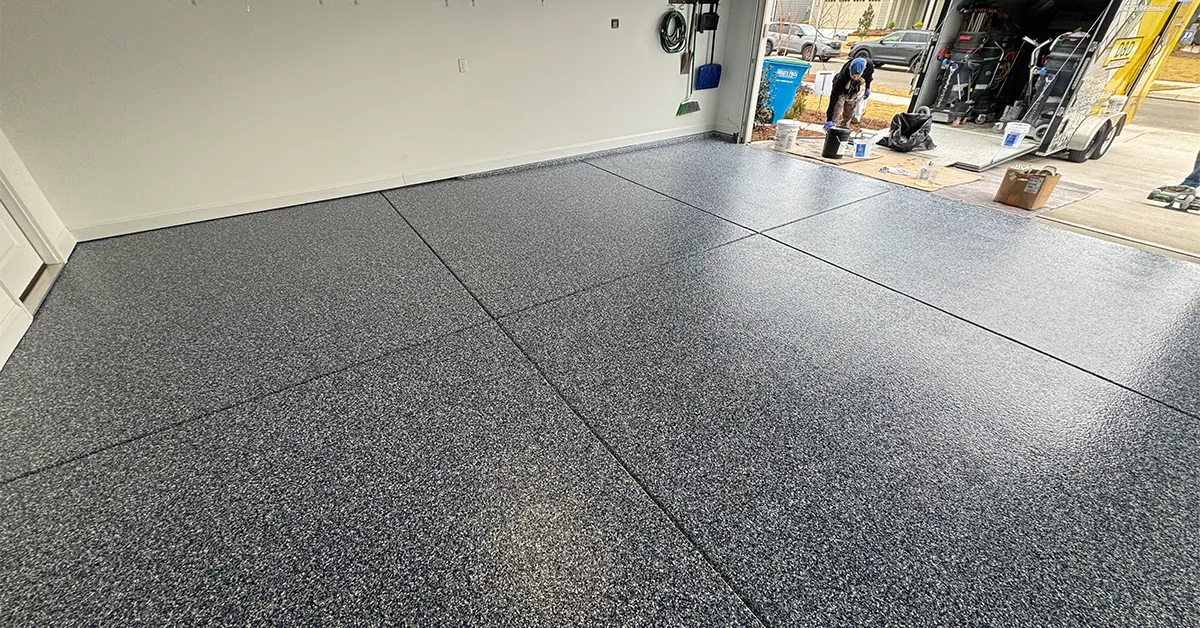
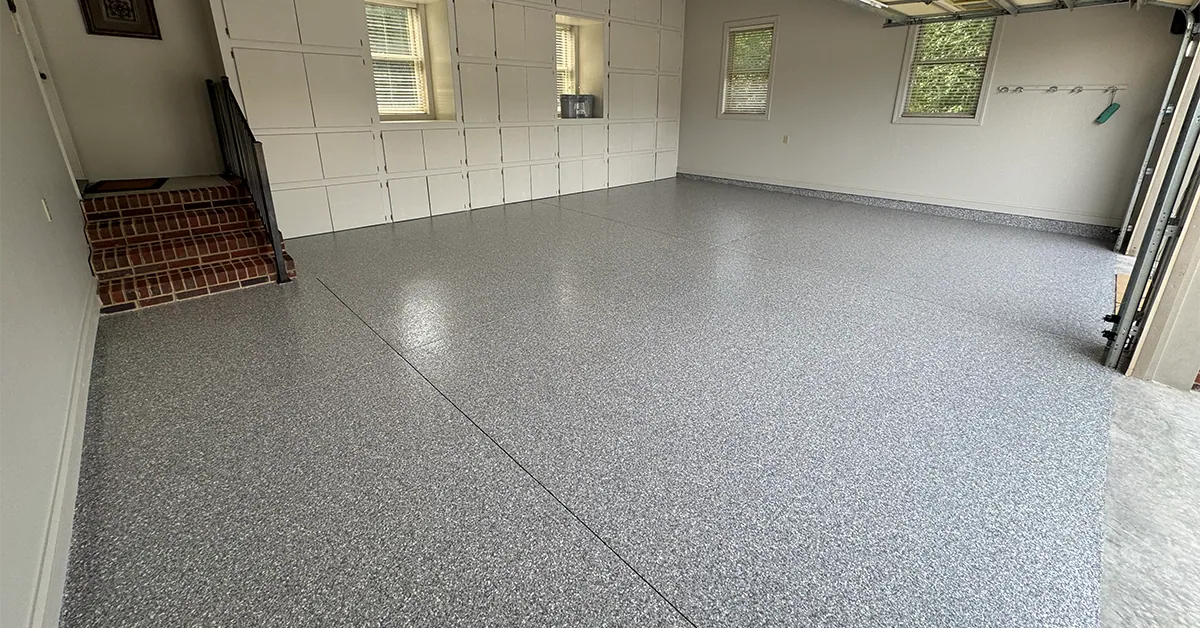
For a residential garage, the best coating is a flake system: a mechanically ground slab, an epoxy, polyurea or polyaspartic base coat depending on the project, vinyl flake broadcast until the surface will not take another chip, and a polyaspartic topcoat. Solids content in the base coat varies between installers and it is the specification most worth asking about. It is the best because it solves the three things a garage floor actually has to survive, hot tires, dropped tools and moisture from below, in one build. But no coating outperforms the preparation under it, so the honest answer to which coating is best is that the best system installed over an unprepared slab will fail before a lesser system installed correctly.
Key Takeaways
- For residential garages, a flake system with a polyaspartic topcoat is the standard.
- No coating outperforms its surface preparation, which makes prep the real answer.
- A retail kit and a professional system are different products, not different price points.
- Metallic is a decorative system, not a better one, and it takes three to five days.
- Ask two things before you ask about color: how the slab gets prepared, and what the solids content of the coating is.
A contractor who installs every system named on this page has no product to defend when someone asks which is best. One who installs a single system is answering a different question.
We get asked for the best coating constantly, and after years of installs the honest answer is that best depends on the slab in front of us.
What Most Homeowners Get Wrong
Most homeowners treat this as a product question, because that is how the market presents it: rankings, brand comparisons, best-of lists. They arrive wanting to know which product to buy.
The product is the smaller half of the answer. A high-end system over a slab that was acid etched rather than ground has a shallow bond and will release. A mid-range system over a properly ground, moisture-tested slab with its cracks repaired will still be bonded in a decade. The ranking that matters is not between products, it is between installations, and no best-of list can measure that.
What Separates a Professional Coating System From a Retail Kit
Solids content and thickness. A professional base coat goes down about four sheets of paper thick, 15 mils, and it is 100 percent solid material. A retail kit is a thinner, often water-thinned coating designed to be rolled by one person in an afternoon, and epoxy garage floor installation is its own question, and the grades within each product are covered separately.
The wear layer. A professional system has a dedicated polyaspartic topcoat about three sheets of paper thick, 13 mils, sealing in the flake. Most kits have no separate wear layer at all, which means the decorative layer is also the surface taking the abuse.
Surface preparation. A kit includes an acid etch pack because mechanical grinding requires an industrial grinder, a hardness test to select the right grinding tooling, and edge grinders for the perimeter. That equipment is the actual barrier, not the skill.
Flake coverage. A kit supplies enough chip for decorative scatter. Broadcasting to full coverage uses several times that.
Crack repair. A kit has no answer for the cracks that appear once a slab is ground, because it never grinds, and how the slab is prepared is where that gets handled.
Moisture. A professional install measures slab moisture before selecting a base coat. A kit assumes the slab is dry.
What Determines the Best Garage Floor Coating for Your Garage
Only three things actually change which coating goes down. Everything else on your slab changes the price or the preparation, not the product.
Slab moisture. A slab passing vapor up from the ground needs a moisture-tolerant base rather than a standard epoxy, and that reading is taken before anything is chosen.
Temperature on the day. Thirty degrees is the floor for a resinous system, and near it the base becomes polyurea because epoxy will not cure reliably at that end of the range, and how an install is sequenced is built around it.
Decorative or working. Metallic suits a finished basement or a display garage. For a working garage, flake is the standard answer: more durable in practice, faster to install, and it hides the wear a real garage generates.
And the factors that do not change which coating you buy still decide whether it lasts, which is a different question this blog is not the place for. Slab condition and surface preparation change the price and the labor, not the product, and what the preparation involves covers them. Grade within a product, flake coverage and the wear layer are install standards rather than choices you make. Slip resistance comes from the flake texture with a grip additive available where more is wanted. Pick the system on the three above. Judge the installer on everything else.
What Happens When You Get This Wrong
Choosing on product ranking alone produces two predictable outcomes.
The first is a good product over bad prep. The floor looks correct for months, then releases in sheets or bubbles where slab moisture pushed it off from below. Failed coating has to be ground off before the slab can be prepared properly, which is why removal costs more than the original install.
The second is a retail kit on a slab that needed a system. The kit cures thin, has no wear layer, and wears through at the tire paths in the first year. What follows is not a touch-up, it is a full removal.
There is a third that is less obvious: choosing metallic for a working garage because it looked best in photographs. It is a beautiful floor and a decorative one, and it shows traffic differently than flake does.
Why How a Contractor Installs the System Matters
The shortcut available to a contractor who wants the job cheaper is acid etching instead of grinding. An acid wash roughens the surface without opening it, can leave residue that interferes with the bond, and is one of the most common causes of later coating failure. It is faster and cheaper on the day and it photographs identically.
A contractor installing this properly grinds every slab with an industrial grinder to white open porous concrete, and hand-grinds the edges and the apron. Concrete hardness is tested first to select the right grinding tooling, and slab moisture is measured before a base coat is chosen. Every crack the grinding reveals is mechanically cleaned out and filled with a two-part polyurea crack mender, ground flush. Flake is broadcast until the surface will not take another chip. The floor is scraped and vacuumed before the topcoat. Then the polyaspartic goes on to a measured thickness rather than until the bucket empties.
Every system named above is one we install as part of our garage floor coatings, so the recommendation is never limited to what is in the van. We install every system named above, so when David tells you at the estimate which one your slab should take, he is not describing the only thing in the van.
When none of this is the right answer. If the slab is failing structurally, if the garage is a rental, or if the floor has to come up again, no coating is the right choice and a floating product or nothing at all is better. A coating is a long-term commitment to a slab, and it is only worth making on a slab worth committing to.
The Bottom Line
For a garage that gets used, a flake system with a polyaspartic topcoat is the right answer, and it is the right answer only if the slab underneath it was mechanically prepared. So the question worth asking a contractor is not which coating they consider best but how they prepare the surface and what they do about the cracks the grinder finds. A contractor who answers those two clearly has told you what your floor will look like in year five. The estimate is where those answers get given on your specific slab.