Table of Contents
- What most homeowners get wrong
- Epoxy Resin and the Other Garage Floor Coating Types
- What determines which type belongs on your slab
- What happens when you get this wrong
- The bottom line
- Frequently asked questions
Direct Answer
Garage floor coatings come in a small number of material families that occupy different layers of the same system. Base coats are epoxy, polyurea, polyaspartic or a moisture-barrier epoxy, chosen by what the slab and the conditions call for. Topcoats are polyaspartic or urethane, finishes are flake, metallic or solid color, and within epoxy the solids content ranges from water-thinned retail products to 100 percent solid commercial material. Naming a coating type is not choosing a floor, because a floor uses one base, one finish and one topcoat, and within each the grade varies as much as the category does. A ground slab, an industrial-grade product and the equipment to apply it matter more than which family name is on the bucket.
Key Takeaways
- Materials sort by layer: base coats bond, topcoats wear, finishes decide appearance.
- Base coats: epoxy, polyurea, polyaspartic and moisture-barrier epoxy, chosen by project. Solids content varies widely and is the spec worth asking for.
- Topcoats: polyaspartic and urethane. A clear coat is an unpigmented topcoat.
- Finishes: flake, metallic and solid color. Flake is the residential standard.
- Epoxy resin sold for tabletops and art is a different product from a floor system.
A contractor who stocks every one of these materials can say plainly that asking which coating type is best is like asking which layer of a roof is best.
We specify from this list on every job, and the type that gets picked is decided by the slab and the use rather than by the name on the product.
What Most Homeowners Get Wrong
Most homeowners approach this as a menu: epoxy, polyurea, polyaspartic, polyurethane, resin, pick one.
They are not alternatives on a menu. Each occupies a specific position in a build, and a finished floor uses several of them at once. The confusion is made worse by the word resin, which covers both floor systems and the clear casting product sold for tabletops and craft projects. Those are genuinely different materials with different jobs, and searching for one returns the other constantly.
Epoxy Resin and the Other Garage Floor Coating Types
Base coats, the bonding layer:
Epoxy, and its solids content. The standard base for a residential garage, and the number that matters is the solids content: a 100 percent solid product cures slowly and locks into the ground concrete, where the water-thinned version sold in kits does not. The grade is not something you can see on a finished floor, so it has to be asked about before the work starts, and how to ask a contractor about product grade covers that.
Polyurea. Also a base coat. Flexible and fast-curing, and it cures at temperatures where epoxy will not. Used on cold-weather installs and slabs with more seasonal movement. Below 30 degrees, polyurea is the base coat that will actually cure.
Moisture-barrier epoxy. A fast-cure base used where the slab moisture reading calls for it. This is a slab-condition decision made after testing, not a product preference.
Topcoats, the wear layer:
Polyaspartic. The standard topcoat. UV-stable so it holds color and gloss under sun, and it resists the hot-tire pickup, where a warm tire lifts the coating as it cools that lifts thinner coatings. Applied about three sheets of paper thick, 13 mils, which is a specification: thicker buries the flake texture and the floor becomes slippery, thinner leaves the flake incompletely sealed in.
Urethane. Also used as a protective topcoat, typically on metallic builds.
A clear coat is simply a topcoat with no pigment in it, which is what almost all garage topcoats are, because the color is already in the flake underneath.
Finishes, the appearance layer:
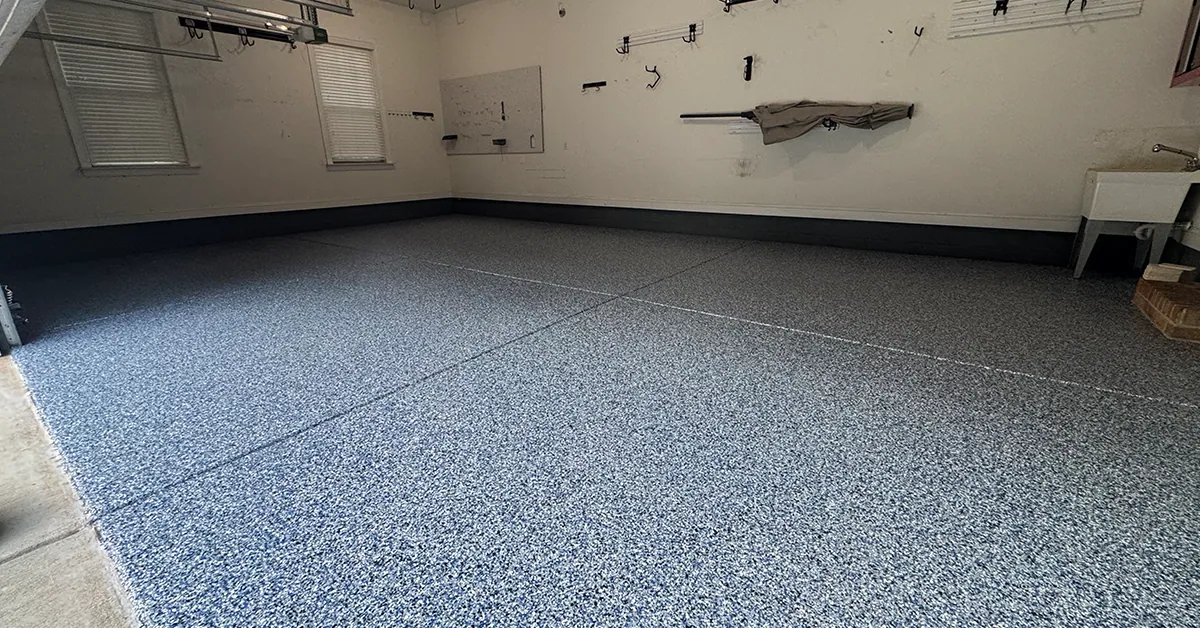
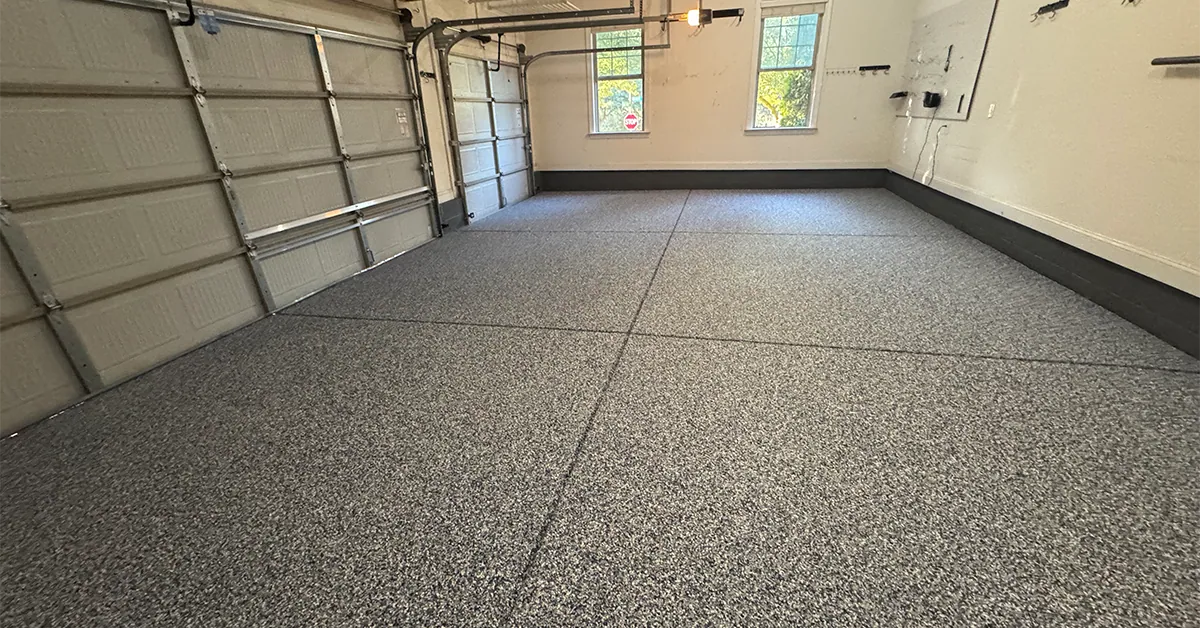
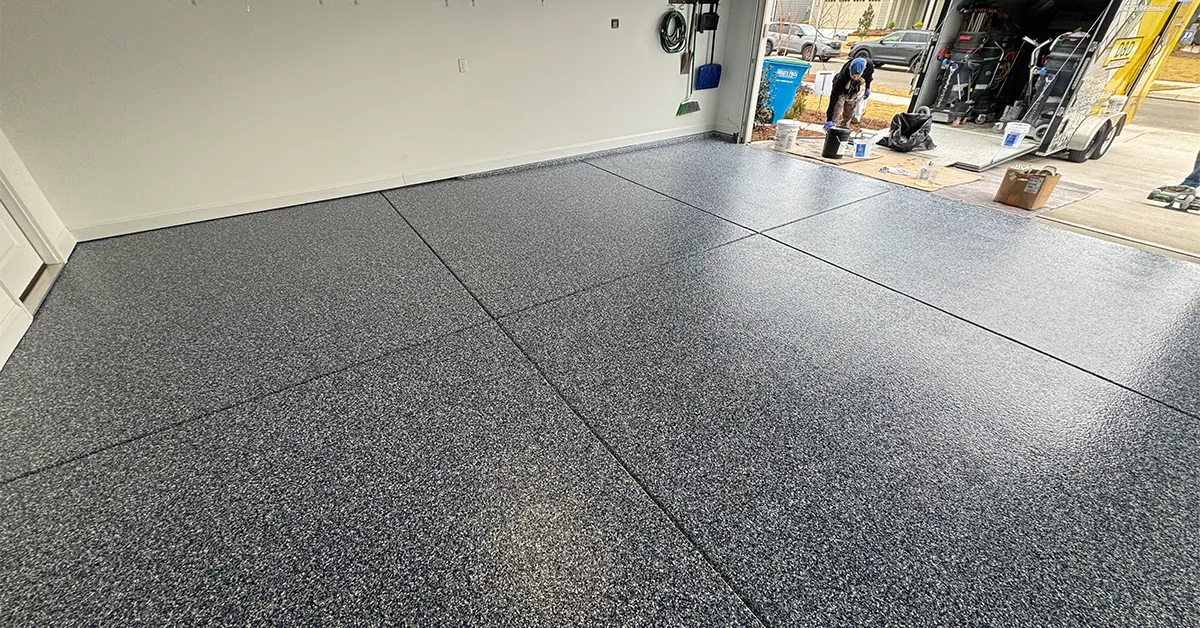
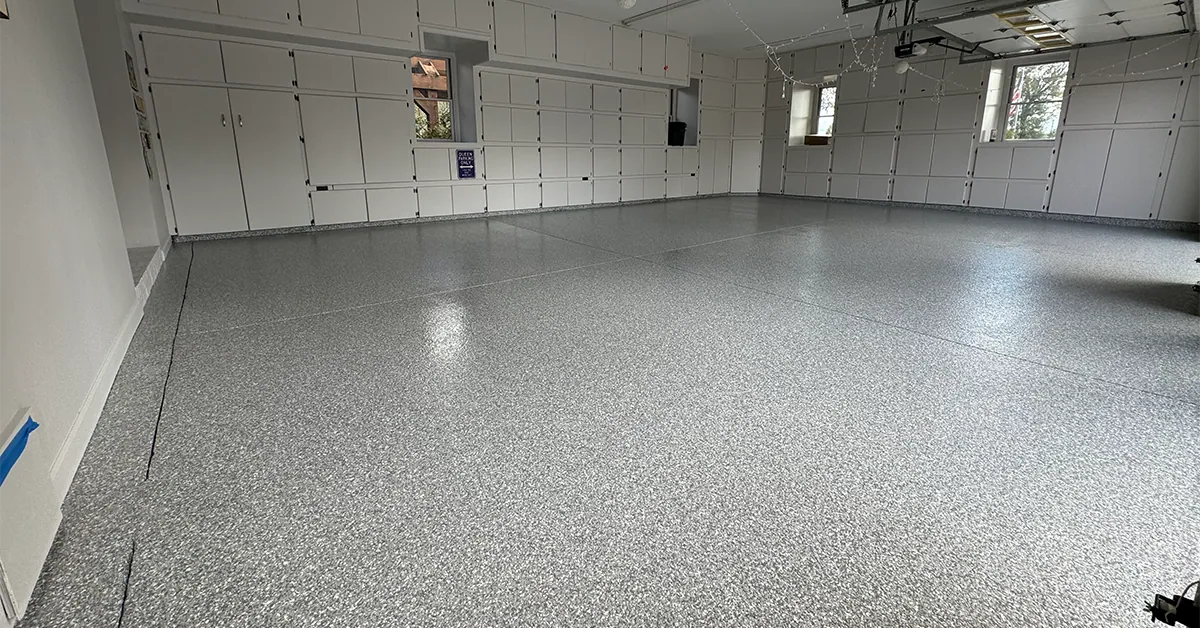
Flake. Vinyl chip broadcast into the wet base coat to full coverage. Carries the color and builds the slip-resistant texture. The residential standard for a garage that gets used.
Metallic. A pigment layer over a cured and sanded base, then topcoated. A separate build with a three-to-five-day timeline rather than one day.
Solid color. A three-coat system, primer plus base plus topcoat, with no chip. Two to three days.
What Determines Which Type Belongs on Your Slab
Slab moisture. Decides whether a standard epoxy base is appropriate or a moisture-barrier product is needed, and the reading is taken before anything else goes down. A moisture meter is what produces that number, and a crew without one is guessing at the base coat.
Temperature at install. Below 30 degrees, no resinous system goes down and the base switches to polyurea near that threshold, and how an install is sequenced is built around it.
Slab movement history. A slab that has cracked seasonally benefits from a flexible base.
Concrete hardness. Tested first because it decides which grinding tooling the machine needs. It does not change the material but it determines whether any material can bond.
Whether the space is working or decorative. Flake for a garage, metallic for a display space or finished basement.
Whether a single day matters. Flake is typically one day on three cars and under. Solid color is two to three and metallic is three to five.
What Happens When You Get This Wrong
Using a topcoat as a base coat is the most common error in the market, and it usually arrives as a one-day system with no epoxy in it. Fast cure means less time for the resin to penetrate the slab, so the bond is shallower.
Using a base coat with no topcoat leaves no UV-stable wear layer. The floor ambers under sun and the flake edges wear because nothing sealed in them.
Choosing a base coat for schedule rather than for conditions is not a failure on the day and it is a decision made for the wrong reason. Polyurea because the temperature calls for it is correct. Polyurea because it cures faster and the crew wants to finish is a scheduling choice presented as a technical one.
And buying clear casting resin expecting a floor system produces a floor with no wear layer, no flake and no bond profile.
How to read a coating quote. Every layer is named in a quote for the coating systems we install, and that is what to check for anywhere. Check that each layer is accounted for: what bonds to the slab, what provides the appearance, and what takes the abuse. A quote naming only one material is describing an incomplete system, and a quote that names all three tells you the contractor is thinking in layers rather than in products.
When no coating is the answer. A slab in excellent condition that you simply want sealed and easy to sweep does not need a coating system at all. Sealing a ground slab is a different service with a different result, it costs less and takes less time, and it leaves you with a finished slab rather than a new surface. Not every garage floor needs the full build.
Why the Type Matters Less Than the Build
Every type on this list can be installed well or badly, and the type is not what decides which. A 100 percent solid epoxy over an unground slab still peels. A thinner product over a properly profiled slab outlasts it. The category names the chemistry; the build decides the outcome.
That is why we specify from the slab rather than from a product line. The base coat is chosen against moisture readings and the temperature we will be working in, the flake goes down to refusal, and the polyaspartic topcoat is the layer that takes the daily abuse at 13 mils. David walks every estimate and every final walk-through, and our own crews do the work, because the specification only holds if somebody owns it end to end.
The Bottom Line
There are three families, not a menu: base coats that bond, finishes that decide appearance, and topcoats that take the wear. Every real floor uses one of each. When you compare quotes, check that all three layers are named and that the base coat was chosen after a moisture reading taken before the base coat is chosen rather than before one. The estimate is where your slab tells us which combination it can take.